Hotel Owners: How to Add Travel Sales to Your Business
How UK hotel owners can add travel sales as a new revenue stream: the models, the rules on ATOL and packages, commission maths and a route that starts without cost.

A hotel owner can add travel sales by selling trips under their own brand through an established ATOL holder’s licence, rather than building a licensed travel business from scratch. You keep your guest relationships and your name. The licence holder carries the regulated infrastructure. Through TimesHunters, partners keep 70% of the commission on each booking, and there is no cost to start.
TL;DR
- Your guests already trust you. Selling their next hotel, cruise, tour or villa stay builds on that trust and brings in a second income line.
- The legal route matters more than the idea: flight-inclusive sales need ATOL protection, and combining services yourself can make you a package organiser.
- Selling as an agent under an existing licence keeps your liability and admin low. Referring guests elsewhere for a small fee gives you little control.
- Commission varies widely by model, so work out what you keep per booking before you commit.
- Rules on packages change for contracts made on or after 6 April 2027, so build your process with that in mind.
Table of Contents
- Why hotel owners are a natural fit for travel sales
- Three ways to sell travel from a hotel
- What UK law expects when you sell travel
- What you keep: commission maths
- Turning guests into travel clients
- Setting up: a practical checklist
- Perspective
- Start selling under your own name
- FAQ
- Sources
Why hotel owners are a natural fit for travel sales
You already hold the two things a new travel agency spends years building: a customer list and credibility. Past guests who had a good stay are 80% more likely to book direct on their return than a cold first-time guest, according to Webb Marketing’s 2026 UK trends report. The same report finds email to a guest database delivers the highest return of any channel.
The obvious product is the one your guests ask you about anyway: where to stay next. A couple who celebrated an anniversary with you might want a villa in the Algarve, a cruise or a rail trip. Today they search elsewhere, and you earn nothing from that decision.
Small properties usually do best with a hybrid approach, according to Little Hotelier’s guide to ancillary revenue: own the simple, high-margin extras, and take partner commission on the rest. Travel sales fit the second half. You are not adding a department, you are adding a revenue line to a relationship that exists.
Three ways to sell travel from a hotel
The choice is mostly about how much responsibility you want to carry. One hospitality guide on selling flights from a hotel sets out three models, from least to most operational commitment.
| Model | What you do | What you earn | Who owns the customer |
|---|---|---|---|
| Referral to a partner agency | Pass guests on | Small fee, little control | The agency |
| Agent selling under an established licence | Advise, propose and sell under your own brand | A share of each booking | You, as the brand they deal with |
| Own platform, own regulated business | Build, license and protect everything yourself | Everything, minus the cost and risk | You |
The third route means taking on regulation, taxes, refunds and after-sales support yourself. The same guide notes that the closer you get to selling the product, the closer you are to the problem when it fails. For most hotel owners, the middle model delivers what they want with far less exposure.
That middle model is what a white-label travel agency platform provides. TimesHunters lets you start a travel business under your own name using Times Travel group’s ATOL-protected licences, and the licence’s branding is invisible to your clients. You get a branded booking site, access to wholesale hotel, cruise and tour inventory, instant pricing proposals and automated booking management. Our guide on how hoteliers compare bedbanks with white label explains the difference in more detail.
What UK law expects when you sell travel
This is where hotel owners most often get caught out, so it is worth understanding before you sell anything.
Agent or principal
Under ABTA’s explanation of how travel businesses trade, a retail travel business acting as an agent brings about a contract between the customer and the supplier, must tell customers it is an agent and who the principal is, and is paid by agreed commission. If you combine travel services yourself, for example a flight plus hotel on your own website, you become responsible for financial protection and liability under the Package Travel Regulations.
When ATOL applies
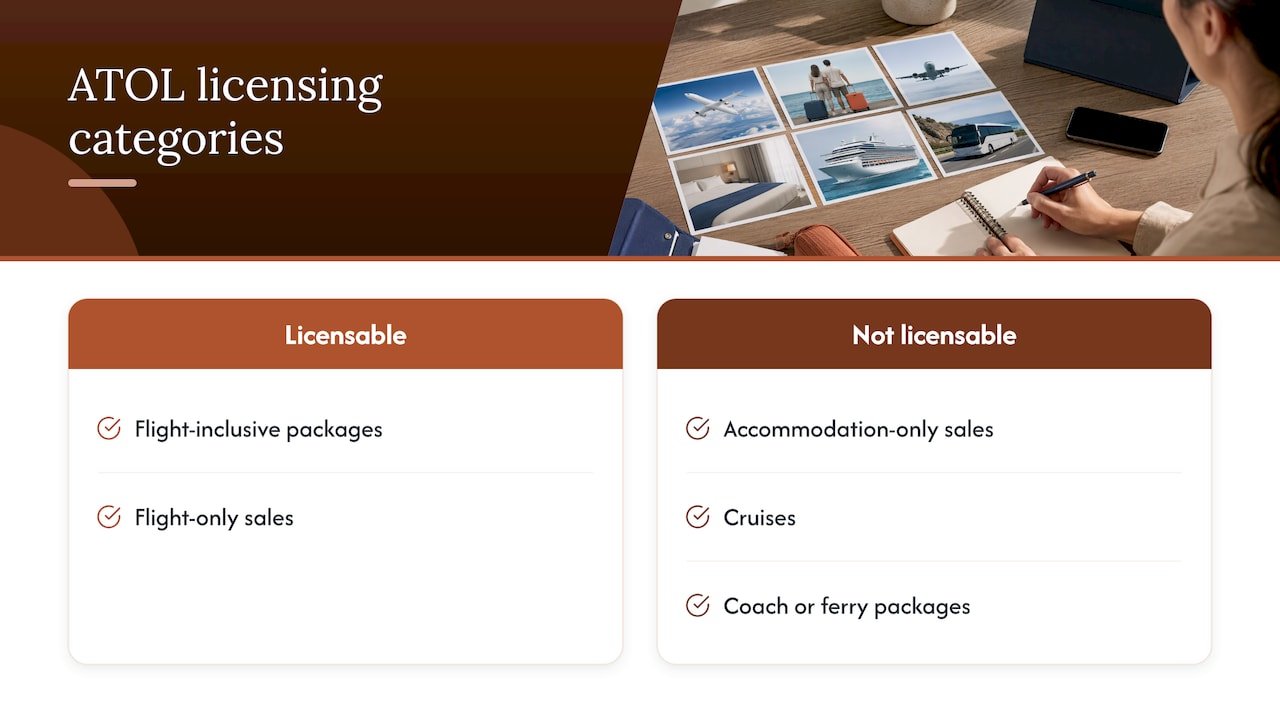
ABTA defines licensable business as flight-inclusive packages and flight-only sales. Accommodation-only sales, cruises and coach or ferry packages are non-licensable. That is useful: hotels, cruises and tours, the core of what a hotel owner’s guests want, do not need ATOL by themselves.
Where flights are involved, the Civil Aviation Authority requires an ATOL holder selling through agents to have a written agency agreement containing its Schedule of Terms, and agents must issue an ATOL Certificate immediately when payment is taken. Paperwork that does not comply can lead to a consumer claim being referred back to the agent for a refund. Our own guide to trust accounts versus insurance covers the routes for UK agents, and our piece on protecting client money covers the principles.
What counts as a package
Under the Package Travel and Linked Travel Arrangements Regulations 2018, a package is two or more different types of travel service for the same trip. According to DMC Quote’s summary of government guidance, a hotel plus airport transfer is usually a package, while a hotel plus one small excursion probably is not, unless the excursion is around 25% or more of the price or advertised as an essential feature.
This catches hotels that think they are only adding a little extra. Hospitality Tax explains that a hotel selling a package in its own name, such as one including coach transport for guests, can fall within the Tour Operators’ Margin Scheme for VAT. If you want to see how add-ons turn into packages in practice, this ski-by-train guide shows how combinations of travel elements are built.
The 2027 change
Amending regulations made on 22 April 2026 apply to contracts entered into on or after 6 April 2027. Per the same DMC Quote summary, separate bookings of two or more services made in a single visit or contact with a trader become full packages, and suppliers must refund organisers and retailers within 14 days of cancellation. What counts as a single visit or contact was still awaiting government guidance when that summary was written. Build your booking process on the assumption that bundled sales will carry full responsibility, and check the official government guidance for the current position.
There is no single government-issued travel agent licence in the UK. A consultant arranging holidays as an authorised agent for an established ATOL holder may not need their own ATOL, while someone creating and selling flight-inclusive packages in their own name generally does. Using another company’s ATOL number without a valid authorisation is not acceptable.
What you keep: commission maths
Commission is where the models differ most. VisitScotland Business Support says online travel agent commissions are usually around 15 to 20% for accommodation and 15 to 30% for experiences. Those figures are what a hotel pays when it is the supplier. When you sell travel yourself, you are on the other side of that table.
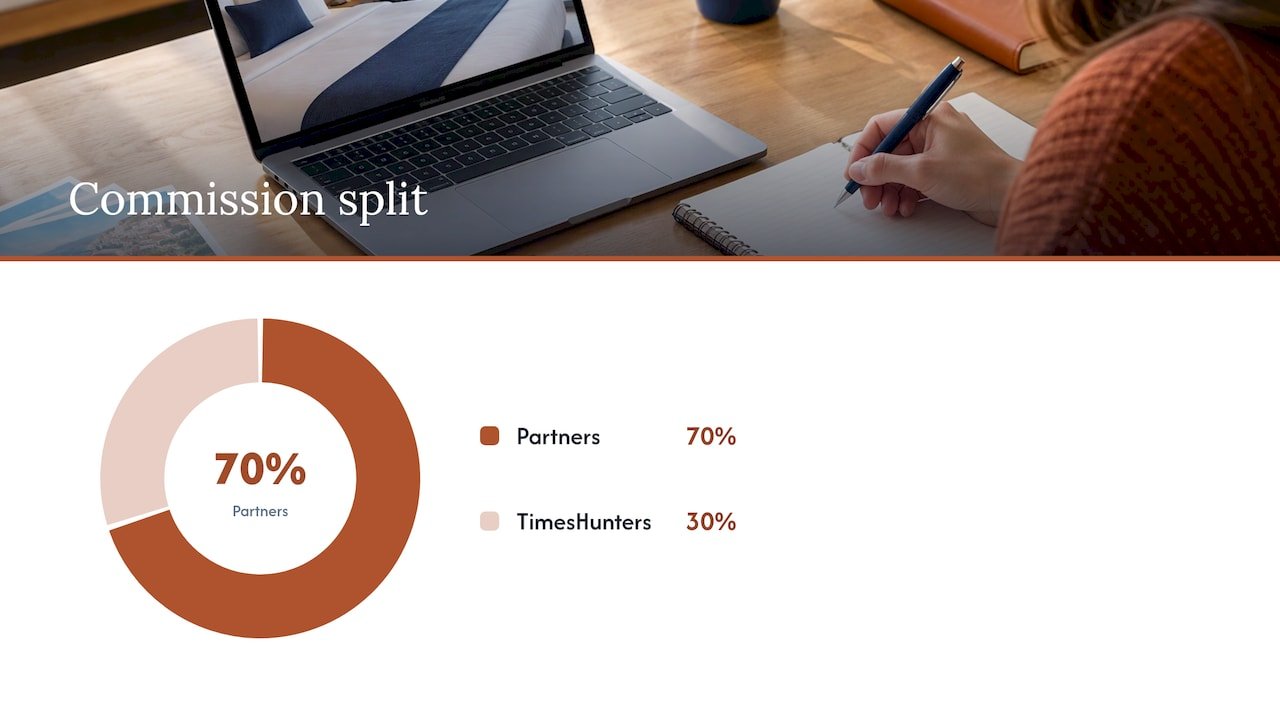
TimesHunters pays partners 70% of commission on bookings, set against the 4% the owner’s own description gives as typical of online travel agencies. We split each booking’s commission 70/30. Because the commission is a share of what the supplier pays, the money you keep depends on the product, so we do not quote a headline figure per booking. A partner testimonial reports income rising from £400 to £1,200 per booking.
To work out your own number, VisitScotland advises working through product cost, partner costs, the customer’s price and your maximum acceptable commission. Do the same for each product line. Our guides on increasing agent commission, cruise commissions and tour operator commissions show the arithmetic.
One principle from the beam’s 2026 Code of Practice is worth knowing: commission is typically payable only where the agency has material involvement in a booking. If a guest rebooks directly with the supplier without you, do not expect to be paid. Advise, propose and manage the booking, and keep a record of it.
Turning guests into travel clients
Your guest list is the asset, so handle it carefully. RoomRaccoon notes that a booking confirmation is not automatically permission to send marketing under UK GDPR and PECR, so use a compliant consent route and a clear opt-out.
Within those limits, three habits work:
- Segment by occasion. Webb Marketing describes sending an anniversary couple an offer twelve months later, rather than a generic newsletter.
- Ask at check-out. Invite guests to join a list for travel ideas, with consent recorded.
- Follow up fast. Instant pricing proposals and automated client follow-up are part of the TimesHunters platform, so a guest’s enquiry at the front desk becomes a priced proposal rather than a promise to get back to them.
Your front-desk team matters here. Little Hotelier recommends signage and trained front-desk staff for any extra you add. Our training guide covers launching a white-label agency in four weeks.
Setting up: a practical checklist
- Decide what you will sell first. Hotels, cruises and tours are non-licensable, so they are the simplest start. Villas, safari camps and rail are also resold through the platform.
- Get your agency terms in writing. ABTA’s Code of Conduct requires written agency agreements stating principal and agent capacity and security arrangements.
- Price transparently. ABTA’s guidance says everything a client must pay belongs in the basic price, with optional extras clearly identified.
- Plan your service capacity. Do not promise service you cannot deliver. ABTA’s Code of Conduct expects acknowledgement of client correspondence within 14 days and a detailed reply within 28.
- Tell clients what they need to know. That includes passport, visa and health requirements before the contract is made.
- Automate confirmations. See our guide to booking confirmation automation.
For the wider picture of building the business, read our seven stages of selling travel and our guide on becoming a travel agent in the UK.
Perspective
Most hotel owners we speak to assume that selling travel means becoming a regulated travel company. It does not have to. The expensive part of this business is not the idea, it is the licence, the financial protection and the booking admin.
Our model is built to take that weight off you. You sell under your own name to your own guests. The licence behind you is Times Travel group’s ATOL-protected one, and its branding is invisible to your clients. You keep the relationship, which is the part that has real value.
Compare that with a referral fee, where someone else keeps your guest, or a 4% online travel agency commission. We think a 70% commission, a branded booking site and wholesale rates are a better foundation for a second income line.
If your guests already ask you where to go next, you have most of what you need.
Sam
Start selling under your own name
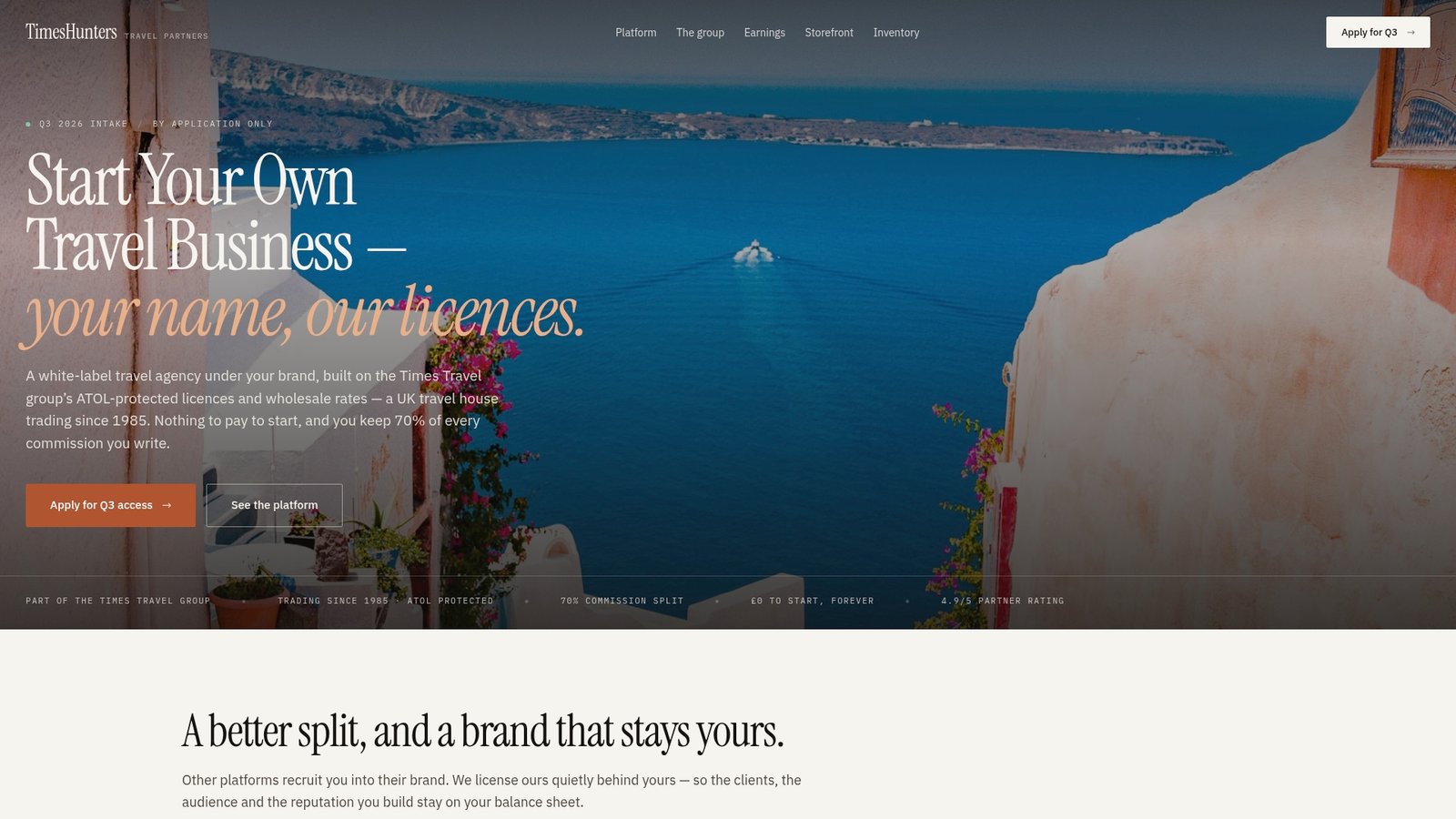
TimesHunters gives hotel owners a white-label travel agency with ATOL-protected licences, a branded booking site, wholesale hotel, cruise and tour inventory, managed payments and financial protection, and training and support. Partners receive 70% commission, and there is no cost to start.
See how it works on the TimesHunters white-label travel agency page, or read about our UK referral programme.
FAQ
Do I need an ATOL to sell travel from my hotel?
Only if you sell flights or flight-inclusive packages, which ABTA defines as licensable business. Accommodation-only sales and cruises do not need one. Selling as an authorised agent under an established ATOL holder’s licence, with a written agency agreement, covers the flight side without you holding your own.
Does adding a transfer or excursion make me a tour operator?
Possibly. A hotel plus airport transfer is usually a package, and a hotel plus one small excursion probably is not unless it is around 25% or more of the price or advertised as an essential feature. Selling under an established licence as an agent keeps your role clear.
How much commission can I expect?
It depends on the product and the supplier. TimesHunters partners receive 70% of commission on bookings, and we do not publish a per-booking figure. Online travel agents typically charge accommodation suppliers around 15 to 20%, so work out your own margin per product.
Can I email my past guests about travel offers?
Yes, with a compliant route. Marketing email needs consent or another lawful basis under UK GDPR and PECR, and a booking confirmation alone is not permission. Record consent and include a clear opt-out.
Sources
- Hotel ancillary revenue: A guide for small hotels, Little Hotelier
- Selling Flights From a Hotel: Beyond the Room
- How your business trades, ABTA
- Travel trade selling through agents, UK Civil Aviation Authority
- B2B Travel Portal UK, DMC Quote
- Hotel VAT: Rooms, Long Stays and Packages, Hospitality Tax
- Travel Agent Licence UK 2026, UK Startup Magazine
- Choosing an Online Travel Agent, VisitScotland Business Support
- The beam Code of Practice 2026
- ABTA Code of Conduct, September 2026
- ABTA Code of Conduct guidance, November 2025
- UK Hotel Marketing Trends 2026 and 2027, Webb Marketing
- How UK Hotels Can Increase Direct Bookings in 2026, RoomRaccoon
- Skiing by Train 2026/27