
Trust Accounts vs Insurance: UK Agents’ ATOL Route to Legal Sales
Learn when UK travel sellers need ATOL, insurance, bonding, or a trust account, plus the compliance checklist and a white label route for new agents.

For flight-inclusive sales you must use ATOL, with a certificate issued the moment payment is taken. For other packages or linked travel arrangements you must still provide insolvency protection, by bond, insurer cover or a compliant trust account, under the Package Travel Regulations 2018. Get this wrong and you cannot legally take a booking.
TL;DR:
- For packages without flights, sellers may choose a bond, financial failure insurance, or a compliant trust, but cover must provide refunds and, when relevant, repatriation.
- A professional trustee handles releases, reconciliations, and reporting; an internally run trust may cost less to establish but demands tighter controls and records.
- Agents operating under a principal’s ATOL licence must confirm who issues certificates and holds customer funds before transfer, then give customers the principal’s protection documents.
- A bond or insurance policy needs current proof of cover, while trust arrangements require a deed, trustee approval, release rules, and monthly reconciliations.
Table of Contents
- Trust accounts: how they work for UK travel sellers
- Insurance, bonding and ATOL: what each covers and when you need them
- How UK law and industry rules determine what protection you must use
- Practical checklist for agents: choose, set up and document your chosen protection
- When trust accounts or insurance actually apply in practice
- TimesHunters perspective: how a white-label ATOL route helps new agents
- Start selling under an ATOL-backed licence today
- FAQ
- Sources
Trust accounts: how they work for UK travel sellers
A trust account is a segregated bank account that holds customer money separately from your business’s own working capital, usually governed by a trust deed and overseen by an independent trustee. The money inside it belongs to the customer until the holiday is delivered, not to you, which is what makes it count as insolvency protection under the Package Travel and Linked Travel Arrangements Regulations 2018.
Two models dominate the UK market:
- Professional trustee service: a third-party trustee controls releases, reconciles balances and reports independently, which tends to satisfy regulators and trade bodies with less friction.
- Internally administered trust account: you run the account yourself under the trust deed’s rules, which costs less to set up but demands tighter internal controls and more paperwork to prove compliance.
For ATOL-protected flight bookings, money held before it reaches the airline or ATOL holder is treated as ATT Pipeline Monies, and you must hold and report it correctly if the ATOL holder fails. ABTA now accepts compliant trust accounts as a membership option, provided the arrangement meets the Package Travel Regulations and the trust deed stands up to scrutiny.
Whichever model you choose, keep the trust deed itself, trustee statements, monthly reconciliations and a record of who can authorise a release.
Pro Tip: Ask any prospective trustee for a sample reconciliation report before you sign anything, not after, so you know what oversight actually looks like in practice.
Our guide to travel trust account checks walks through the specific items UK operators should verify before relying on one.
Insurance, bonding and ATOL: what each covers and when you need them
ATOL and financial failure insurance (FFI) solve the same problem, insolvency protection, but they apply to different products and work differently when a claim actually happens.
- ATOL is mandatory for flight-inclusive package holidays sold in the UK. Holders contribute to the Air Travel Trust, and customers are entitled to a refund or repatriation if the ATOL holder stops trading.
- Bonding involves an approved body holding a financial guarantee on your behalf, which pays out to customers if you become insolvent, separate from any trust arrangement.
- FFI is an insurance policy that pays customer refunds directly if you fail, with the insurer, rather than a trustee or bond provider, carrying the liability.
According to ABTA’s guidance on financial protection options, principals selling non-ATOL packages can meet their legal duty through a bond via an approved body, FFI, or a trust account, there is no single mandatory route outside ATOL.
The practical difference shows up in documentation. A bond or FFI policy needs a current certificate of cover you can produce on request, while a trust account needs reconciliations and trustee sign-off. Our overview of core insurance covers for UK travel agents sets out which policies and brokers to approach first if you decide insurance suits your business better than running a trust arrangement.
How UK law and industry rules determine what protection you must use
Three frameworks decide what you are legally required to hold, and they interact rather than stand alone.
The Package Travel Regulations 2018, Part 5, require organisers to provide “effective security” for refunds and, where carriage is included, repatriation. The regulations name insurance, bonding and trust monies as acceptable forms of that security, but the arrangement has to actually deliver a refund or repatriation if you fail, a token policy that doesn’t cover both isn’t enough.
ATOL’s own Standard Terms set the operational detail: when you must issue an ATOL Certificate (immediately on taking payment), what your agency agreement with the ATOL holder must say, and the exact receipt wording customers need to see so they know what part of their payment is protected.
- Issue the ATOL Certificate at the point of payment, not afterwards.
- Keep the agency agreement on file alongside every certificate issued.
- Make sure receipts state clearly which elements are ATOL protected and which are not.
ATOL holders currently contribute £2.50 per passenger to the Air Travel Trust, the fund that underwrites refunds and repatriation when an ATOL holder ceases trading.
ABTA layers its own Code of Conduct guidance on top, requiring Members to give customers clear confirmation invoices and evidence of whichever cover applies, on a set timetable rather than whenever convenient. Mapping your business model, flight-inclusive or not, principal or agent, against these three layers tells you exactly which protection you are obliged to arrange.
Practical checklist for agents: choose, set up and document your chosen protection
Work through this in order rather than tackling it piecemeal.
- Identify your licensable sales. Flight-inclusive packages need ATOL; everything else needs insolvency protection by bond, FFI or trust account under the Package Travel Regulations.
- Fix your agency agreement. If you sell under someone else’s ATOL licence, the agreement must set out who issues certificates, who holds money before it reaches the ATOL holder, and how ATT Pipeline Monies are handled.
- Choose your non-ATOL protection route. Compare the ongoing cost and admin of a trust account against an FFI policy or bond before registering with an approved body or trustee.
- Set up recordkeeping. A trust account needs a signed deed, monthly reconciliations and defined release rules; an FFI or bond needs a current certificate of cover you can produce instantly.
- Fix your customer communications. Every booking confirmation should state which protection applies, when it was issued, and what the customer should do if your business or your principal fails.
Pro Tip: Build your ATOL Certificate and confirmation wording into your booking system template now, so compliance happens automatically rather than depending on someone remembering to do it on a busy day.
Our guide to client money protection checks for white-label partners covers the specific items to verify if you’re operating under someone else’s ATOL licence rather than your own.
When trust accounts or insurance actually apply in practice
Picture three typical UK bookings. A customer buys a flight and hotel package together, so you’re selling a flight-inclusive package and ATOL applies automatically, you issue the certificate at payment and the Air Travel Trust stands behind it if your ATOL holder fails.
A second customer books a self-drive tour through Scotland with accommodation but no flights arranged through you, a package under the Package Travel Regulations but outside ATOL. Here a trust account, bond or FFI policy has to cover the refund if you become insolvent before the trip departs.
A third scenario: you act purely as an agent passing a customer’s booking to a principal who holds their own ATOL licence or FFI cover. Your job becomes disclosure, making sure the customer gets the principal’s certificate or confirmation showing exactly what protects their money, rather than arranging protection yourself.
Each scenario needs a different document trail, and mixing them up, treating an agency sale as if you were the principal, is one of the most common compliance mistakes new agents make.

TimesHunters perspective: how a white-label ATOL route helps new agents
Most new agents underestimate how much administrative weight sits behind “just take the booking.” Setting up a compliant trust account, sourcing FFI, or negotiating your own ATOL licence takes time most first-time entrepreneurs don’t have before their first sale. A white-label route that sits under an established ATOL licence removes that upfront burden, letting you focus on selling rather than on trustee negotiations. Our guide on getting an ATOL licence without the typical wait explains what that access actually involves for a new agent.
— Sam
Start selling under an ATOL-backed licence today
We give aspiring UK travel entrepreneurs a route into ATOL-backed sales without the delay of arranging their own trust account or sourcing financial failure insurance first, letting you accept payments online easily through our platform. We handle the licensed infrastructure, managed payments, and commission splits behind every booking.
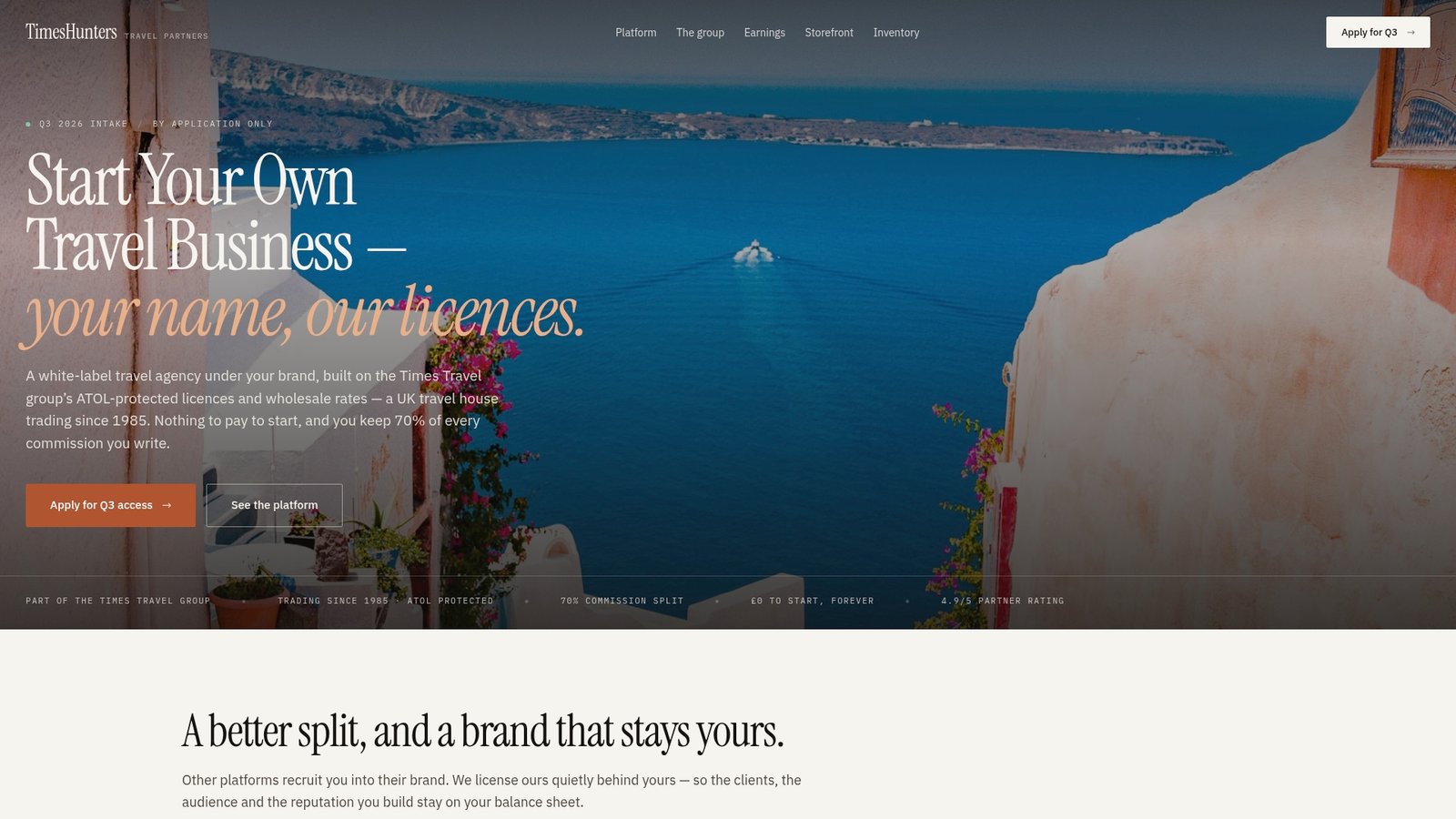
- No separate trust account to set up: bookings run through our existing ATOL-protected licences.
- Managed payments and certificates: ATOL Certificates and confirmation documents are handled as part of the platform.
- A commission split higher than typical online travel agency referrals.
If you’ve been weighing up how long it takes to arrange compliant protection yourself, our white-label travel agency page sets out exactly what’s included and how to get started.
FAQ
Do I need ATOL if I only sell hotels and tours, not flights?
No, ATOL only covers flight-inclusive packages. For hotel-and-tour packages without flights, you still need insolvency protection under the Package Travel Regulations, arranged through a bond, financial failure insurance or a compliant trust account.
Can a trust account replace ATOL for flight-inclusive bookings?
No, ATOL is the specific legal requirement for flight-inclusive package sales in the UK, and a trust account on its own does not satisfy that requirement. Non-ATOL packages, by contrast, can use a trust account as one of several accepted protection routes.
What happens if I take payment before issuing an ATOL Certificate?
You would be out of compliance with ATOL’s Standard Terms, which require the certificate to be issued immediately when payment is taken, not afterwards. Build certificate issuance into your booking workflow so it happens automatically at the point of sale.
How does TimesHunters handle ATOL and payment protection for partners?
We provide access to ATOL-protected licences and managed payments as part of the white-label platform, so partners don’t need to arrange their own trust account or insurance before selling. Partners keep their own brand while booking infrastructure and certificate issuance run through our existing compliant setup.
Will ABTA accept my trust account for membership?
ABTA will accept a trust account for membership purposes where the arrangement meets the requirements of the Package Travel Regulations and the trust deed can be verified. Contact ABTA directly to confirm your specific arrangement qualifies before applying.
Sources
- The Package Travel and Linked Travel Arrangements Regulations 2018, Part 5
- ABTA announces trust accounts decision
- Information required from travel agents for consumer claim assessment — CAA