Start Branded Group Travel in the UK: Fill 8–15 Seats via White Label
Launch a branded UK group travel business using white label platforms. Learn to fill 8–15 seats, set profitable prices, and secure terms.

Yes. You can sell group travel under your own brand and earn meaningful commission on every booking. Start with one small, niche group, protect your margins with a proper supplier contract, and lean on booking technology to handle the admin. A platform such as TimesHunters gives you ATOL‑backed inventory and a 70% commission split without needing your own licence from day one.
TL;DR:
- Most niches can support profitable group bookings with as few as 8 to 10 travelers, especially in specialized or premium markets.
- Starting with known groups reduces risk and marketing effort, while building around a trusted figure can boost conversion rates.
- Price the trip based on your required income, factoring in planning, commissions, and attrition buffers, rather than setting a fixed ticket price first.
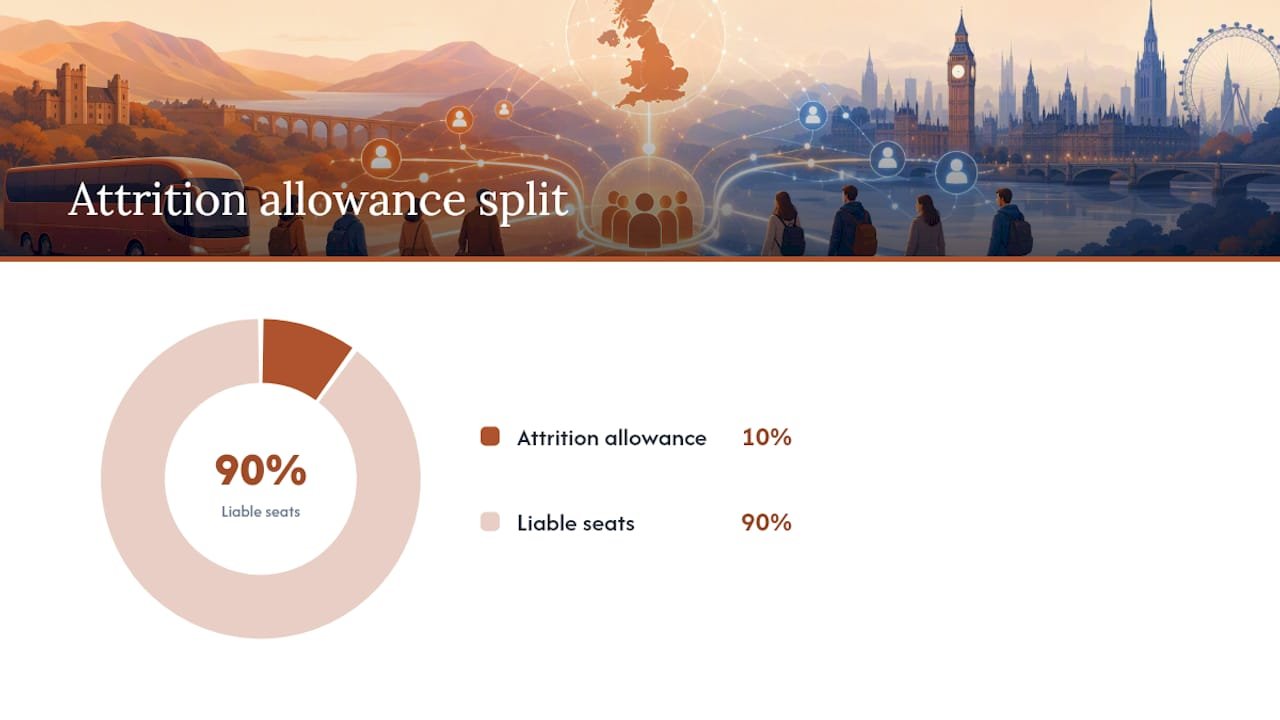
- Negotiate attrition allowances of around 10% and establish clear cut-off dates and substitution rules in your contracts to avoid financial surprises.
- Platforms like TimesHunters offer ATOL‑backed inventory and automated booking tools, allowing you to sell group trips without needing your own license.
Table of Contents
- Why sell group travel instead of individual trips?
- How do you choose your first group model and niche?
- How should you price and contract a group trip?
- How do you market and fill a group trip?
- What tools and templates do you actually need?
- How do you manage risk if a group doesn’t fill?
- Some platforms offer a branded booking site, ATOL-protected inventory, and automated booking management, so you’re not building consumer protection or payment systems from scratch. If you’re short on time and want a branded, insured route to market fast, a platform model like this removes most of the setup work.
- Starting small isn’t a compromise, it’s the strategy
- Ready to launch your own group travel brand?
- Sources
- FAQ
Why sell group travel instead of individual trips?
A group booking worth £15,000 pays out far more commission than ten separate £1,500 bookings ever will, even at an identical percentage rate. That’s the entire commercial case for group travel sales: you do roughly the same amount of admin work, but the numbers behind it are bigger.
The people who tend to do well with groups aren’t necessarily career agents. They’re niche experts, community organisers, and anyone with a following who trusts their judgement.
- Yoga instructors, hobby club leaders and alumni networks already have an audience that wants to travel together.
- Corporate group travel works well for agents with existing business clients who need staff incentive trips or conference travel sorted.
- Repeat‑client agents who’ve built trust over years of individual bookings can convert that trust into group leadership.
The other split worth understanding early is known versus speculative groups. A known group (a client’s own network, a corporate account) carries far less risk than a speculative or resell group, where you’re marketing a trip to strangers and hoping seats fill.
How do you choose your first group model and niche?
Pick a niche before you pick a destination. Trips built around common interests like wine tasting, running clubs, or professional associations tend to attract people who already share that identity, while generic tours may be harder to sell.
Known groups and speculative groups each carry a different risk profile:
- Known groups — you’re selling to people who already know and trust you (a church group, a school reunion, a client’s staff). Lower marketing effort, lower risk, usually smaller margins because there’s less room to add value adds.
- Speculative or resell groups — you build the trip first and market it to a cold or semi‑warm audience. Higher risk, but higher reward if it fills, since you can price in a wider margin.
For a first attempt, advisors booking groups generally recommend starting small, somewhere around 8 to 15 seats, rooms, or cabins, especially in premium or tightly defined niches where filling a small block is genuinely achievable.
Every successful group trip needs a “pied piper”, the trusted figure whose name on the invite gets people to say yes. If you don’t have one yourself, partner with a local instructor, a club chair, or a well‑connected client and offer them a free place or a small fee for bringing their group along.
Pro Tip: If you can’t find a pied piper straight away, launch to your own client list first. A speculative trip built around your existing relationships is lower risk than cold marketing to strangers.
How should you price and contract a group trip?
Price backwards, not forwards. Decide the income you actually need from the trip, then build the per‑person price up from there, factoring in your planning time, any leader free‑of‑charge place, commission splits, and processing fees. TIQUE’s step‑by‑step guide recommends this backwards approach specifically because it stops agents from underpricing trips that eat their own margin.
Your payment schedule should mirror what the supplier demands of you. A typical structure runs:
- Small holding deposit at booking to secure the block
- One or two staged payments tied to supplier deadlines
- Final balance due 60 to 90 days before departure, depending on the supplier
Before you sign anything, run through a contract checklist. Group tour marketing resources treat the contract as a financial roadmap, not paperwork, because a misread attrition clause can turn a profitable trip into a loss overnight. Check for:
- Attrition allowance — how many seats can drop before penalties kick in, ideally negotiated to around 10% without cost
- Cut‑off dates — the date names and payments must be finalised
- Penalty scale — what you owe per dropped seat after the attrition allowance is used
- Substitution rules — can a name be swapped free of charge, and up to what date
Build any unavoidable guarantee cost into your per‑person price rather than absorbing it if numbers fall short.
How do you market and fill a group trip?
Fill your own network before you spend a penny on adverts. Existing clients, local clubs, and community Facebook groups convert far better than cold audiences, because the trust is already there.
A layered launch sequence keeps momentum building instead of dumping the whole trip on the market at once:
- Presale to your warmest list — past clients, alumni, or the pied piper’s inner circle, with a short window and a small incentive.
- Leader incentive push — let your group leader invite their own network with an early‑bird price attached.
- Public launch — open remaining seats more broadly through your channels once the core is filled.
TIQUE’s guide to creating group trips makes a point worth repeating: sell the experience and the identity of the trip, not just the destination. “Join our running club in Lisbon” outsells “5 nights in Lisbon” every time.
Before launch, prepare a short pitch you can say out loud in 30 seconds, a one‑page flyer, and a landing page with one clear call to action: reserve a seat with a deposit.
What tools and templates do you actually need?
You don’t need an enterprise system to run a group booking well. You need a branded trip page or booking microsite, a simple CRM or spreadsheet to track deposits and rooming, a way to take payments online, and automated reminder emails for balances and deadlines.
Automate the repetitive stuff, payment chasing, deposit confirmations, packing list reminders, and keep the relationship work personal. Your group leader wants a call from you, not another automated email.
Four templates save more admin time than almost anything else:
- Booking agreement with clear terms
- Participant roster with rooming and dietary details
- Packing list specific to the trip
- Emergency contact sheet for the group leader and every traveller
Advisors who run groups regularly tend to build these once and reuse them for every trip, which is exactly why a white‑label platform that pre‑builds booking pages and automated confirmations removes so much of the early operational load.
Pro Tip: Build your four templates before you launch your first trip, not after. Retrofitting a roster template onto a group that’s already booked is where most first‑timers lose an evening they didn’t need to.
How do you manage risk if a group doesn’t fill?
Set your terms before you take a single deposit, not after a problem appears. Make deposits non‑refundable but transferable, so a traveller who drops out can hand their place to someone else rather than costing you the seat.
- Require or strongly recommend travel insurance for every traveller, and keep a local emergency contact list for the destination.
- Negotiate attrition allowances and substitution rights into your supplier contract before you market a single seat, not after numbers fall short.
- Ask suppliers for staged payment leniency where possible, particularly on a first group, since BDMs will often flex terms for a new seller who’s upfront about it.
- Set a hard decision date, when you’ll close sales, when penalties start applying, and when you’ll communicate to travellers if the trip needs to convert or cancel.
That last point matters more than most new sellers expect. A clear timetable, mapped against your supplier’s own deadlines, is what stops a slow‑filling trip from becoming a financial emergency three weeks before departure.
Some platforms offer a branded booking site, ATOL-protected inventory, and automated booking management, so you’re not building consumer protection or payment systems from scratch. If you’re short on time and want a branded, insured route to market fast, a platform model like this removes most of the setup work.
Starting small isn’t a compromise, it’s the strategy
Most advisors who now run large group programmes started with one group of ten people and a spreadsheet. The templates, the supplier contacts, and the platform support exist precisely so that first group doesn’t need to be perfect. Pick one low‑risk group, write clear terms, and measure what actually happens.
— Sam
Ready to launch your own group travel brand?
Every route into group travel sales covered so far, building your own contracts, chasing supplier terms, running your own booking page, works. It also takes months to set up properly if you’re doing it from scratch.
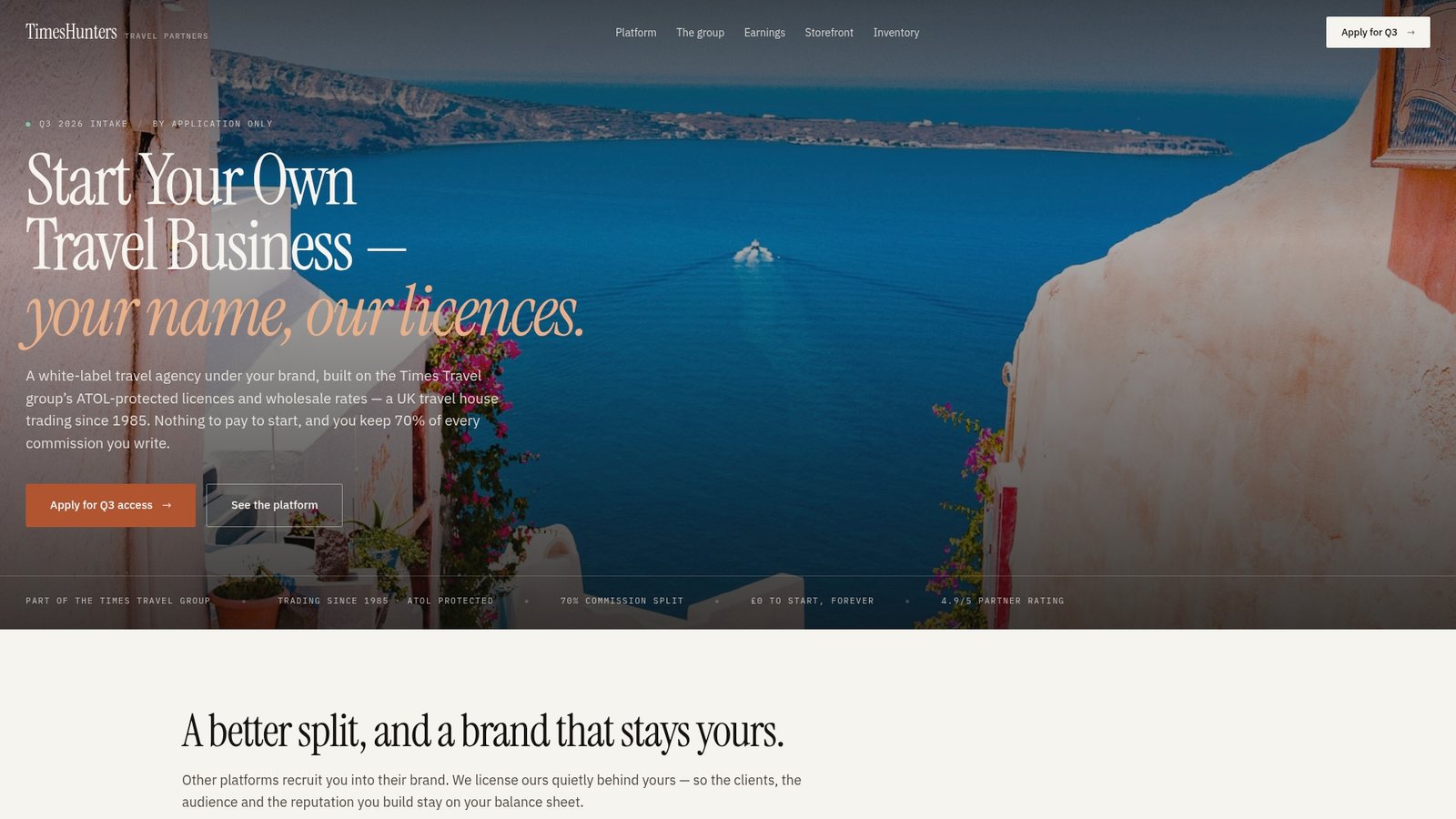
Before committing to any platform, run a short evaluation: confirm the ATOL protection is genuine, ask exactly how the commission split works, and request a demo along with sample partner materials so you can see the branded site in action. Compare contract terms and ask for partner references if you’re unsure. When you’re ready, visit the TimesHunters partner platform to request a demo and see what a fully branded, insured group travel business looks like before you launch your first trip.
Sources
- Ask-an-Advisor: How Can I Start With Groups? Should I Let Other Advisors Sell into My Groups?
- Booking a Group: Step-by-Step Guide for Travel Advisors – TIQUE
- The future of group travel marketing — planner resources
FAQ
How small can a group booking realistically be?
Many niches support viable groups from as few as 8 to 10 travellers, or around five cabins on a cruise, particularly in premium or specialist markets.
What’s the difference between a known group and a speculative group?
A known group is sold to people who already trust you, a client base, a club, a corporate account, while a speculative group is marketed to a colder audience and carries higher risk but often higher margin potential.
How do I price a group trip without losing money?
Work backwards from the income you need, then build in planning time, leader incentives, processing fees, and an attrition buffer before you land on a per‑person price.
What contract clause causes the most problems for new group sellers?
Attrition penalties and cut‑off dates catch out more new sellers than anything else. Misreading these clauses can turn a filled trip into a financial loss.
Do I need my own ATOL licence to sell group travel?
Not necessarily. Platforms such as TimesHunters let you sell under ATOL‑protected licences without holding your own, while still paying 70% commission on bookings.