UK Agent Playbook: Keep More Commission When Upselling Travel Extras
Action-first scripts, ABTA and ATOL checkpoints, and quick tests to raise attach rates and keep more commission when upselling travel extras for UK agents.
The single most effective upsell approach is matching the right extra to the right moment in a traveller’s journey, not pitching everything at once. Timed, relevant offers convert better and protect trust: travel insurance sits naturally at booking, lounge access belongs closer to departure. ABTA guidance and ATOL Standard Term 1 exist to keep those offers transparent and compliant, so build your pitch process around both from day one.
TL;DR:
- Offering travel insurance at booking and lounge access closer to departure aligns best with the traveler’s mindset and improves conversion rates.
- Limiting offers to one or two per touchpoint and personalizing them based on trip type enhances client receptiveness and reduces complaints.
- Transparent and clear presentation of extras, including separate pricing and timely issuance of ATOL certificates, is mandatory under ABTA and ATOL regulations.
- Mapping product offers to pre-trip, at-trip, and post-trip stages, with tailored messaging and timing, significantly increases upsell effectiveness.
- Using benefit-focused language and simple tiered options, such as good, better, best, encourages more clients to choose higher-margin upgrades.
Table of Contents
- High-impact extras and when they usually convert
- When to offer: mapping extras to the traveller journey
- How to pitch: scripts, psychology and techniques that work
- Pricing transparency and your ABTA and ATOL obligations
- Measuring performance and running simple tests
- What separates a smooth upsell from a complaint
- How TimesHunters helps you keep more of what you sell
- Sources
- FAQ
High-impact extras and when they usually convert
Some add-ons earn their place in almost every itinerary, others only work for specific trip types. Knowing which is which saves you from pitching low-value extras that annoy clients without moving commission.
- Travel insurance: sell at the point of booking, when the client is already thinking about protecting their spend.
- Airport lounge access: works best once flights are confirmed and departure is close, when comfort feels tangible.
- Private or shared transfers: pitch alongside accommodation confirmation, framed as removing a logistics headache.
- Seat upgrades: offer once check-in opens, when the client can picture the actual flight.
- Extra baggage allowance: raise it early for long-haul or multi-stop trips, where packing concerns surface sooner.
- Excursions and day tours: introduce after the main booking, once the destination feels real.
- Fast-track security or priority boarding: works well for business travellers pressed for time.
- City or attraction passes: suit families and first-time visitors planning a packed schedule.
- Rail passes: fit multi-destination European itineraries better than single-city stays.
Insurance, lounge access and upgrades typically carry stronger margins than baggage or passes, so prioritise your pitch time accordingly. Transfers and insurance both need clear optional language: never let a client assume either is included when it isn’t.
When to offer: mapping extras to the traveller journey
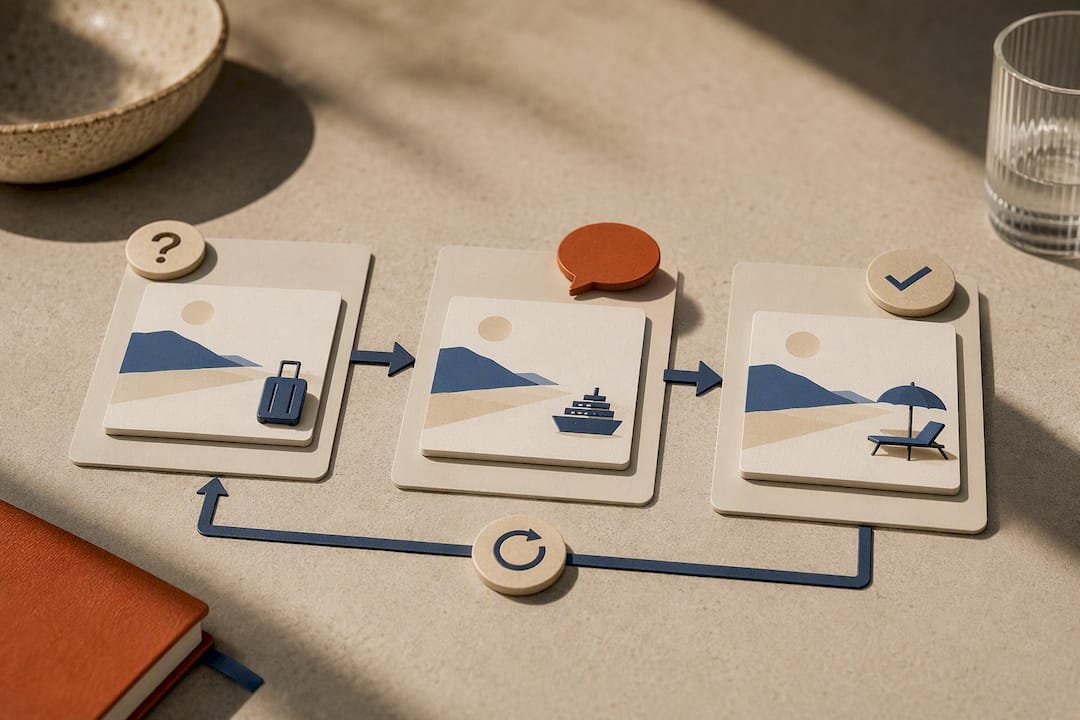
Product fit matters, but timing decides whether an offer lands or gets ignored. The modern add-on stack framework splits the journey into three windows, and treating each differently is what separates agents who convert from those who get tuned out.
- Pre-trip: from enquiry to a few days before departure. This is where insurance, upgrades and excursions sit, delivered through the booking call, a follow-up email or a proposal document.
- At-trip: from check-in through to landing. Lounge access, fast-track and transfers belong here, triggered by pre-departure SMS or a prompt at the airport desk.
- Post-trip: after return. This window suits loyalty offers and early booking incentives for the next trip, delivered through a re-engagement email.
Mapping products to these stages improves both conversion and how the client perceives the offer, according to the same add-on stack research, which also found that timing often matters more than how many products you list.
Three rules keep this manageable: limit yourself to one or two offers per touchpoint so nothing feels like a hard sell, personalise by trip type rather than sending the same list to every client, and lead with convenience or risk reduction rather than price. A family booking a beach holiday and a solo business traveller should never see the same pitch.
Pro Tip: Send the at-trip offer as a short SMS two to three days before departure, when clients are actively thinking about the trip but haven’t started packing yet.
How to pitch: scripts, psychology and techniques that work
Start every upsell conversation with three quick questions: “Is anyone in your group anxious about flying or health cover?”, “How much luggage are you planning to bring?”, and “Do you have any time pressure at the airport?” The answers point you straight to insurance, baggage or fast-track without guesswork.
- Booking call: “Most clients travelling to [destination] add annual multi-trip cover here. Want me to include a quote?”
- Confirmation email: “Your flights are booked. Lounge access from £X makes the wait before boarding a lot more comfortable.”“”
- Pre-departure SMS: “Two days to go. Fancy skipping the security queue with fast-track for £X?”
- At-desk pitch: “We’ve got a seat upgrade available for this flight if you’d like more room.”
- Declined offer recovery: “No problem at all. If you change your mind, this stays available right up until check-in.”
- Post-trip loyalty offer: “Book your next trip within 30 days and we’ll lock in your current rate.”
Framing benefits rather than features, offering clear optionality, and using real urgency (an actual deadline, not manufactured pressure) all lift take rates. Avoid overselling with more than two offers per touchpoint, hidden fees that surface only at payment, and bundles so confusing the client can’t tell what they’re paying for.
Pro Tip: If a client hesitates, ask what’s putting them off rather than repeating the pitch. Most objections are about clarity, not price.
Pricing transparency and your ABTA and ATOL obligations
Presenting extras clearly isn’t just good practice; it’s a trade requirement. ABTA’s code of conduct guidance requires transparent price indications for optional extras and says any non-optional fixed costs must appear in the headline price, not added later. Where you’re selling flight-inclusive or protected elements, ATOL Standard Term 1 obliges you to give specific information before and after the sale and to issue an ATOL certificate on payment.
Build this checklist into every booking flow:
- Show optional extras as clearly labelled add-ons, never pre-ticked.
- Keep protected and non-protected amounts separate on the confirmation.
- Issue the ATOL certificate at the point of payment, not after.
- State insurance and transfers as optional in writing, not just verbally.
- Review confirmation templates against current ABTA guidance each year.
Measuring performance and running simple tests
Track four numbers: attach rate (percentage of bookings with at least one extra), incremental margin per booking, conversion by channel (call versus email versus SMS), and complaint rate tied to add-on sales. If complaints rise alongside attach rate, your pitch script needs tightening, not scaling back.
- Test benefit-first wording against feature-first wording in confirmation emails.
- Test sending the at-trip offer two days before departure versus five days before.
- Test presenting three price tiers instead of a single yes-or-no offer.
Branded fares presented as a clear good, better, best hierarchy typically move many buyers above the lowest price point, according to IdeaWorksCompany’s airline retail research, which found three tiers usually outperform an open-ended list. Segment further by trip length and traveller type: business travellers respond to time-saving extras, families to convenience, long-haul travellers to comfort.
What separates a smooth upsell from a complaint
A well-timed insurance offer at booking, followed by a lounge suggestion once flights firm up, tends to lift attach rates without a single client feeling pushed. The opposite happens when agents bundle extras into one lump price: clients can’t see what they’re paying for, and that’s when complaints follow. The fix is always the same, break the bundle apart and let the client choose each piece.
— Sam
How TimesHunters helps you keep more of what you sell
Upselling only pays off if you’re keeping a meaningful share of the commission on every booking. A white-label travel agency platform lets you run a branded travel business under your own name while operating on ATOL-protected licences, so the compliance groundwork covered above is already built into the infrastructure.
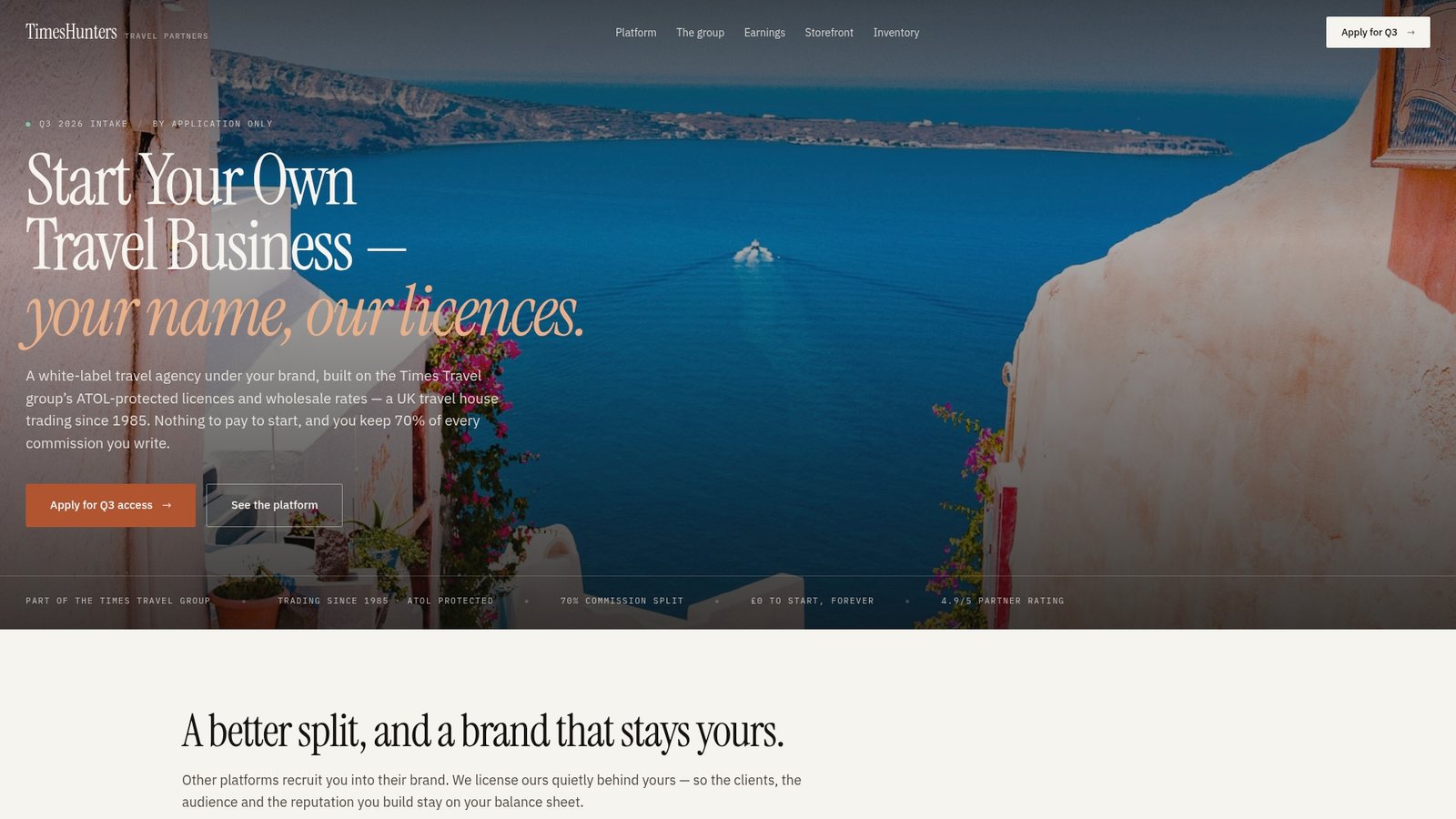
If you’re ready to build a branded agency around your own client list, the white-label travel agency platform page walks through how the commission split and wholesale access work. You can also look at what convenience-driven upsells look like in business travel for more on why timing matters so much at the point of sale. Start exploring the setup at TimesHunters.
Sources
- The modern add-on stack: What to offer pre‑trip vs at‑trip vs post‑trip | Protect Group
- ABTA code of conduct guidance (price indications)
- 2025 almanac of airline retail (IdeaWorksCompany)
FAQ
What are good examples of upselling in travel?
Travel insurance at booking, lounge access or seat upgrades closer to departure, and transfers or excursions once accommodation is confirmed all count as strong examples. Each works because it’s offered at the moment the client is already thinking about that part of the trip.
How do you attract customers to a travel agency?
Clear, transparent pricing and add-ons presented as genuine options rather than pressure tend to build the trust that brings repeat and referred clients. Personalising offers by trip type, following ABTA’s guidance on price indications, also reduces the complaints that damage reputation.
What are effective upselling techniques for agents?
Mapping offers to the pre-trip, at-trip and post-trip stages of the journey, asking discovery questions before pitching, and limiting each touchpoint to one or two offers all improve take rates. Framing extras around convenience or risk reduction works better than leading with price.
What upselling techniques work best for hotel-style extras?
Presenting three clear tiers, such as a basic room, an upgraded room and a suite, typically moves guests toward the middle option more effectively than a simple yes-or-no upgrade offer. This good, better, best structure is documented in airline retail research and applies just as well to accommodation upgrades sold by agents.