
Sell Live Travel Quotes Compliantly: 8 Step Launch for UK Agents
Launch compliant instant live travel quotes in eight steps. Covers UK package/LTA tests, required disclosures, revalidation rules, pricing models and a...

Real time travel quotes are instant live pricing proposals for travel products: hotels, cruises, tours and packages priced from a supplier feed at the moment a customer asks. They speed up sales and make you look sharp in front of a client, but they only work when you pair them with the correct contracting and financial protection disclosures. Partners can access this kind of live pricing through platforms such as TimesHunters, which pairs wholesale rates with ATOL protected licences.
TL;DR:
- Live travel quotes are limited by black-out fares, held inventory, and immediate revalidation, so prices may not be guaranteed at purchase.
- Differentiating a package from a simple quote depends on sale structure, not presentation, and must be clearly disclosed to avoid legal risks.
- Supplier connectivity requires real-time revalidation, webhooks, and fallback options to ensure quote accuracy and operational resilience.
- Presenting clear expiry times and immediate customer notifications helps avoid complaints related to rate discrepancies during the actual purchase.
- Using platforms like TimesHunters simplifies setup with pre-licensed integrations, automated booking, and higher commission opportunities for white-label partners.
Table of Contents
- Why instant, live quotes matter for your travel business and which products support them
- Regulatory and financial protection checklist for instant quotes
- Technical requirements: supplier connectivity, revalidation and operational webhooks
- How to present live quotes without triggering complaints
- Commercial model and margins: building live quotes that pay your business
- Implementation checklist: stepwise tasks to launch real-time quoting
- What switching to instant quotes actually feels like
- TimesHunters: a turnkey route to instant, compliant quotes
- Primary sources and further reading
- Sources
- FAQ
Why instant, live quotes matter for your travel business and which products support them
Speed sells. A customer who gets a firm price in seconds rather than waiting for a callback is more likely to book there and then, and a live quote also lets you compare two or three options side by side without losing the moment. For an aspiring travel entrepreneur working from a laptop, that immediacy does the job a shop window used to do.
Coverage varies by product. Hotels tend to have the deepest live connectivity because most chains and wholesalers run modern booking APIs. Many cruise lines now expose live cabin pricing too, though allocation can be thin on popular sailings. Tours and packaged holidays are patchier: some operators feed live rates, others still rely on negotiated allotments or manual quoting sheets that cannot be automated.
Three practical limits show up constantly:
- Black-out fares that a feed will not display even though the supplier technically has the product.
- Held inventory that another agent is already quoting, which can vanish before your customer pays.
- Revalidation required immediately before payment, because a price shown five minutes ago is not guaranteed.
Set expectations accordingly and treat a live quote as a strong indication of price, not a locked contract until it is confirmed.
Regulatory and financial protection checklist for instant quotes
The moment you assemble two or more travel services into one sale, you may have created a package rather than a simple quote, and that changes what you must tell the customer. Government guidance is clear that whether a sale counts as a package, a linked travel arrangement (LTA) or a standalone booking depends on the structure of the sale, never on how polished or fast the quote looks.
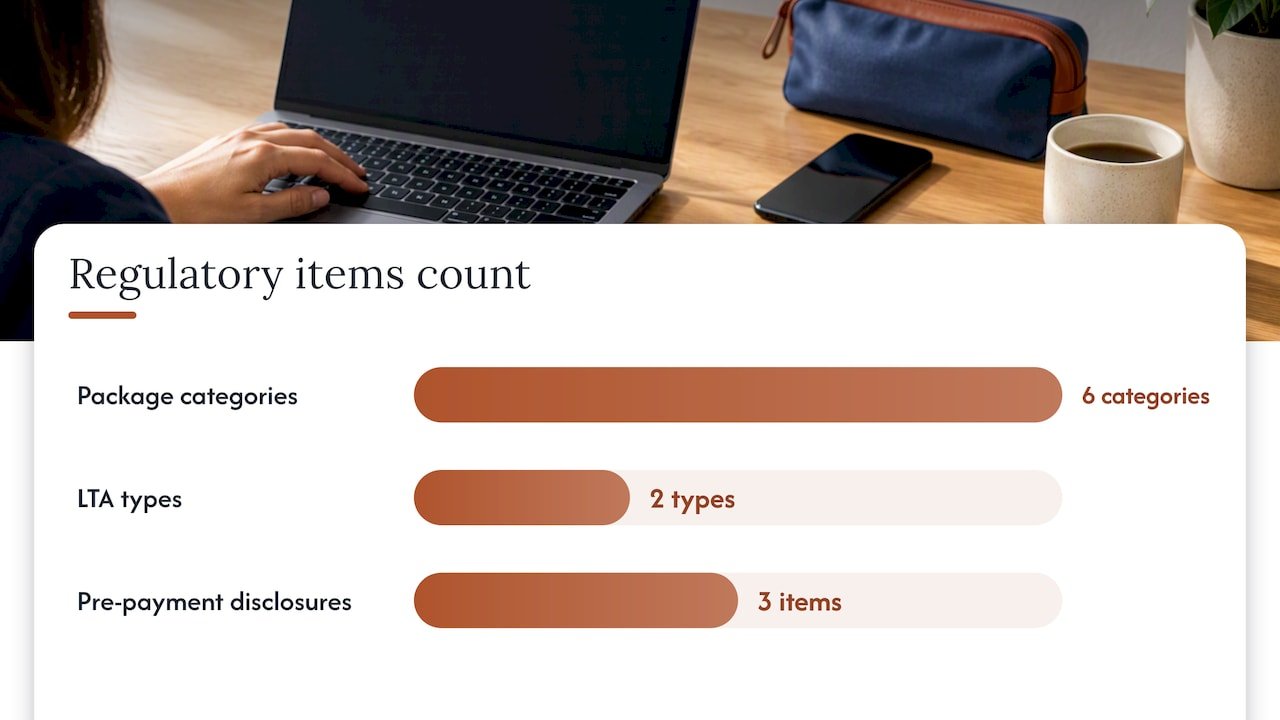
The Package Travel Regulations 2018 guidance sets out six package categories and two types of linked travel arrangement, including a specific test: bookings made through separate but linked online processes within 24 hours can count as an LTA even if paid separately.
Before you take payment, your quoting screen should make three things obvious:
- Who the contracting party is: you, the wholesaler, or the underlying supplier.
- What financial protection applies, whether that is ATOL, an ABTA scheme, or none.
- How long the quoted price stays valid before it needs revalidating.
One rule decides the whole category: whether the sale is structured as a single contract or linked booking process, not how the quote is presented. Get that call wrong and you risk selling an unprotected package as if it were a simple service.
Technical requirements: supplier connectivity, revalidation and operational webhooks
A live quote is only as reliable as the plumbing behind it. Four connection types cover most of the market: GDS terminals for flights and some hotel chains, wholesaler APIs for packaged rates, channel manager feeds for independent hotels, and direct supplier integrations for cruise lines and tour operators who run their own systems.
To turn a quote into a bookable, supportable product, your platform needs:
- Price and availability revalidation immediately before payment is taken.
- A booking API that can create, amend and cancel a reservation without manual intervention.
- Webhooks that push status changes, such as a supplier cancelling a room, back to your system in real time.
- Timed quote holds so a customer sees a countdown rather than a price that silently expires.
- Fallback rates or alternative options ready to show the moment a quoted rate disappears.
Resilience matters as much as connectivity. Caching a price for too long risks showing stock that has already gone, while refreshing too aggressively can trip a supplier’s rate limits and get your feed throttled. A proper test environment, separate from live bookings, lets you run end-to-end checks before a new supplier connection goes anywhere near a paying customer.
Pro Tip: Run a weekly reconciliation between your quote log and actual supplier confirmations, it catches silent revalidation failures long before a customer does.
How to present live quotes without triggering complaints
The way you show a live price on screen matters almost as much as the number itself. A clear banner stating the price’s validity window and the supplier’s name gives the customer a fair expectation, rather than the impression of a fixed, guaranteed fare.
Where the combination of services you are quoting creates a package or an LTA, say so on the same screen, along with the protection status that applies. Advertising standards guidance is explicit that firms using shared or third-party pricing systems must take reasonable steps to avoid showing a live price that is no longer available by the time the customer tries to pay.
Practical habits that reduce friction:
- State a firm expiry time on every quote rather than a vague “subject to availability”.
- Ask for a deposit only once the price has been revalidated, not off the original quote.
- If a rate disappears after the customer has committed, notify them immediately and offer a comparable fallback rather than silence.
Complaints tend to cluster around one failure mode: a live price shown in marketing or on-screen no longer matching what’s available at purchase, which is exactly the scenario advertising guidance asks firms to guard against.
Commercial model and margins: building live quotes that pay your business
Every live quote needs a margin built in before it ever reaches the customer. Most agents use one of three methods: a flat percentage markup on the supplier’s net rate, a fixed service fee added on top, or a blended approach that rounds the final price to a clean figure once currency conversion is applied.
Commission timing depends on the supplier or wholesaler you work through, and reconciling what you are owed against what actually lands in your account is a routine but essential task, usually done monthly against supplier statements.
- Percentage markup works well on high-value bookings like cruises and tours.
- Flat service fees suit lower-margin products such as standalone hotel nights.
- Currency rounding should always favour a clean, transparent customer price, not a hidden margin.
As a worked, illustrative example: a package booking through a white-label partner model that pays out a commission split similar to the structure TimesHunters offers its partners. At such a split, the partner’s share is a substantial portion of the net booking amount, before any of their own service fees are added on top.
Implementation checklist: stepwise tasks to launch real-time quoting
Launching live quoting is a sequence, not a single switch. Work through it in order rather than trying to do everything at once.
- Confirm supplier contracts and check whether each connection supports live pricing or only static rate sheets.
- Decide your protection approach for each product type, package, LTA or standalone service, before building any pricing rules.
- Connect supplier feeds and implement revalidation logic so no price reaches a customer unchecked.
- Add webhooks for booking status changes and set a clear quote expiry with a fallback rate ready to show.
- Write disclosure scripts for staff covering contracting party, protection status and price validity.
- Train staff on when a combination of services becomes a package under the current guidance.
- Run test bookings through to reconciliation before taking a single live customer payment.
- Soft launch with a small group of clients and monitor complaints, cancellations and revalidation failures closely.
What switching to instant quotes actually feels like
Moving from manual quoting to live pricing changed the pace of every client conversation. Quotes that used to take a day came back in seconds, and clients who were shopping around stopped drifting off to compare elsewhere.
The early mistakes were predictable in hindsight: a couple of quotes went out without a clear protection disclosure, and one supplier connection wasn’t revalidating properly, so a customer nearly paid for a room that had already gone. Testing that revalidation step properly, before it touches a real booking, is the single habit that cut cancellations the most.
— Sam
TimesHunters: a turnkey route to instant, compliant quotes
Building your own supplier connections, revalidation logic and disclosure screens from scratch is a serious technical undertaking for a solo entrepreneur. TimesHunters offers a shortcut: a branded booking site running on wholesale hotel, cruise, tour, villa, safari camp and rail inventory, with ATOL-backed licences already in place and automated booking management handling the operational side.
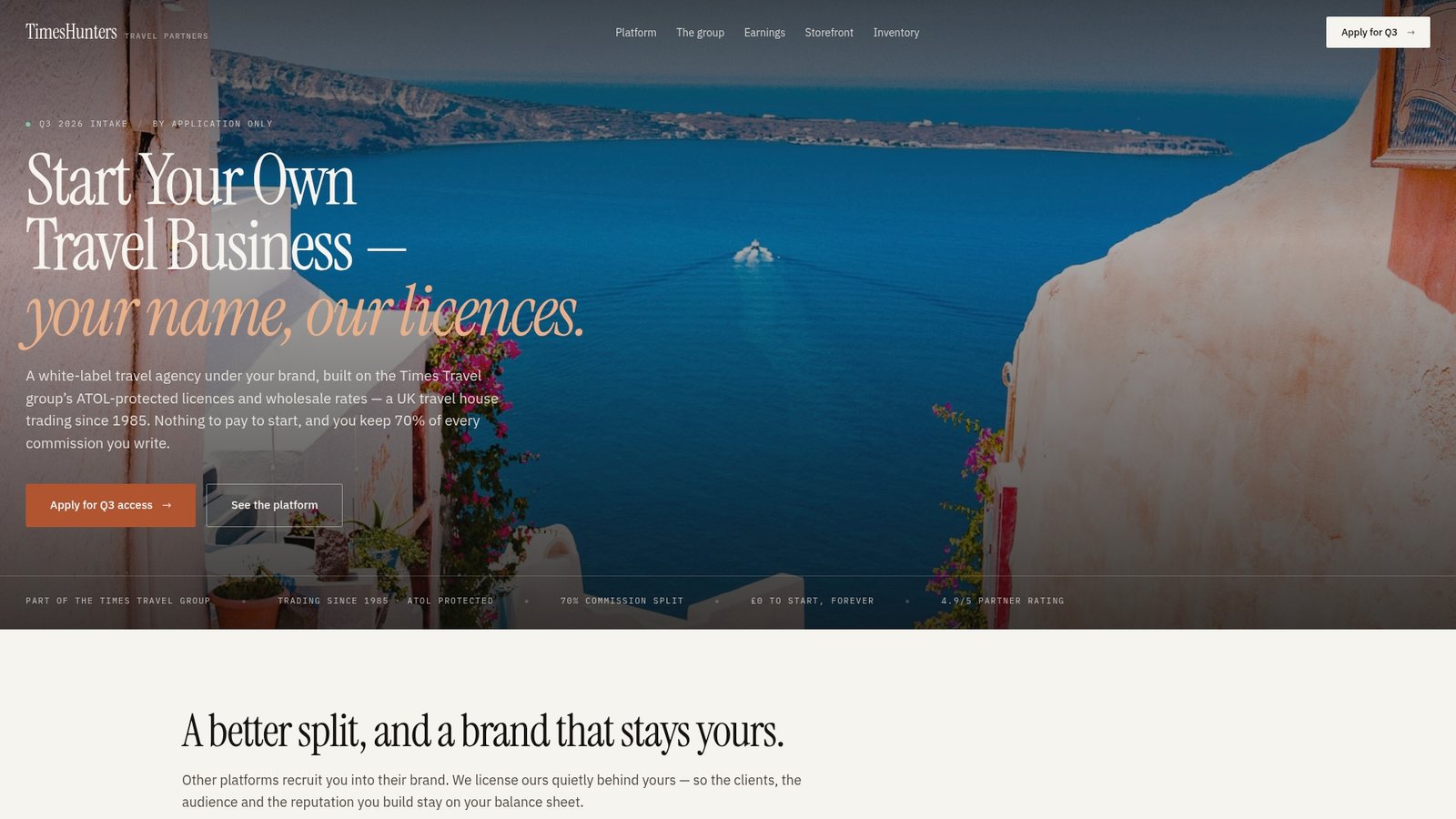
- A branded site under your own name, with the underlying licence invisible to your clients.
- Wholesale rates and automated booking management rather than manual quoting sheets.
- A commission split on bookings higher than typical rates seen in standard online travel agency arrangements.
If you would rather focus on clients than on building supplier integrations yourself, explore the white-label travel agency model and see how the partner pack works.
Primary sources and further reading
- Better protection for UK holidaymakers, government guidance on package and LTA classification.
- Package Travel Regulations 2018 guidance, detailed category tests.
- ABTA Code of Conduct guidance, advertising and live pricing advice.
- Package versus linked booking examples, for illustrating the distinction in practice.
Sources
- Gov
- Package Travel Regulations 2018: guidance for businesses (gov.uk PDF)
- ABTA code of conduct guidance (June 2025)
FAQ
Does a real-time travel quote automatically create a package?
Not automatically. Whether a sale becomes a package depends on how it’s structured, such as a single contract or a linked online booking within 24 hours, not on how the quote was generated or displayed.
Do I always need ATOL protection to sell instant quotes?
Only when the products you’re combining meet the package or linked travel arrangement tests set out in the Package Travel Regulations guidance. A single standalone hotel booking, for example, typically falls outside those rules.
Why does a live quote sometimes disappear before payment?
Live prices come from supplier feeds that update constantly, so a rate can sell out or change between the moment it’s quoted and the moment payment is attempted. Reasonable revalidation before checkout, and a fallback offer when a rate vanishes, are the standard ways to handle it.
How much commission can a white-label travel partner earn?
It depends on the platform’s own commercial terms.
What should a live quote screen disclose before a customer pays?
It should show the contracting party, the applicable financial protection status, and how long the quoted price remains valid. This keeps the sale aligned with the disclosure principles set out in ABTA’s guidance on advertising and live pricing.