
Travel Proposal Conversion: Turn Enquiries into Bookings
How independent UK travel advisors turn enquiries into confirmed bookings: reply speed, qualifying questions, proposal content, follow-up timing and what to measure.

Travel proposal conversion is the share of proposals you send that end in a paid booking. For a new independent advisor it is decided by four habits: replying fast, asking the right questions before you price anything, sending one clear priced recommendation, and following up on a schedule. The trip itself rarely loses the sale. The process around it usually does. And because you earn commission only when a booking completes, every proposal that goes quiet is unpaid work.
This guide is for people building their own travel brand: freelancers, hospitality owners, influencers and professionals with an existing audience. It walks through the sales process step by step, with the numbers worth tracking and the legal detail a UK proposal has to get right.
TL;DR
- Reply to every enquiry the same working day, ideally within the hour, with a short personal message rather than a finished proposal.
- Ask a handful of qualifying questions (dates, party, budget, style, who decides) before you build anything.
- Send one recommended option with a full total price, a validity date and a single next step.
- Follow up at about 48 hours, again at 5 to 7 days with something new, then close the loop once.
- Track three timestamps per enquiry and your stage-to-stage conversion, so you fix the leakiest step first.
Table of Contents
- What proposal conversion actually measures
- Speed: the first reply sets the tone
- Qualify before you build
- What a UK proposal needs to contain
- Present one clear recommendation
- Follow up without pushing
- Where enquiries leak, and what to measure
- Our view: conversion is a systems problem
- Make every proposal count
- FAQ
- Sources
What proposal conversion actually measures
A proposal is a pre-booking sales document. It sets out the trip you recommend, what is included and what it costs, so the traveller can decide. It is not a reservation. A quotation is narrower: a price for a defined set of services. An itinerary comes later, once everything is confirmed.
That difference matters for how you count. A verbal yes, or a polite “looks lovely”, is not a booking. The safest definition of “won” for a small agency is a deposit received, the lead traveller’s details in hand and supplier space held. Count conversion from that point, not from enthusiasm.
There are two ratios worth separating:
- Enquiry to proposal: how many enquiries you actually quote.
- Proposal to booking: how many quotes turn into a paid deposit.
Mixing them hides where you lose people. A low overall number could mean you are slow to quote, or that your quotes are weak. The fixes are different.
Speed: the first reply sets the tone
Most trade guidance agrees on one point: the first reply should be quick and personal, and it does not need to be a full proposal. A good first message does three small jobs. It acknowledges the person by name and repeats their dates, destination and party size. It says what happens next and roughly when. And it asks the one or two questions that would change your answer.
Some practical targets:
- Reply on the same working day as a minimum. Replying within the first hour is the stronger habit, and many agents using messaging apps aim for much faster during working hours.
- Give a date for the proposal in that first message, for example “you will have my recommendation by Thursday noon”. It stops the customer shopping around while they wait.
- Do not delay the first reply to polish the proposal. A short, substantive holding reply beats a perfect document that lands two days later.
Travellers often speak to two or three advisors. The one who responds first with something useful usually has the advantage, and a slow answer is read as a preview of how you will handle their money and their problems on the trip.
Reported benchmarks put the average first-response target for email enquiries at under four hours, and the same source says email and web enquiries convert at a lower rate than phone calls or walk-ins (TravelSalesIQ, November 2025). Treat these as industry guide figures rather than promises. Your own numbers will differ, and tracking them is the point of the measuring section below.
If your volume is small, you can win here simply by being tidy. Our travel agent email templates cover the first reply, the proposal cover note and each follow-up, so you are not rewriting the same message every time.
Qualify before you build
The most common cause of a proposal that goes nowhere is a proposal built on guesses. Spend ten minutes up front, by phone or a single consolidated email, and establish:
- Dates and flexibility. Fixed school holidays are a different job from “sometime in spring”.
- Who is travelling. Numbers, ages of children, and how rooms will be shared.
- Budget. Including whether flights are part of it, and which airport they want to leave from.
- Style and pace. Boutique or big resort, relaxed or packed, the interests that matter.
- Occasion and practical needs. Honeymoon, milestone birthday, mobility or dietary requirements.
- Who decides, and by when. If a partner or parent has the final say, your proposal needs to work for them too.
Ask these in one go rather than drip-feeding questions across a week. Each extra back-and-forth adds delay and gives the traveller a reason to drift. If you want the conversation itself scripted, our travel sales scripts use three to five questions to get this information without it feeling like a form. For the wider process, seven stages of selling travel puts fit before price.
Qualifying also protects your time. If the budget cannot match the brief, you find out before you spend two hours building a proposal, and you can reset expectations honestly.
What a UK proposal needs to contain
A proposal that wins is clear enough that the traveller can picture the trip and the total cost without asking you anything. In the UK there is also a legal floor when you sell a package.
Under the Package Travel and Linked Travel Arrangements Regulations 2018, the key pre-contract information must be given to the traveller before they are bound by a package contract. The government’s guidance explains that this pre-contractual information is binding and must not be altered unless the traveller expressly agrees. It includes the total price of the package and the details of the organiser, as well as cancellation terms. In practice, the information a package customer should receive covers:
- destination, dates, and departure and return times;
- transport and its details;
- accommodation and its category;
- meals, excursions and other included services, plus transfers;
- suitability for travellers with reduced mobility;
- contact details for the organiser and retailer;
- total price, taxes and how and when payment is due;
- passport, visa and health formalities;
- cancellation rights and any charges;
- relevant insurance.
The government guidance says that where an item does not apply, for example there are no meals included, it does not need to be listed. If you are unsure which category a particular sale falls into, read the guidance itself, and check with the organiser whose licence you trade under. A white-label model through an ATOL-protected licence handles the financial protection side, but you still need to write a proposal that is accurate and complete.
Beyond the legal content, a good proposal has these elements:
- A short “why this” paragraph. Explain why you chose this hotel or cruise cabin for their brief. It shows you listened.
- A total price, up front. Avoid “from” pricing in the proposal itself. The traveller wants to know what they will pay.
- Clear inclusions and exclusions. Flights, transfers, baggage, resort fees, excursions.
- A validity date. Prices and availability change, so a genuine “held until Friday” gives a legitimate reason to decide.
- One next step. “Reply YES and I will send the deposit link” is easier than a menu of options.
If you would rather not start from a blank page, there is a travel proposal template you can adapt and send in minutes.
Present one clear recommendation
It is tempting to send three hotels, four room types and a day-by-day plan to prove how much work you did. It tends to backfire. A wall of choices hands the traveller a reason to pause, or to forward your document to a cheaper competitor for comparison.
A structure that works well for most enquiries:
- One primary itinerary, priced as a single total.
- One alternative that you would genuinely recommend, for example a step up in room category or a different resort at a lower price.
- A single call to action with a deadline.
Some advisors prefer a good, better, best format with three options laid out identically, so the customer is choosing between your options rather than between you and someone else. Either approach is fine. What does not work is a loose pile of options with no recommendation. You are the expert, and the traveller is paying for your judgement.
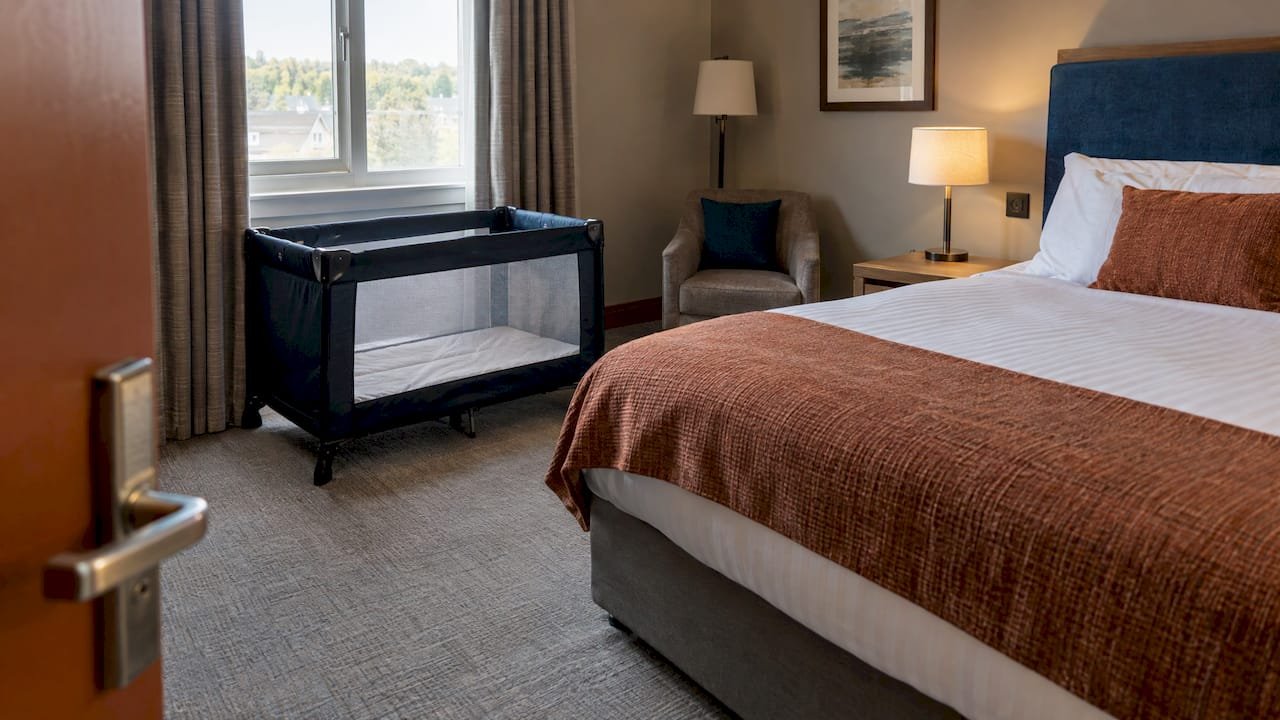
A tailored proposal also matters because a generic reply to a specific enquiry feels written for somebody else. Echo their words: the anniversary, the toddler who needs a cot, the husband who hates long transfers. Then add one or two suggestions they did not ask for, such as a better-placed room or a private transfer. That is where upselling travel extras lifts both the value of the booking and the traveller’s confidence.
One format tip: a web page or a clean PDF that is easy to read on a phone beats a long attachment. Most people will first open your proposal on mobile.
Follow up without pushing
The follow-up is where most small agencies lose the most business, mostly through silence rather than through mistakes. One analysis of travel sales data reports that a sizeable share of qualified enquiries never receive a quote, and that around 30 to 45% of quotes get no follow-up at all (TravelSalesIQ, June 2025). The same source argues that closing that gap is the highest-return fix for most agencies. These are industry estimates, not guarantees, but the direction is clear: the advisor who simply follows up has an edge.
A simple rhythm that does not feel pushy:
- At about 48 hours: a light check-in. “Did the proposal come through clearly? Happy to adjust anything.”
- At 5 to 7 days: a second message that adds something new, such as a limited availability note, a change in price, a photo of the room they would have, or an answer to a question they raised.
- One final message: tell them you will hold the dates until a named day, thank them, and let it go.
Adding value each time is the key. “Just checking in” three times is nagging. “The room type you liked has two left on those dates” is information.
A few closing habits to avoid, drawn from common sales-coaching advice (TravelSalesIQ, September 2025): never actually asking for the booking, discounting the moment the customer hesitates, apologising for your price, and filling a silence by talking. State the price, ask for the booking, then pause. If price is the objection, find out what the customer values before you cut your margin.
Where enquiries leak, and what to measure
You do not need an elaborate system. You need a spreadsheet or simple pipeline and the discipline to update it. For every enquiry, record three timestamps:
- when it arrived and when you first replied;
- when the proposal went out;
- when the customer decided, or when you closed it.
Then define your stages and stay consistent. A workable set for a small agency is: enquiry received, qualified, proposal sent, in revision, deposit received (won), lost. Keep “proposal in revision” separate from “proposal sent” so you can see how often your first attempt misses the brief.
Review monthly and look at stage-to-stage conversion rather than one overall figure. If many enquiries never reach a proposal, your problem is speed or qualifying. If many proposals never get a reply, look at your follow-up and the clarity of your next step. If many proposals are revised repeatedly, your questions at the start were not thorough enough.
As a rough comparison point, one industry source puts the typical share of original enquiries ending in a confirmed booking at 25 to 35%, with top performers reaching 40 to 55% (TravelSalesIQ). Your results will depend on the destination, price point and where your enquiries come from. Compare yourself with your own previous months first.
Also track the source of each enquiry: your website, Instagram, a referral, a lead magnet download. Enquiries from referrals and existing relationships often convert better than cold web traffic, and knowing which channel pays tells you where to put your effort. Our guides on travel lead magnets and travel agency SEO cover how to bring in better-fitting enquiries in the first place.
Our view: conversion is a systems problem
We think new advisors often blame themselves when a proposal goes quiet. Usually the cause is the process: a slow reply, a proposal that took two days to produce, a follow-up that never got sent because there was no time.
That is why our model is built around taking the repeatable work off your plate. Partners get instant pricing proposals, a branded booking site, automated client follow-up and managed payments, so your hours go into the conversation with the traveller rather than into admin.
It also changes what each conversion is worth. Our partners keep 70% commission on bookings, and the clients and the brand are yours. When you are paid properly for each booking, it makes sense to invest the time in a tailored proposal and a careful follow-up.
Start with the basics in this guide: reply fast, ask good questions, recommend one thing clearly, follow up twice. Do those consistently and your numbers move.
Sam
Make every proposal count
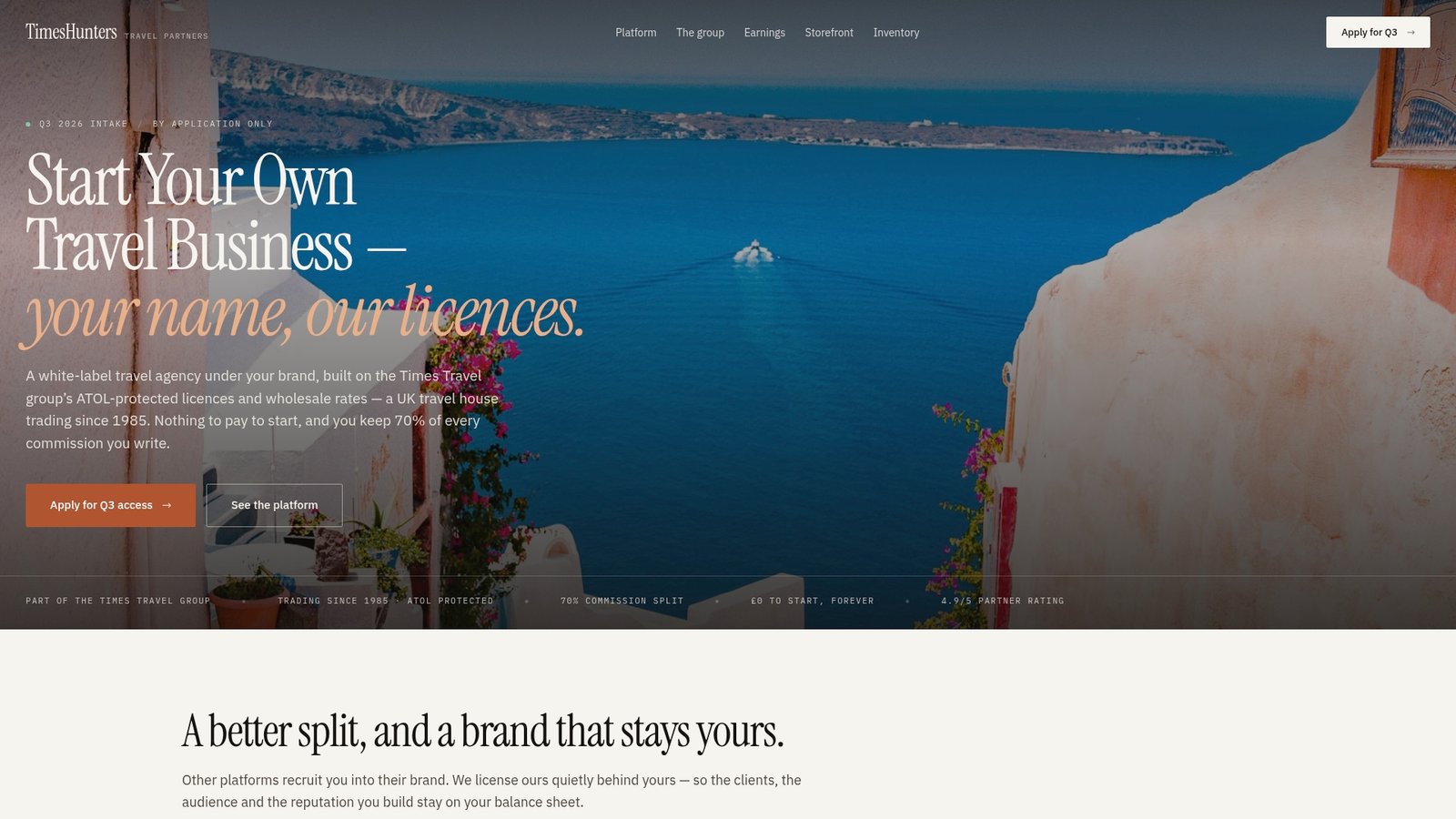
If you are building a travel business under your own name, the platform you run it on shapes how many proposals you can send and how professional they look. TimesHunters is a white-label travel agency platform that lets you trade under your own brand using Times Travel group’s ATOL-protected licences, with no cost to start. You get access to wholesale hotel, cruise and tour inventory, instant pricing proposals, automated booking management and automated client follow-up, along with training and support. The licence’s branding is invisible to your clients, so the relationship stays yours.
One partner reports that their income per booking rose from £400 to £1,200 after joining. Results depend on the individual, but the structure is clear: partners receive 70% commission, compared with the 4% typically offered by online travel agencies.
See what is included on the white-label travel agency page, or read how travel agent support takes you from onboarding to launch. If you want to understand what you could earn per booking first, the guide to travel agent commission rates sets it out.
Once a customer says yes, the work is not finished. Booking confirmation automation keeps the handover from proposal to confirmed trip tidy, which is part of what earns repeat business and referrals.
FAQ
How fast should I reply to a travel enquiry?
Aim for the same working day at the very least, and within the first hour when you can. The first message does not need to be a proposal. It should acknowledge the request, repeat the key facts, say when you will send your recommendation and ask the questions that change your answer.
What is a good proposal-to-booking conversion rate?
Industry guides report quote-to-book ratios of roughly 30 to 40%, though figures vary by source, destination and price point. Track your own first, split into enquiry-to-proposal and proposal-to-booking, then improve the weakest step. A rate you can improve month on month is more useful than any benchmark.
Should I send several options or just one?
Send one primary recommendation priced as a total, plus at most one alternative you would genuinely suggest. Too many choices give the traveller a reason to pause or compare elsewhere. End with one clear next step and a validity date.
How many times should I follow up on a proposal?
Two follow-ups and a final closing message is a sound pattern: a check-in at about 48 hours, a value-adding message at 5 to 7 days, then a last note with a hold date. After that, let it go politely and keep the door open for later.
When can I call a travel enquiry a confirmed booking?
Only when the deposit has cleared, the lead traveller’s details have arrived and supplier space is held. Until then it is a proposal, however keen the customer sounds. Counting from the deposit keeps your conversion figures honest.
Sources
- Package Travel and Linked Travel Arrangements Regulations 2018 guidance (GOV.UK)
- Email Sales Techniques for Travel Agents (TravelSalesIQ, November 2025)
- Science of Travel Sales: Conversion Data Analysis (TravelSalesIQ, June 2025)
- 15 Closing Techniques Travel Agents (TravelSalesIQ, September 2025)