Online Booking vs Consultative Selling: Which Builds a Travel Business?
Online booking or consultative selling? See how each earns for a UK travel entrepreneur, and how to combine advice with a branded online booking site.

If you are starting a travel business, the choice is not really online or personal. Customers will book online whatever you do. What you decide is whether you compete on price and speed, or on advice, trust and a client list you own. For an independent agent, consultative selling is the stronger foundation. Online tools then take the admin off your hands, so you spend your time advising rather than chasing paperwork. That is the model we built Timeshunters around: you advise under your own brand, with a branded booking site, wholesale inventory and ATOL-protected licences behind you.
TL;DR
- Online booking is a transaction channel: the customer searches, compares and pays. Consultative selling is an advice process: you diagnose what the trip needs and recommend it.
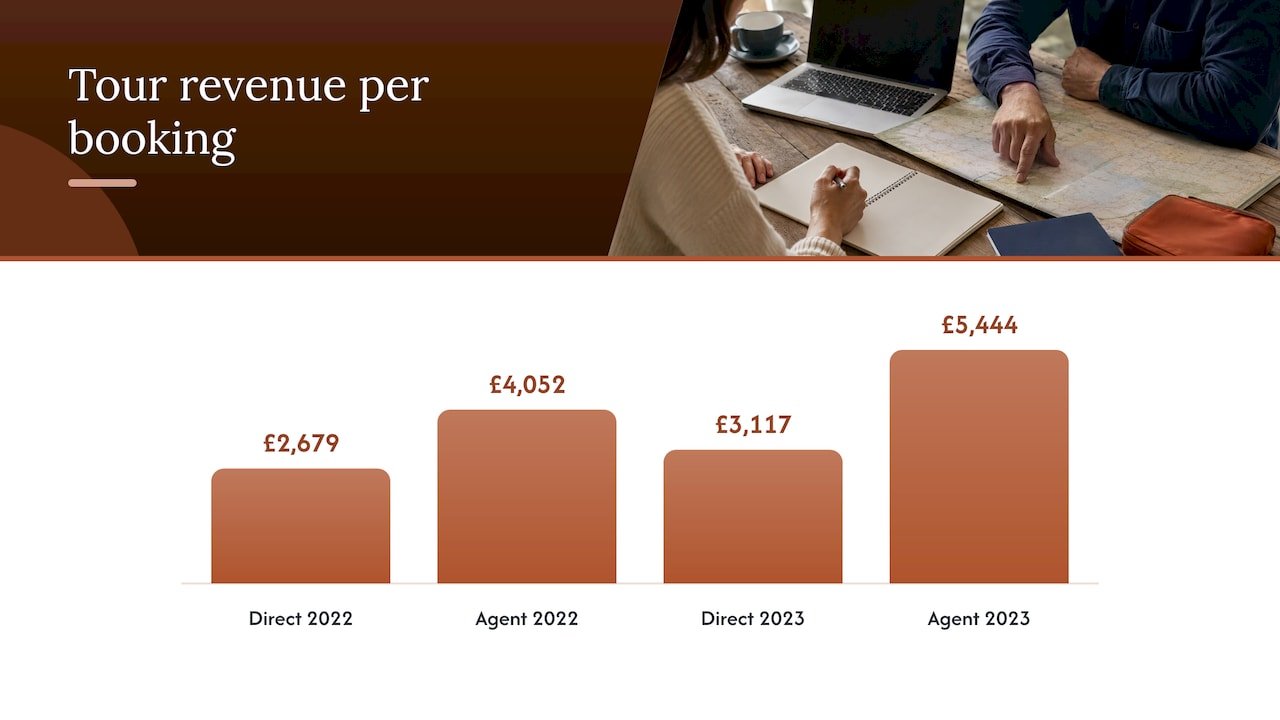
- Reported UK tour figures show agent bookings carrying a much higher revenue per booking than direct ones (£5,444 against £3,117 for 2023), which is where advice earns its keep.
- The two are not rivals for a small business. Advice wins the client, and online tools quote, confirm, collect payment and follow up.
- Your margin depends on the commission split you keep and on the licence you trade under, so check both before you pick a route.
- With Timeshunters you keep 70% commission, start at no cost and sell under your own name.
Table of Contents
- What the two approaches actually mean
- Why advice suits complex and high-value trips
- Where online booking still belongs in your business
- What each route does to your earnings
- How to sell consultatively, step by step
- What UK rules you must respect
- Making the model work with your own audience
- Start selling under your own name
- Our view: advice is the product, software is the back office
- FAQ
- Sources
What the two approaches actually mean
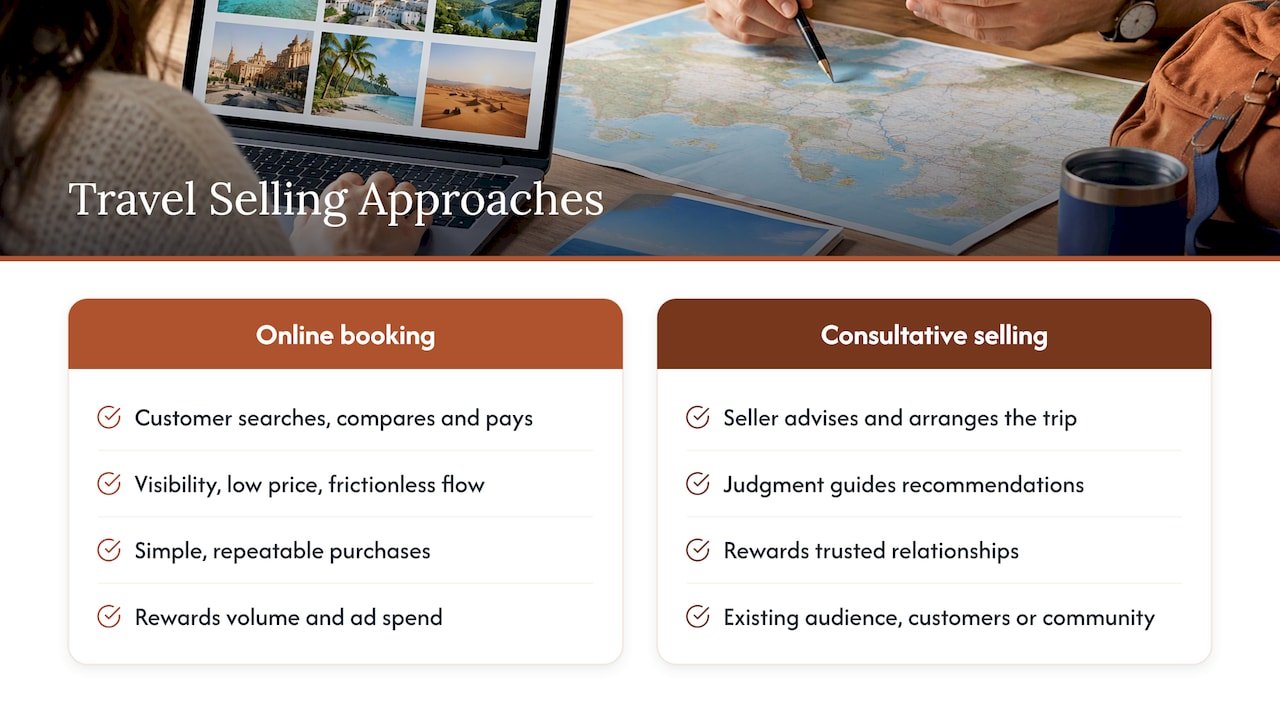
Online booking means the customer does the work. They search a site or app, compare prices, pick an option and pay, often without speaking to anyone. The seller’s job is to be visible, cheap and frictionless. That suits simple, repeatable purchases such as a single hotel night or a flight on a known route.
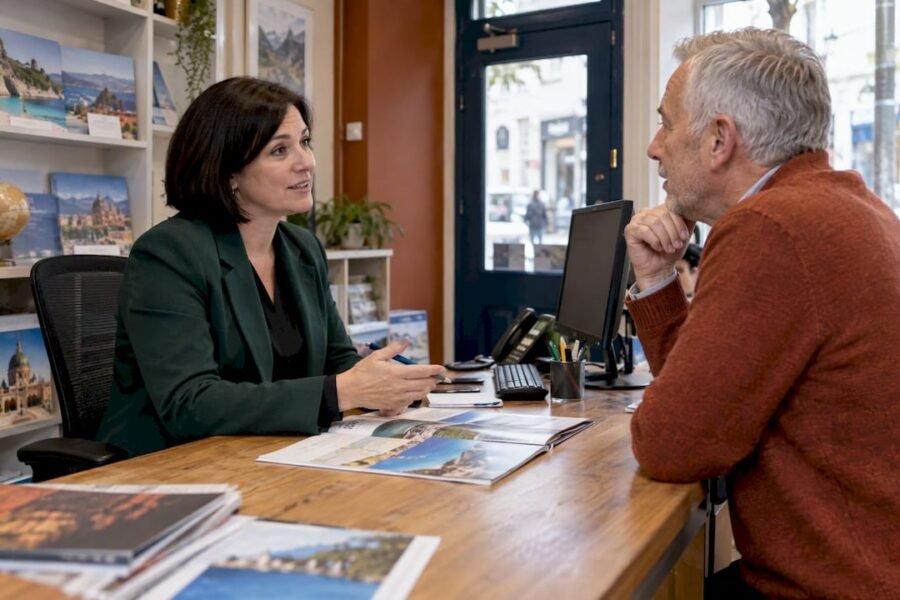
Consultative selling means you act as an adviser first and a seller second. You ask about who is travelling, why, what has gone wrong on past trips and what the budget really is. Then you recommend a specific answer and handle the arrangements. The value you sell is judgement: the right cabin, the right resort for a family with a toddler, the right order for a three-stop itinerary.
For a new travel entrepreneur the difference matters because the two approaches reward different things. Online selling rewards volume and advertising spend. Consultative selling rewards relationships, so it favours people who already have trust with an audience, a customer base or a community.
Why advice suits complex and high-value trips
A travel purchase is rarely one click. McKinsey’s research on the digital traveller found that the average journey to buy a single hotel room lasted 36 days and spanned 45 touchpoints across search engines, intermediaries and supplier sites. It recommended helping consumers explore and choose, rather than jumping straight to the sale. That is a description of what an adviser does. If you want to see how a well-run tour operator structures that exploring-and-choosing stage, this explanation of how a tour booking process works shows the sequence from enquiry to confirmation.
The longer and more tangled the journey, the more a customer will pay someone to shorten it. A honeymoon with a safari and a beach stay, a multi-generational villa week or a cruise with flights and pre-stay hotels all carry real risk of a wrong choice. In those cases the customer is buying confidence as much as a product.
It also shows in the money. Travel Weekly UK reported tour revenue per booking of £2,679 for direct sales against £4,052 for agent bookings in 2022, and £3,117 against £5,444 for 2023. Clients who are guided tend to book more, and a commission earned on a £5,444 booking is a different business from one earned on a £3,117 booking.
Where online booking still belongs in your business
The UK market is overwhelmingly digital. Breaking Travel News, reporting Phocuswright figures, put the UK at £56.6 billion in gross bookings in 2025, with 90% online penetration. Your clients live in that world. They expect to read a proposal on their phone, pay without a phone call and receive confirmations instantly.
So do not set out to be an adviser who works from a notebook. The practical question is which parts of the sale should be online and which should be human:
| Stage | Best handled by | Why |
|---|---|---|
| Discovery and needs | You, in conversation | This is where trust and the sale are decided |
| Shortlisting and pricing | Online tools | Instant proposals save hours per enquiry |
| Recommendation | You | Judgement is the product |
| Payment and confirmation | Online, automated | Clients expect speed and a clear record |
| Follow-up and rebooking | Automated, with your personal touch | Keeps your client list working for you |
This split is the heart of the model. The adviser’s time goes to the two conversations that win and keep the client, and software does the rest.
What each route does to your earnings
The route you choose changes your margin as much as your sales style. Startups.co.uk’s UK guide sets out the independent route: £15,000 to £30,000 of regulatory capital and ATOL licensing from £1,523 (a £300 application plus £1,223 a year for a Small Business ATOL). That route keeps all the supplier commission, but it needs the capital and the time to get licensed.
A white-label route removes that barrier. You trade under an existing licence holder’s protection and keep the client relationship. Commission is the number to compare. Online travel agencies typically pay a small share of the booking. We pay partners 70% commission, and our own share of each booking is the remaining 30%. Our guide to typical travel agent commission rates walks through the numbers by product type, and the tour operator net-per-booking calculator shows how to work out what you actually keep.
A partner of ours reports that the move took their income from £400 to £1,200 per booking. That is one partner’s experience, not a promise, but it shows why the split matters when each booking is built on advice.
Work your model from the commission you take home, not from turnover. A founder who looks only at gross bookings can overstate income badly once splits, fees, marketing and tax come out, as StartGrowImprove’s UK guide illustrates with a worked example. Build your own spreadsheet with your realistic bookings per year, average value and the split you keep.
How to sell consultatively, step by step
You do not need a sales background. You need a repeatable routine.
- Start with the trip, not the product. Ask who is going, what the occasion is, what the best and worst past trips were and what must not go wrong. Write the answers down, because they become the proposal.
- Set the budget range early. Clients are relieved when you ask. It stops you building a proposal they cannot afford and lets you pitch the right tier.
- Build two or three options, not ten. The point of an adviser is to narrow choice. Recommend one and explain why. Instant pricing proposals make this fast, because you can price a hotel, a cruise or a tour while the conversation is fresh.
- Explain the protection. Tell the client who the principal is, what is protected and how their money is held. This is part of the sale, not small print.
- Take payment cleanly. A clear payment link and a prompt confirmation make the client feel looked after.
- Follow up before and after travel. A message a week before departure and a check-in on return are where referrals and repeat bookings come from.
Steps 3, 5 and 6 are where most solo advisers lose hours. We built the platform to handle them: a branded booking site, instant pricing proposals, managed payments and financial protection, and automated client follow-up. The training and onboarding programme is built to take a new partner from sign-up to launch in around four weeks.
What UK rules you must respect
Whichever way you sell, the rules follow the product, not the channel.
ABTA explains that a retail agent acts for a principal, is not party to the customer’s contract, must tell customers who the principal is and is paid by agreed commission. It also draws the line between licensable business (flight-inclusive packages and flight-only sales, covered by ATOL) and non-licensable business such as cruises and accommodation-only sales.
The Civil Aviation Authority adds requirements for ATOL holders selling through agents. There must be a written agency agreement with each agent, including the CAA Schedule of Terms, and an ATOL Certificate must be issued immediately on payment, whatever the booking method.
That is why the licence you trade under matters so much to a consultative seller. Advising on a flight-inclusive tailor-made holiday without the right protection is a legal problem, not a style choice. Our guides on selling tailor-made holidays legally in the UK and on the ATOL licence and the wait to obtain one cover the detail. Our model uses the ATOL-protected licences of Times Travel group, so you can sell under your own brand while the protection sits behind the booking.
Making the model work with your own audience
Consultative selling depends on trust, and trust is easiest to earn where you already have it. That is why the model suits people with an existing audience or client base:
- Freelancers and travel enthusiasts can turn years of informal recommendations into a business with a name.
- Hospitality owners can sell guests the next stage of the trip, and offer villas, tours and cruises beyond their own property.
- Creators and influencers can recommend trips to followers who already ask them where to go. Our guide to monetising a travel audience through a compliant agent explains how.
- Professionals with client relationships can add travel as a service for people who already trust their advice.
If you are earlier in the journey, our guide to becoming an independent travel agent in the UK covers the routes in order.
Start selling under your own name
With Timeshunters you launch a travel business in your own name, with no cost to start. You keep your brand, your clients and your autonomy. The licence’s branding is invisible to your end clients, so what they see is you. You get access to wholesale hotel, cruise and tour inventory, a branded booking site, instant pricing proposals, managed payments and financial protection, and automated client follow-up. You keep 70% of commission on every booking.
See how it works on our white-label travel agency page, or go straight to the referral programme to see the 70% split in detail.
Our view: advice is the product, software is the back office
Most people who ask us this question think they are choosing between a website and a conversation. They are really choosing where their time goes.
A customer can find a flight time in seconds. What they cannot easily find is someone who knows which resort suits their family, which cruise cabin avoids the noise and what to do if plans change. That is what an independent adviser sells, and it is why a name people trust is worth more than a page of listings.
We built Timeshunters so that a newcomer does not need a licence of their own, a large capital outlay or a team to sell this way. You keep 70% commission, because we believe the person who finds and looks after the client should be paid like it. Your booking site, proposals, payments and follow-up run in the background, so your hours go on the conversations that win clients.
If you already have people who ask you where to go, you have the hard part. We supply the rest.
Sam
FAQ
Is consultative selling just for luxury travel?
No. It suits any trip with several moving parts or a lot of emotion attached: honeymoons, family villa weeks, cruises, safaris and multi-stop tours. Those happen to be higher-value, which is why advice tends to pay well there. Simple one-night stays can still be quoted and confirmed online in minutes.
Can I run a consultative business with an online booking site?
Yes, and most successful independents do. You advise in conversation, then the booking site and proposal tools handle pricing, payment and confirmation. With us you get a branded booking site and automated follow-up to support the advice you give.
Do I need my own ATOL to sell tailor-made holidays?
Not necessarily. The ATOL requirement applies to flight-inclusive packages and flight-only sales, and the person selling must be covered by a licence holder. Our partners sell under Times Travel group’s ATOL-protected licences. Our client money protection checklist explains what to look for.
How much commission can I keep?
Partners on our platform keep 70% of commission on bookings, and we retain 30%. What that is worth in pounds depends on the product and its supplier commission, so model it per booking before you plan your income.
Sources
- How to serve today’s digital traveller (McKinsey)
- Touring and adventure clients spend more with agents than direct channels (Travel Weekly UK)
- UK travel distribution settles into a stable pattern (Breaking Travel News)
- How To Start A Travel Agency (Startups.co.uk)
- How to Start a UK Travel Agency (StartGrowImprove)
- How your business trades (ABTA)
- Travel trade selling through agents (UK Civil Aviation Authority)