How to Start a Travel Side Hustle in the UK
Start a travel side hustle in the UK: which models exist, what you can earn, the ATOL rules, and how to launch under your own brand with 70% commission.

The travel side hustle with the clearest path to real money is selling holidays under your own name: you find the clients, a business behind you supplies the licence, the supplier rates and the booking systems, and you earn commission on every trip. Blogs, photography and YouTube channels can pay, but they depend on building a large audience first. Selling travel to the people who already trust you can earn from the first booking. With Timeshunters you keep 70% of the commission on each booking, sell under your own brand using Times Travel group’s ATOL-protected licences, and there is no cost to start.
TL;DR
- The most common UK route is a home-based agent business. TTG puts the average full-time home-based agent at around £24,000 a year, with part-time and new agents earning much less.
- Package holidays that include flights must be ATOL protected. Under a white-label arrangement the licence cover is already in place, so you can sell legally from day one.
- Plan for six to 12 months before the income looks decent, and choose a niche you already have an audience for.
- Your commission share matters more than almost anything else. With Timeshunters partners keep 70% and the client relationships stay theirs.
Table of Contents
- Which travel side hustles actually pay
- The business models open to you in the UK
- What the 70% means in pounds
- Realistic earnings and timing
- Choose a niche you can talk about
- The legal side: what you must get right
- Launch step by step
- Choosing a provider: the questions that matter
- Promo: start under your own name
- Perspective
- FAQ
- Sources
Which travel side hustles actually pay
Search for this topic and you will find lists of 10 or 14 ideas: travel blogging, photography, house sitting, pet sitting, car rental, walking tours. Most of them need either a big audience or upfront capital before they pay anything.
Selling travel as an adviser is different, because the income comes from a booking rather than from views. Someone who trusts your recommendation books a villa, a cruise or a safari, the supplier pays commission, and you take your share. You do not need to be a travel blogger. You need people who would ask you where to go.
That is why this route suits the people most likely to be reading this:
- Professionals with an existing network of colleagues, clients or friends who take holidays.
- Creators and influencers whose followers already ask where to stay.
- Hospitality owners who want to sell trips beyond their own rooms.
- Enthusiasts who plan trips for friends and family anyway and would like to be paid for it.
Our guide to monetising your travel expertise compares the options in more detail. The rest of this article follows the agent route, because it is the one where you can start small and keep the business.
The business models open to you in the UK
TTG’s guide to becoming a home-based agent lists the main UK models: owning your own business under a host agency, going self-starter, being supported with leads, franchise ownership, or taking a remote employee role. It advises comparing the commission structure, ongoing fees, training, back-office systems, whether licences and insurance are included, and the community around you.
Those criteria are the right ones, and they are worth turning into a short table of what you are really choosing between:
| What you need | Going fully alone | Employee or franchise role | White-label platform |
|---|---|---|---|
| Brand | Yours, but you build everything | Usually the company’s | Yours |
| Licensing and financial protection | You arrange it yourself | Provided | Provided |
| Client relationships | Yours | Often the company’s | Yours |
| Commission share | All, minus your costs | Set by the employer or franchisor | 70% with Timeshunters |
| Time to launch | Long | Medium | Weeks |
The white-label route is the one we built Timeshunters around. You sell under your own name, while the ATOL-protected licences of Times Travel group sit behind you and the licence’s branding is invisible to your clients. The client list, the brand and the autonomy remain yours.
Travel Weekly’s homeworking guide makes a warning that applies to every model: commission splits, training, support, leads and fees vary widely, so you should have a clear plan for year one and a vision for year three before you commit. Treat the split as the first number you compare.
What the 70% means in pounds
A commission split is easy to quote and easy to misread. Here is the arithmetic on an invented booking, purely to show how it works.
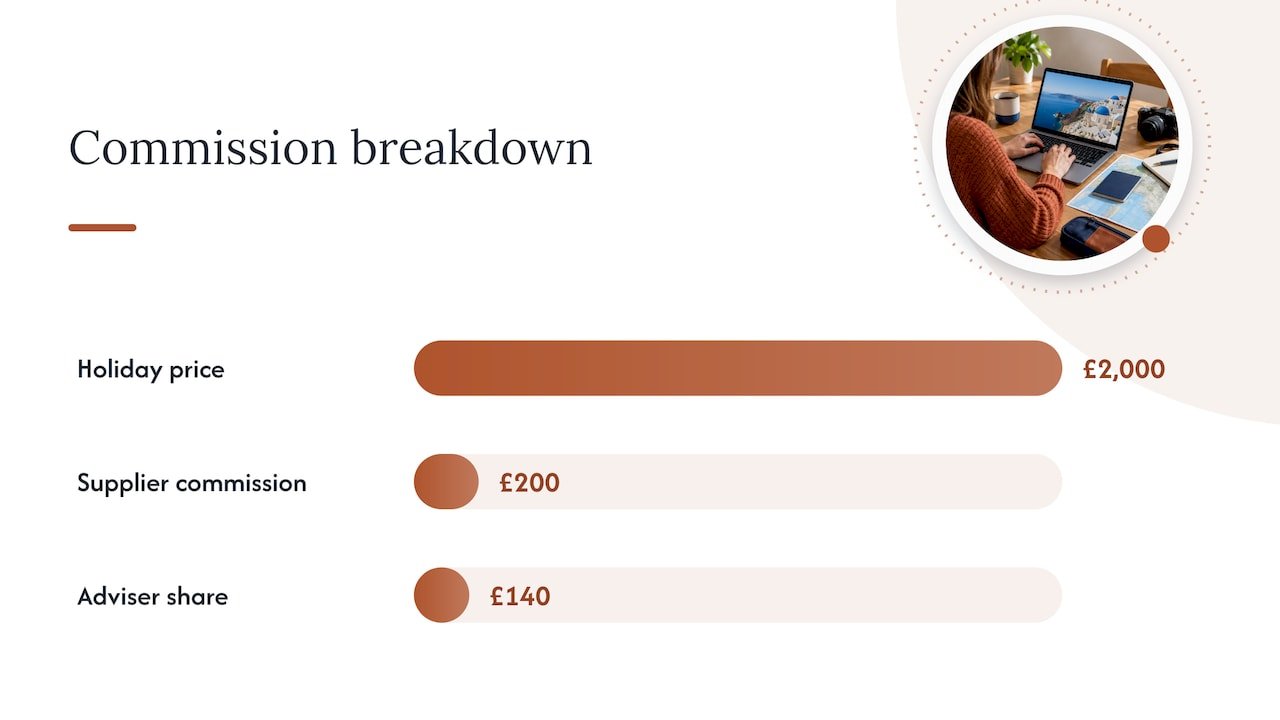
Suppose a client books a £2,000 holiday and the supplier pays 10% commission, which is £200. At a 70% share you keep £140. The same booking through an arrangement that passes on a far smaller share leaves you with a fraction of that. The percentage that matters is the one applied to the commission the supplier pays, so the supplier’s rate and your share both determine what lands in your account.
One Timeshunters partner reports moving from £400 to £1,200 per booking after switching to the model. That is the effect of keeping a bigger share on trips you were already selling, rather than handing most of it to an intermediary. Your own result will depend on what you sell and how often.
Supplier commission varies by product. TTG notes that income depends on the type of holidays sold, the product mix and the host agency’s commission structure, because flights, hotels, car hire and operators each pay differently. Our pages on cruise agent commissions and tour operator commissions show how to calculate your net per booking before you choose what to sell.
Realistic earnings and timing
Treat this as a side hustle that grows, not a quick payout.
- TTG reports that a full-time UK home-based agent earns around £24,000 a year on average, top performers earn far more, and part-time or new agents earn much less.
- Travel Weekly quotes a Blue Bay Travel chief executive saying that a start-up can target £300,000 of turnover from about 100 clients, and that it may take six to 12 months to build a decent level of income.
So the maths of a side hustle is about clients and repeat business. Ten people who each book a family holiday and a city break in a year are a better foundation than a hundred followers who never book. Because you own your client relationships, every happy customer is an asset that books again with you.
To keep the hours manageable alongside a job, automate what you can. Timeshunters partners get automated booking management, instant pricing proposals and automated client follow-up, so a quote or a confirmation does not need an evening of admin.
Choose a niche you can talk about
People do not pay commission-earning attention to a generalist. They pay attention to someone who knows the thing they want. A strong niche sits where three things overlap: what you know and love, what people will pay for, and what pays decent commission.
Good starting points for UK sellers include:
- Cruises, where commissions are clear and repeat custom is common. Our guide to selling cruises from home covers how to start properly.
- Villas and safari camps, for clients who want something their usual website will not show them.
- Honeymoons, weddings abroad and milestone trips, where a personal recommendation matters.
- Corporate travel, if you already work with businesses. See how to sell corporate travel from home.
- Group travel, for clubs, teams and families. If you build a group niche, it helps to understand how contract coach services in the UK are run, since ground transport shapes a group’s itinerary.
The platform gives you access to wholesale hotel, cruise and tour inventory, plus villas, safari camps and rail, so you are not limited to a single product type while you find out what your clients ask for most.
The legal side: what you must get right
This is where side hustles in travel differ from selling crafts on a stall. Money paid for holidays has to be protected.
Package holidays. GOV.UK guidance states that package holiday rules sit in the Package Travel and Linked Travel Arrangements Regulations 2018, as amended in 2026, and advises businesses to take legal advice on their obligations. If you plan to put together packages yourself, speak to a solicitor who works in travel law.
ATOL. Business Companion explains that ATOL is the UK financial protection scheme for flight-inclusive package holidays sold by UK-based travel businesses. For packages without flights, organisers can use bonding, insurance or a trust account. Our explainer on trust accounts versus insurance sets out how those routes work, and the page on tour operator bonding covers the costs.
Agency agreements. ABTA says that as an agent you have agreements with the principals you work with, must tell customers you are an agent and who they contract with, and are paid agreed commission by the principal. Its Code of Conduct guidance also expects a written agency agreement that sets out the security for money paid over. Those rules apply to ABTA members, but they show what good practice looks like.
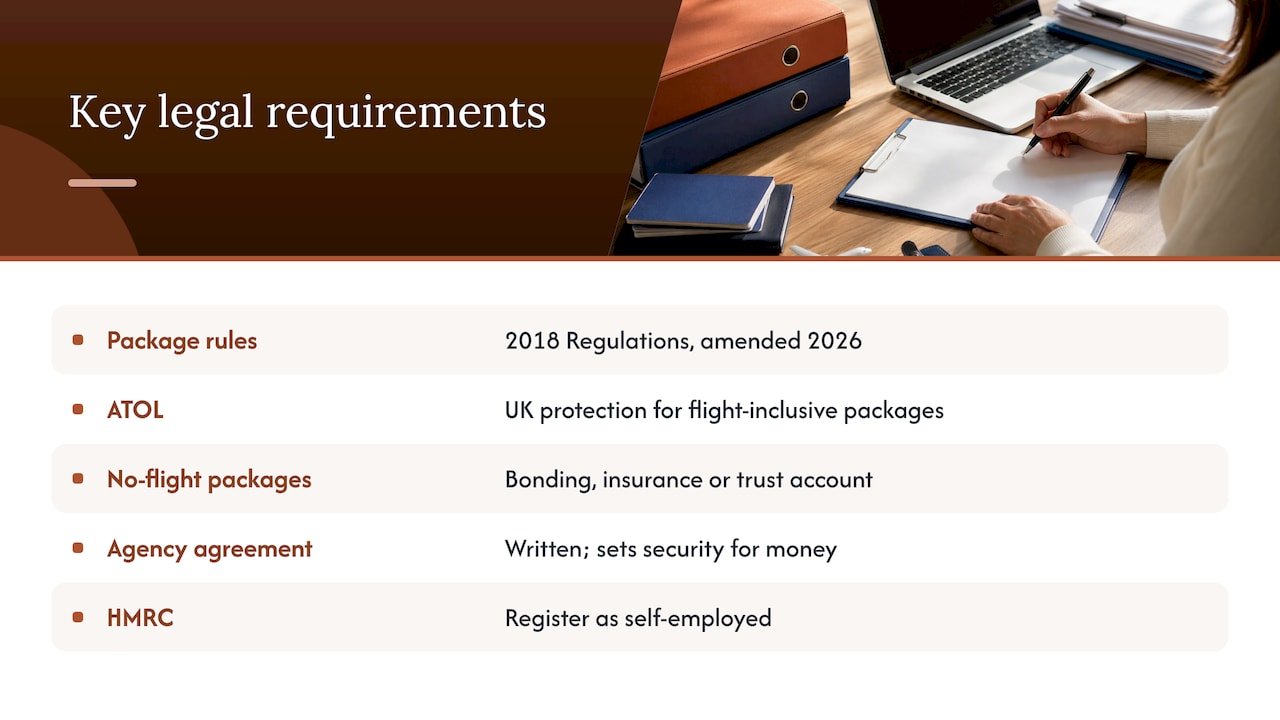
With Timeshunters, managed payments and financial protection are part of the platform, and your sales run under Times Travel group’s ATOL-protected licences. That takes the licensing and protection work off your plate, so your time goes to clients. You should still register as self-employed with HMRC for the income you earn.
Launch step by step
- Decide who you will sell to. Start with the people who already ask you for advice. Write down ten names and what each would book.
- Pick a niche and a name. Choose one or two holiday types and a brand name that sounds like you. Our guide to launching a travel brand walks through the choices.
- Set up the business behind you. Instead of arranging a licence, payments and supplier accounts separately, you join a platform that supplies them. This is where a white-label model saves the most time: you receive a branded booking site, wholesale inventory and managed payments without building any of it.
- Learn the product. Training and support are part of the Timeshunters offer, and our 30/60/90 onboarding plan is designed to take you to launch in four to eight weeks.
- Quote and sell. Use instant pricing proposals to turn a conversation into a priced option the same day. Our guide to selling travel to clients sets out a seven-stage approach.
- Add extras. Transfers, insurance and excursions raise the value of each booking. See how to keep more commission when upselling travel extras.
- Follow up and repeat. Automated follow-up keeps you in touch after the holiday, when the next trip is usually planned.
Choosing a provider: the questions that matter
Travel Weekly lists the points worth checking before you sign with any homeworking arrangement: whether the model is proven, the commission structure and when it is paid, joining fees and ongoing costs, whether you own your client base, what training you get, and how easy it is to leave.
Measure any option against that list. With Timeshunters the answers on the main points are plain: partners receive 70% commission, there is no cost to start, the brand and client relationships stay with the partner, and training and support are included.
Promo: start under your own name
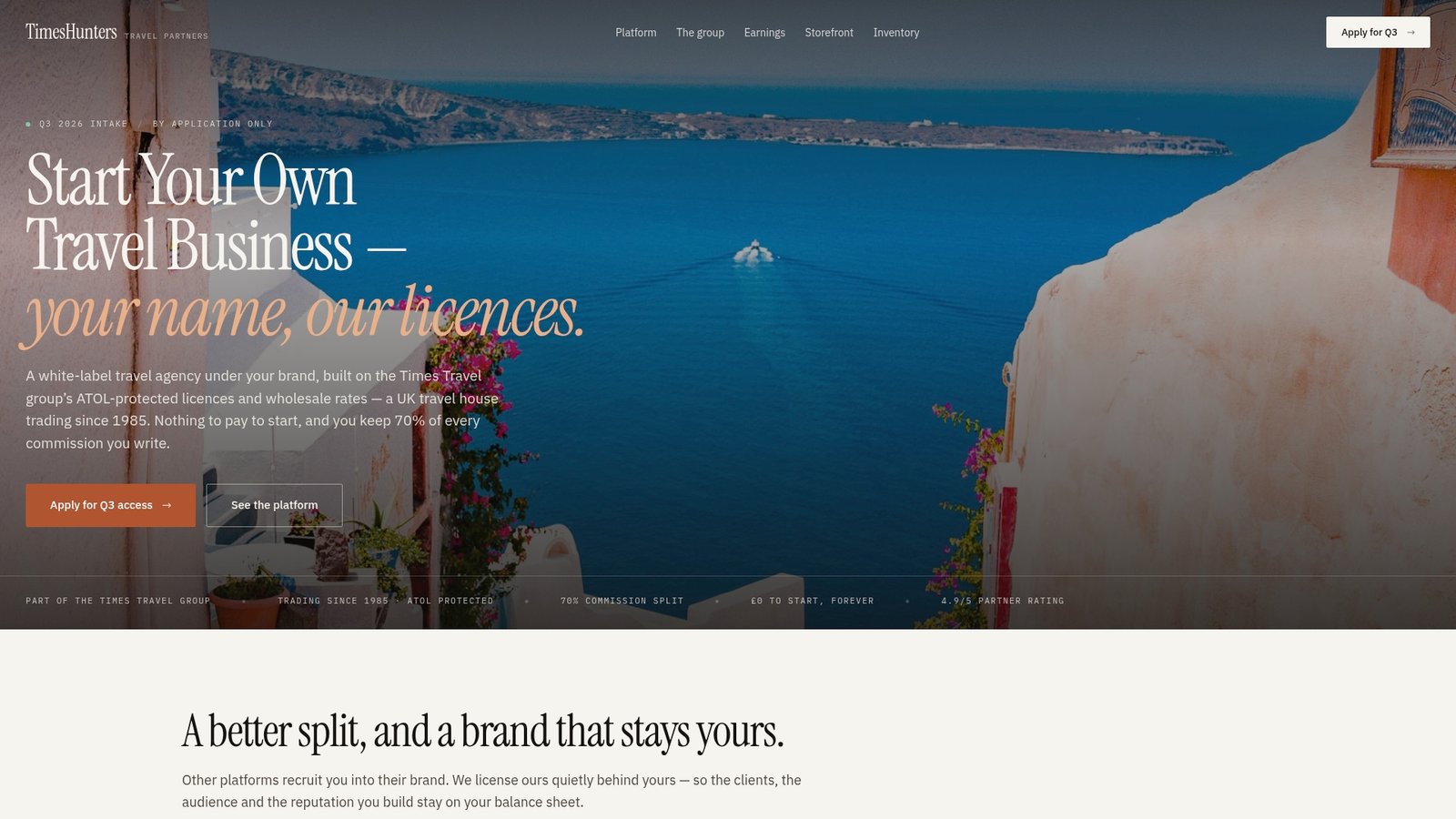
If you want to sell travel without building a licence, a booking system and supplier access from scratch, the Timeshunters white-label travel agency gives you a branded booking site, wholesale rates, managed payments and ATOL-protected licences, with 70% of the commission going to you.
If you are a creator, our page on selling travel as an influencer shows how it works with an audience. For a view of the inventory, see the white-label travel agency page.
Perspective
Most people who want a travel side hustle assume the hard part is finding suppliers or getting a licence. It is not. The hard part is trust, and you already have some of that with the people around you.
We built Timeshunters so that trust stays with you. Your clients book with your brand, you keep the relationship, and you keep 70% of the commission instead of the single-digit share that online agencies typically pass on. The ATOL-protected licences, the wholesale rates and the booking automation are the infrastructure, and you should not have to build infrastructure to earn from your own recommendations.
Start with a handful of clients and one niche you love. Let the first bookings teach you what your audience wants, then widen the offer.
Sam
FAQ
Is a travel agent a good side hustle in the UK?
It can be, if you have people who would book with you and you can give it steady attention. TTG says earnings vary with time invested, product mix and commission structure, and Travel Weekly suggests allowing six to 12 months to build a decent income. A higher commission share helps your hours go further.
How much does it cost to start?
With Timeshunters there is no cost to start. Partners then earn 70% commission on bookings, and Timeshunters collects the remaining 30% split. Costs elsewhere vary, so compare joining fees and ongoing charges before you commit anywhere.
Do I need an ATOL licence myself?
Flight-inclusive package holidays sold in the UK must be ATOL protected. Under the Timeshunters model you sell using Times Travel group’s ATOL-protected licences, so the protection is already in place. For advice on your own legal position, speak to a solicitor who specialises in travel law.
Can I run it alongside a full-time job?
Many people do. Automated booking management, instant pricing proposals and automated client follow-up cut the admin, so evenings and weekends go on conversations with clients. Start with the people you already know and expand as bookings grow.
Do I need a big social media following?
No. A small group of people who trust your advice can be enough to start. Followers help if they ask you for recommendations, but referrals from friends, colleagues and past customers are often where the first bookings come from.
Sources
- How do I become a home-based agent? | TTG
- Travel Weekly Guide to Homeworking
- How your business trades | ABTA
- Guidance on the application of the Code of Conduct | ABTA
- Package holidays: complying with regulations | GOV.UK
- Part 1. Package holidays | Business Companion
- UK contract coach services