Which travel niche should you actually build a business around?
Discover profitable travel niche ideas that cater to specific audiences. Learn how to validate your concept before launching your business.

Pick one narrow audience, pair it with a theme people already pay to solve, and validate it before you touch a website builder. That is the whole game. The travel industry rewards specificity: a homeworker who focused solely on solo parents travelling with neurodivergent children built £1.6 million in bookings within two years, not by chasing every holidaymaker but by ignoring almost everyone else.
Here are eight travel niche ideas worth scanning right now before you commit to any of them:
- Wellness and longevity retreats
- Sustainable and regenerative travel
- Accessible and inclusive holidays
- Slow travel and rail journeys
- Solo female travel with a safety focus
- Culinary and food-led trips
- Multi-generational and ancestry travel
- Digital nomad and work travel
Pick the one where you already have an audience or genuine curiosity, then run it through the validation checklist further down before you spend a penny on branding.
Key Takeaways
Choosing a narrow, monetisable travel niche and validating it within a week beats months of generalist content that competes with everyone and converts almost no one.
| Point | Details |
|---|---|
| Pick one narrow niche | Combine an audience you understand with a theme people already pay to solve. |
| Validate before building | Run the five-item checklist (search volume, community size, suppliers, landing page, small ad test) in one afternoon. |
| Match monetisation to niche type | High-ticket niches suit direct packages; volume niches suit affiliate and content income. |
| Avoid the common traps | Don’t pick a niche too broad to compete in, and don’t skip supplier and compliance checks. |
| Consider a white-label route | Timeshunters offers ATOL-protected, branded booking infrastructure with partner commission for niche operators who want to sell packages without building supplier contracts from scratch. |
Table of Contents
- Travel niche ideas worth building a business around
- A five-step framework for choosing your travel niche
- How travel niches turn into actual revenue
- Validating a niche before you commit real money
- Turning niche expertise into bookings without building supplier contracts from scratch
- Why niching actually changes your results, not just your branding
- Real examples of niche travel businesses that worked
- Common mistakes that sink a promising travel niche
- How to size up the competition in your chosen niche
- The trade-off nobody mentions when they tell you to niche down
- Start selling niche travel packages without building the infrastructure yourself
- Sources
Travel niche ideas worth building a business around
Every one of these ideas can support a real business, but they don’t all work the same way. Some are high-ticket and low-volume; others depend on scale and repeat bookings. Match the model to your resources, not just your interests.
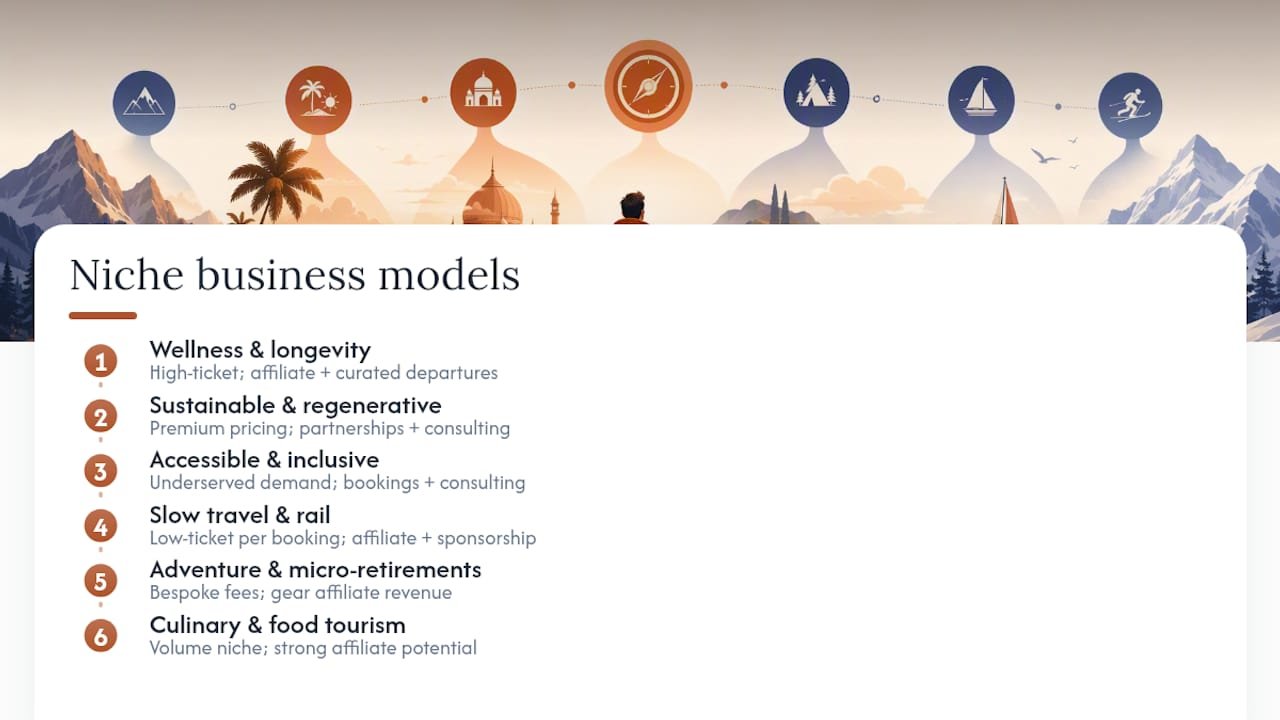
1. Wellness and longevity tourism. This covers retreats, medical spas, and longevity-focused travel built around sleep, nutrition, and recovery. The audience is affluent professionals aged 35 to 65 who already spend on health optimisation. It ranks among the fastest-growing niches heading into 2026. Monetise through affiliate commissions on retreat bookings and by curating hosted group departures with a health practitioner. Content idea: a comparison series reviewing longevity clinics by protocol, not just by location.

2. Sustainable and regenerative travel. This niche targets travellers who want their trip to leave a place better off, not just carbon-neutral. It suits younger professionals and families willing to pay a premium for verified impact. Monetise via partnerships with regenerative lodges and consulting for small tour operators wanting to reposition their offer. A content angle: audit trips against actual regenerative claims, since greenwashing is rampant and readers know it.

3. Accessible and inclusive travel. Wheelchair users, travellers with sensory needs, and older adults with mobility limitations are chronically underserved by mainstream travel content. Demand is strong and supply is thin, which is exactly the gap the £1.6 million case study exploited. Monetise through direct bookings with accessibility-vetted suppliers and paid consulting for hotels wanting to improve their offer. Content idea: detailed access audits of specific destinations, room by room.
4. Slow travel and rail journeys. Built for travellers swapping flights for trains, this niche serves environmentally conscious professionals and retirees with time to spend. It’s less lucrative per booking but rewards content creators with strong affiliate and sponsorship potential. Monetise through rail-pass affiliate links and curated multi-country itineraries. Content idea: route guides that treat the journey as the destination, not the inconvenience.
5. Adventure travel and micro-retirements. This covers career-break travel, sabbaticals, and short “micro-retirement” trips for burnt-out professionals. Audience: people in their 30s and 40s reassessing work-life balance. Monetise through bespoke itinerary planning fees and gear affiliate partnerships. Content idea: a “quit your job for three months” planning series with real budget breakdowns.
6. Culinary and food tourism. Food-led trips serve travellers who plan holidays around meals, markets, and cooking classes. This is a volume niche with strong affiliate potential through food tour bookings and cookery school partnerships. Content idea: neighbourhood food guides written like a local, not a tourist board.
7. Solo female travel with a safety focus. This audience wants specific safety intelligence, not generic empowerment messaging. Monetise through vetted accommodation partnerships and paid community memberships offering real-time safety advice. Content idea: destination safety scorecards based on actual reported incidents, not vague reassurance.
8. Multi-generational and ancestry travel. Families travelling together across generations, or descendants tracing ancestral roots, form a high-ticket niche with strong emotional stakes. Monetise through custom package fees and genealogy-tour partnerships. This one has real regulatory weight: some ancestry travel involves visa and documentation research, so build in consulting time.
9. Dark-sky tourism and noctourism. Stargazing trips and astro-tourism are a small but growing niche with dedicated, spend-ready communities. Monetise through affiliate bookings with dark-sky reserve lodges and small-group hosted trips. Content idea: a seasonal calendar matching celestial events to accessible viewing locations.
10. Experiential luxury and hushpitality. This covers ultra-discreet, high-touch travel for clients who want privacy as much as luxury. It’s a high-ticket, low-volume niche best suited to entrepreneurs with existing high-net-worth contacts, since luxury and group travel show consistent profitability in current forecasts. Monetise through direct commission on bespoke bookings and retainer consulting.
11. Road-tripping and RV micro-communities. This serves van-life travellers and RV owners who want route intelligence and community, not generic guidebooks. Monetise through gear affiliates and paid route-planning memberships.
12. Digital nomad and work travel. Remote workers need visa guidance, coworking recommendations, and connectivity intelligence. This is a volume niche with strong content-to-affiliate conversion, though visa rules shift often enough that you’ll need to keep content current or risk giving outdated advice.
Pro Tip: Don’t pick the niche with the biggest audience. Pick the one where you can answer a stranger’s specific question in under thirty seconds without googling it. That’s your actual expertise, and it’s what readers can smell from a mile off.
A five-step framework for choosing your travel niche
Most people choose a niche based on what sounds appealing rather than what they can actually win. Here’s a faster way to decide.
- Run a passion audit. List five topics you could talk about for twenty minutes without notes. Cross out anything you’d only research for the article, not live for.
- Run a network audit. List every community you already belong to, online or offline. The fastest route to traction is marketing to people you already know, not building an audience from zero.
- Check market validation signals. Search demand, active Facebook or Reddit groups, and supplier availability all need to exist before you build anything permanent.
- Score your shortlist. Rate your top three ideas against passion, network reach, demand, supplier fit, and profitability. A simple scoring matrix lets you pilot two or three ideas in parallel instead of betting everything on a hunch.
- Test before you build. A one-week landing page test or a small ad spend tells you more than a month of planning ever will.
Quick validation checks worth running in the same afternoon:
- Does a dedicated Facebook or Reddit group exist with more than 500 active members?
- Can you name three suppliers who’d take your bookings tomorrow?
- Would you pay for this yourself, right now, at the price you’re planning to charge?
Red flags to watch for: if you can’t find a single supplier willing to work with a small operator, if search demand is entirely seasonal with no year-round base, or if the only people talking about the niche online are other bloggers rather than travellers. Any of those should send you back to the shortlist, not push you forward.
How travel niches turn into actual revenue
Different niches monetise differently, and matching the model to the niche matters more than picking the “best” revenue channel in isolation.
- Affiliate commissions suit high-content, high-search niches like slow travel or culinary tourism, where readers research extensively before booking.
- Direct package sales work best for high-ticket niches like wellness retreats, ancestry travel, or hushpitality, where trust and curation justify a bigger margin.
- Membership or community fees fit solo female travel and digital nomad niches, where ongoing advice matters more than a single transaction.
- B2B consulting works for accessible travel and sustainability niches, where hotels and operators will pay you to help them improve their own offer.
Build early with low-risk offers: a mini-course on planning a specific trip type, a curated itinerary sold as a PDF, or a single hosted departure with a partner supplier who handles the logistics. First sales typically arrive faster in high-engagement communities than through cold search traffic, and niche and group travel segments consistently show stronger margins than generalist offers heading into 2026.
Diversify early rather than late. Once one channel proves itself, layer in a second within the first few months rather than waiting until growth stalls.
Validating a niche before you commit real money
You don’t need months of research to know if a niche has legs. You need an afternoon and a cheap test.
Check long-tail search volume and cost-per-click signals through a free keyword tool. Both tell you whether people are actively searching and whether advertisers think it’s worth bidding on. Then check the size and activity level of relevant Facebook or Reddit groups, since a niche with no online community is a niche with no early customers.
Run this five-item checklist in one sitting:
- Search volume exists for at least three long-tail phrases
- A community of 500+ engaged members exists somewhere
- At least three suppliers are willing to work with you
- A basic landing page with a sign-up form gets real submissions
- A small paid ad test (even £20) generates clicks at a sane cost
If three or more of these fail, the niche isn’t dead, but it needs a different angle before you build around it.
Turning niche expertise into bookings without building supplier contracts from scratch
Picking a niche solves half the problem. Actually selling packaged trips, taking payments, and staying compliant with travel protection rules is the other half, and it’s where most aspiring travel entrepreneurs stall.
A white-label travel agency model solves this by giving you a branded booking site, access to wholesale hotel, cruise, and tour inventory, and ATOL-protected licences you don’t have to apply for yourself. You operate under your own name and niche positioning while the underlying licensing and supplier relationships already exist.
This suits niche operators particularly well because:
- You skip months of supplier negotiation and start selling packaged trips almost immediately
- Automated booking management and instant pricing proposals free you up to focus on content and audience, not admin
- Your brand stays entirely yours, even though the compliance infrastructure sits behind the scenes
The trade-off is a commission split rather than full margin control, and you’re relying on someone else’s supplier relationships rather than ones you’ve negotiated directly.
Pro Tip: If your niche involves anything with financial protection implications, wellness retreats with deposits, multi-leg ancestry trips, or hosted group departures, check exactly what protection framework covers your bookings before you take a single payment.
Why niching actually changes your results, not just your branding
Generalist travel content competes against everyone. Niche content competes against almost no one, which is the entire commercial argument for doing it.
Specialised operators report 15 to 30% higher margins than generalists, largely because long-tail SEO is cheaper to rank for and referral-driven growth compounds faster within a tight community. When you serve one audience well, they talk to each other. A Facebook group for accessible travel spreads your name faster than a generic travel blog ever could, because the members already trust each other’s recommendations.
There’s also a trust dividend. A reader searching for “wheelchair-accessible safaris” who lands on content written specifically for that need converts at a different rate than one landing on a generic “best safaris” listicle. You’re not competing on SEO volume; you’re competing on relevance, and relevance is much harder for a generalist to fake.
The compounding effect matters most over time. Your second piece of content on a niche topic builds on the authority of the first. Your tenth booking in a niche comes with supplier relationships and community trust the first booking didn’t have. Generalist content rarely compounds the same way, because each new topic starts from zero.
Real examples of niche travel businesses that worked
The clearest proof point remains the homeworker who built £1.6 million in sales within two years by focusing exclusively on solo parents travelling with neurodivergent children. She hit early monthly bookings, driven almost entirely by community trust rather than paid advertising. That’s the pattern worth studying: she didn’t try to serve all families, just one specific and underserved segment of them.
Wellness and longevity operators have followed a similar path by attaching themselves to specific health protocols rather than generic “relaxation” messaging, since travellers researching longevity science are willing to pay premium prices for retreats that speak their language.
Slow travel and rail-focused content creators have built sustainable affiliate income by treating train routes as content in their own right rather than a footnote to a destination guide, tapping into growing interest in regenerative and sustainability-led travel heading into 2026.
What links all of these examples isn’t luck or timing. It’s that each operator solved a specific problem for a specific group of people, then built community and content around that single solution rather than diluting it across a broader audience.
Common mistakes that sink a promising travel niche
The biggest mistake is choosing a niche because it sounds impressive rather than because you can actually serve it credibly. A niche in ultra-luxury hushpitality means nothing if you have no access to high-net-worth clients or luxury suppliers.
The second mistake is skipping validation entirely and building a full website, brand, and content calendar before confirming anyone wants what you’re selling. Spend the afternoon on the validation checklist first.
A third common error is picking a niche too broad to actually be a niche. “Adventure travel” isn’t specific enough to compete; “micro-retirement adventure travel for burnt-out finance professionals” is. Specificity is the entire point.
Fourth, many new entrants ignore supplier and compliance constraints until they’ve already sold a package, discovering too late that their chosen niche, ancestry travel with complex visa needs, or wellness retreats requiring medical liability checks, needs infrastructure they don’t have.
Finally, plenty of niche operators abandon a promising idea too early, usually within the first few months, before referral-driven growth has had time to compound. Niche audiences build slowly through trust, not overnight through volume.
How to size up the competition in your chosen niche
Competition in travel niches isn’t just about counting rival blogs. It’s about assessing whether the space has room for another credible voice.
Start by searching your niche’s core long-tail phrases and noting who ranks. If the top results are generic travel media sites rather than dedicated niche specialists, that’s a genuine opening. If three or four established specialists already dominate with strong community trust, you’ll need a sharper angle rather than a direct copy of their approach.
Check community size and engagement, not just follower counts. A niche Facebook group with 2,000 highly active members and daily discussion is a stronger competitive signal than a hashtag with 50,000 mostly dormant followers.
Look at supplier relationships too. If every competitor works with the same three suppliers, there’s likely room for someone offering a different angle, better accessibility credentials, more sustainable partners, or a sharper sub-niche within the space. Competition that’s concentrated on one axis, price, for instance, often leaves other axes wide open.
The trade-off nobody mentions when they tell you to niche down
Everyone tells you to niche down. Fewer people tell you that niching down means saying no to money on the table for months, sometimes longer, while you wait for a smaller audience to trust you enough to buy.
That’s the real trade-off, and it’s worth being honest about it. The homeworker who built her business around neurodivergent family travel didn’t get to £30,000 months by accident; she got there by refusing to dilute her focus even when broader travel bookings might have been easier to close. Focus compounds, but it compounds slowly at first and quickly later, which is exactly the part that trips people up.
The one action worth taking this week: pick your top-scoring niche from the framework above and post in one relevant community, not to sell anything, just to ask a genuine question. The response tells you more about viability than any keyword tool.
— Sam
Start selling niche travel packages without building the infrastructure yourself
There are other routes into niche travel entrepreneurship: building a blog slowly toward affiliate income, or negotiating your own supplier contracts one relationship at a time. Both work, but both take months before you can take a single booking.
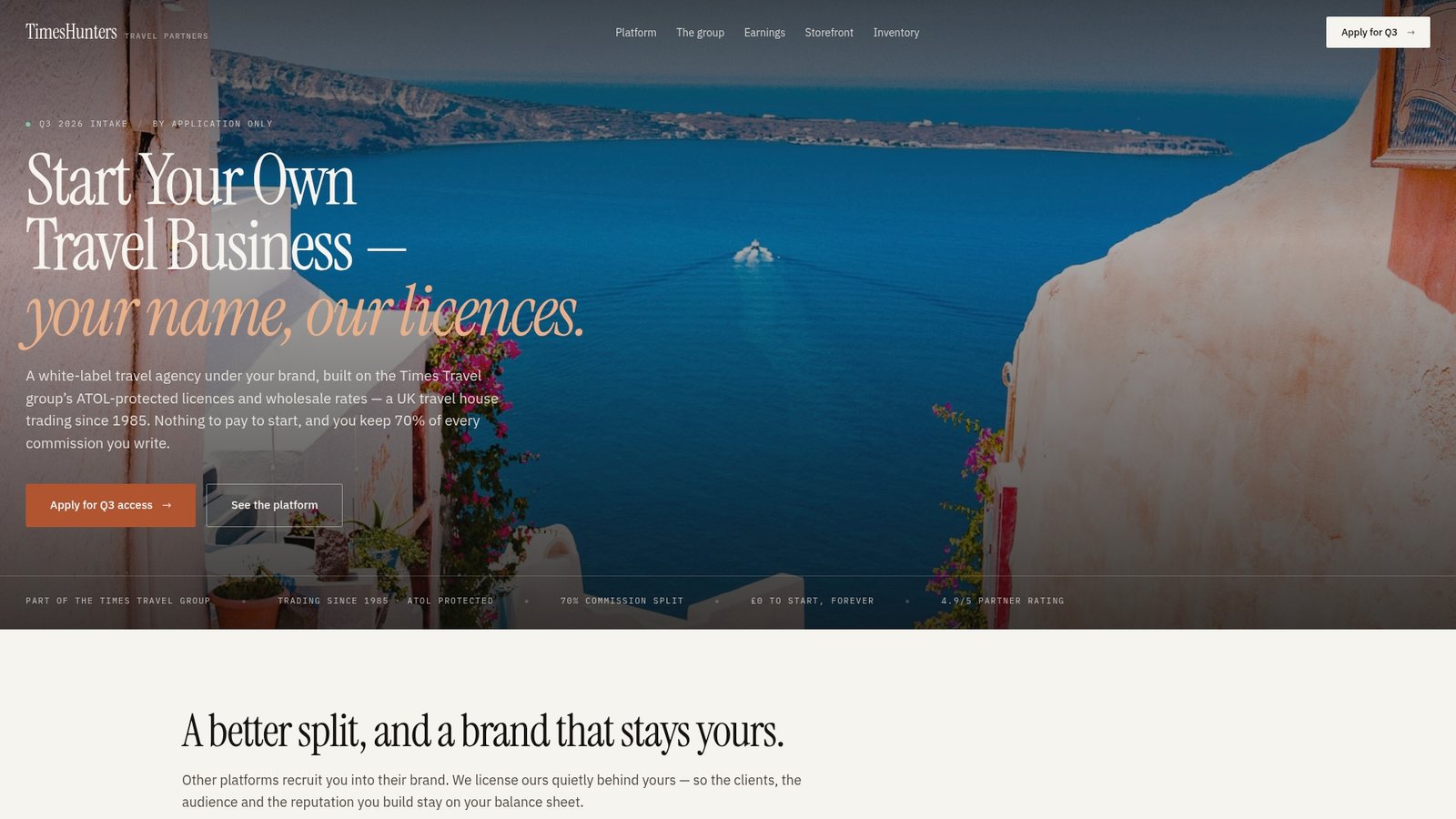
Timeshunters gives you a faster route: a branded booking site, ATOL-protected licences, and wholesale hotel, cruise, and tour inventory already in place, so you’re not spending your first six months chasing supplier agreements before you can sell anything. If your chosen niche involves packaged trips, hosted departures, or anything requiring financial protection, this structure is built for exactly that. Explore the Timeshunters platform and see whether your niche fits their model before you commit to building supplier relationships from scratch.
Sources
- How one homeworker turned her personal mission into a £1.6 million sales opportunity
- Six easy ways to find a niche that fits you
- Niche and group travel: the most profitable segments in 2026 and how to finance them
- Why niching down into a specific travel experience is the best move for tourism operators