Client Ready Travel Proposal Template You Can Send in Minutes
Use this client ready travel proposal template to send polished proposals in minutes. Includes business vs leisure edits, a pricing checklist, and a...

Use this copy-ready travel proposal template and checklist to produce a client-ready proposal in minutes. It’s built for solo agents, freelance consultants and small travel-business owners who need something professional today, not next week. Grab the checklist first, paste the template into whatever tool you already use, and adapt the wording for business or leisure trips as you go.
TL;DR:
- Most successful travel proposals clearly present detailed itineraries, hotel names, transfer providers, activities, and itemized pricing to build client trust.
- Using realistic supplier and hotel names demonstrates that the trip is planned, not hypothetical, and branding should be consistent across all proposal pages.
- A proposal should include a clear expiry date, as well as booking terms, deposit requirements, cancellation policies, and a compelling next step for the client.
- Templates help automate the structure, but specificity in trip details and vivid descriptions of the experience are what truly persuade clients.
- For solo agents, platforms offering integrated licensing, wholesale inventory, and payment protection provide a reliable way to fulfill proposals beyond just drafting them.
Table of Contents
- What must a travel proposal template include?
- Copy-ready travel proposal template you can paste and adapt
- Which tools and formats work best for sending proposals?
- How do you adapt the template for business trips versus leisure trips?
- Common mistakes to avoid and quick presentation tips
- A simple workflow for turning templates into bookings
- What actually matters when you’re building these proposals
- Want the proposal handled without building the business behind it yourself?
- Sources
What must a travel proposal template include?
Most rejected proposals fail for the same reason: something the client needed to see simply isn’t there. A proposal that presents the itinerary, accommodation, activities, pricing and terms in a clear, branded document converts far more enquiries into bookings than a scattered email chain ever will. Before you send anything, run it against this list.
- Branding and cover block. Your logo, the client’s name, the trip title and the date the proposal was prepared.
- A personalised intro. Two or three lines referencing the actual conversation you had with the client, not generic copy.
- Trip overview. Destinations, travel dates, number of travellers and the travel style (relaxed, adventure, corporate, family).
- Day-by-day itinerary specifics. Named hotels, transfer providers, activities and meal inclusions for each day, not vague placeholders.
- Itemised pricing. Taxes shown separately, and totals broken down per person and as a group figure.
- Inclusions and exclusions. What’s covered, what isn’t, spelled out so nobody assumes wrongly.
- Booking terms. Deposit amount, final payment date, cancellation policy and insurance guidance.
- Next steps and validity wording. A clear call to action and a date the pricing expires.
Worth separating early: a quote and a proposal are not the same document. A quote is a pricing estimate. A proposal sells a vision and builds the trust that gets a deposit paid. If you’re only sending numbers, you’re leaving the persuasive part of the job undone.
Copy-ready travel proposal template you can paste and adapt
Here’s a structure you can lift into Google Docs, Word or a proposal platform right now. Fill in the brackets and adjust tone for the client.
- Cover section. “Prepared for: [Client Name] | Prepared by: [Your Name / Agency] | Date: [Date] | Proposal valid until: [Date, 7 to 14 days from send].”
- Personalised note. “It was great hearing about your plans for a ten-day anniversary trip to Portugal. Based on what you told me about wanting quiet coastal towns with easy access to good food, I’ve put together an itinerary that leans into exactly that.”
- Day-by-day itinerary. “Day 1: Arrive Lisbon, private transfer to [Hotel Name], evening at leisure using reliable transfer services to ensure smooth and comfortable arrival. Day 2: Guided Sintra day trip with [Supplier Name], dinner reservation at [Restaurant].” Repeat this row format for each day, naming real suppliers wherever possible.
- Investment summary. Lay this out as line items: accommodation, transfers, activities, taxes and fees, then a per-person total and a group total beneath it.
- Booking terms. “A deposit of £[amount] secures this booking. Full balance due [date]. Cancellations made after [date] are subject to [policy]. Travel insurance is strongly recommended and not included.”
- Next steps. “Reply to this email or click below to confirm, and I’ll issue your booking confirmation within 24 hours.”
On validity wording specifically: state a firm expiry rather than leaving it open-ended. A short window, typically a week to a fortnight, protects you against supplier price changes and gives the client a reason to decide rather than let the enquiry go cold.
Which tools and formats work best for sending proposals?
The right format depends on how much back-and-forth you expect and how polished the client needs it to look. A PDF works well when the proposal is final and you want the layout locked. Google Docs or Word suit proposals still in draft, where the client might want to comment or you’re collaborating with a colleague. A PPT format earns its place for corporate trips presented in a meeting.
Hosted proposal platforms go further: pre-written itinerary sections, pricing tables and e-signature flows speed up the whole process, and integrations with payment providers reduce the time spent chasing deposits. Several tools serve different needs well:
- Creo Proposals focuses specifically on travel agent workflows with client-ready itinerary layouts.
- Better Proposals and Proposable both bring e-signature and payment tracking into the same document.
- PandaDoc and Jotform offer flexible template libraries if you’re building proposals alongside other business paperwork.
- Canva wins on visual design when you want a proposal that looks like a lifestyle brochure rather than a spreadsheet.
Whichever you choose, keep images compressed so file sizes don’t stall on mobile, and always preview the proposal on a phone screen before sending. Most clients open these on the move.
How do you adapt the template for business trips versus leisure trips?
The bones of the template stay the same. What changes is emphasis.
- For business travel, add an objective and expected outcomes line near the top, a meeting agenda, the full attendee list, and an approver field alongside cost-centre or project code columns so finance can process it without questions.
- For leisure travel, lead harder with the experience: swap the objectives line for a short pitch paragraph, and add optional add-ons (upgrades, excursions) the client can tick without a second phone call.
The language shifts too. A business proposal might read “This itinerary supports three client meetings across two days, with contingency built in for delayed flights.” A leisure proposal reads more like “Picture waking up to sea views every morning of this stay, with nothing on the agenda except the beach and a long lunch.”
Common mistakes to avoid and quick presentation tips
Burying the price on page four is the fastest way to lose a client’s attention. Show the total early, then let the itinerary justify it. Beyond that, a few habits separate proposals that convert from ones that get ignored.
- Set a clear expiry date so a supplier price change doesn’t leave you honouring an outdated quote.
- Use real supplier and hotel names instead of generic placeholders. It signals the trip is already planned, not hypothetical.
- Keep branding consistent across every page, including fonts and colours.
- End with one obvious next step. Don’t make the client guess how to say yes.
Pro Tip: Lead your itinerary section with one striking, high-quality photo of the destination. A single strong image sells the experience faster than three paragraphs of description ever will.
A simple workflow for turning templates into bookings
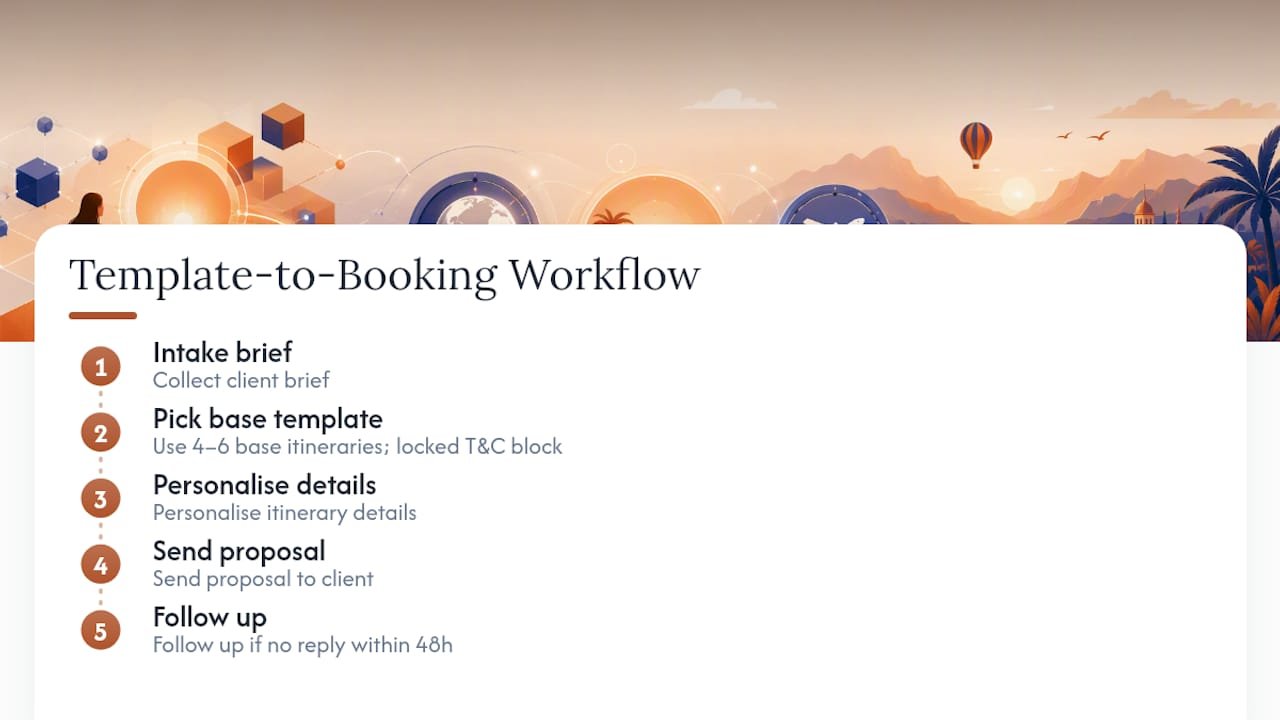
A workflow that holds up under real client volume looks like this: intake the brief, pick the closest base template from your library, personalise the details, send, then follow up within 48 hours if you’ve heard nothing. Keeping four to six base itineraries on hand, with a locked terms and conditions block, cuts the time spent building each proposal from scratch and keeps your legal wording consistent every time.
What actually matters when you’re building these proposals
Templates get treated as a formatting exercise, and that’s the wrong frame. The structure matters, but it’s not what closes the deal. What closes it is specificity: naming the actual hotel, the actual transfer company, the actual restaurant you’d book for their anniversary dinner. A pitch paragraph that shifts the reader’s attention from logistics to what the trip will actually feel like tends to outperform a proposal that reads like a spreadsheet with nicer fonts.

Conventional advice on this topic obsesses over design polish, and while a clean layout is a genuine trust signal for higher-value bookings, it’s not the first problem most agents have. The first problem is usually vague itineraries and buried pricing. Fix those before you spend an afternoon picking fonts.
If you’re doing this solo and the admin is starting to eat into the time you’d rather spend on client relationships, that’s worth noticing early. A template solves the writing problem. It doesn’t solve the licensing, payment processing or wholesale rate access that come with running a travel business properly, and that gap is where a lot of independent agents stall out.
— Sam
Want the proposal handled without building the business behind it yourself?
Templates solve the writing problem. They don’t solve licensing, wholesale rates or payment protection, and that’s usually where solo agents hit a wall. Timeshunters gives you a branded booking site, ATOL-protected licences through Times Travel group, wholesale hotel and cruise inventory, and automated booking management, so the proposal you send is backed by a business that can actually fulfil it.
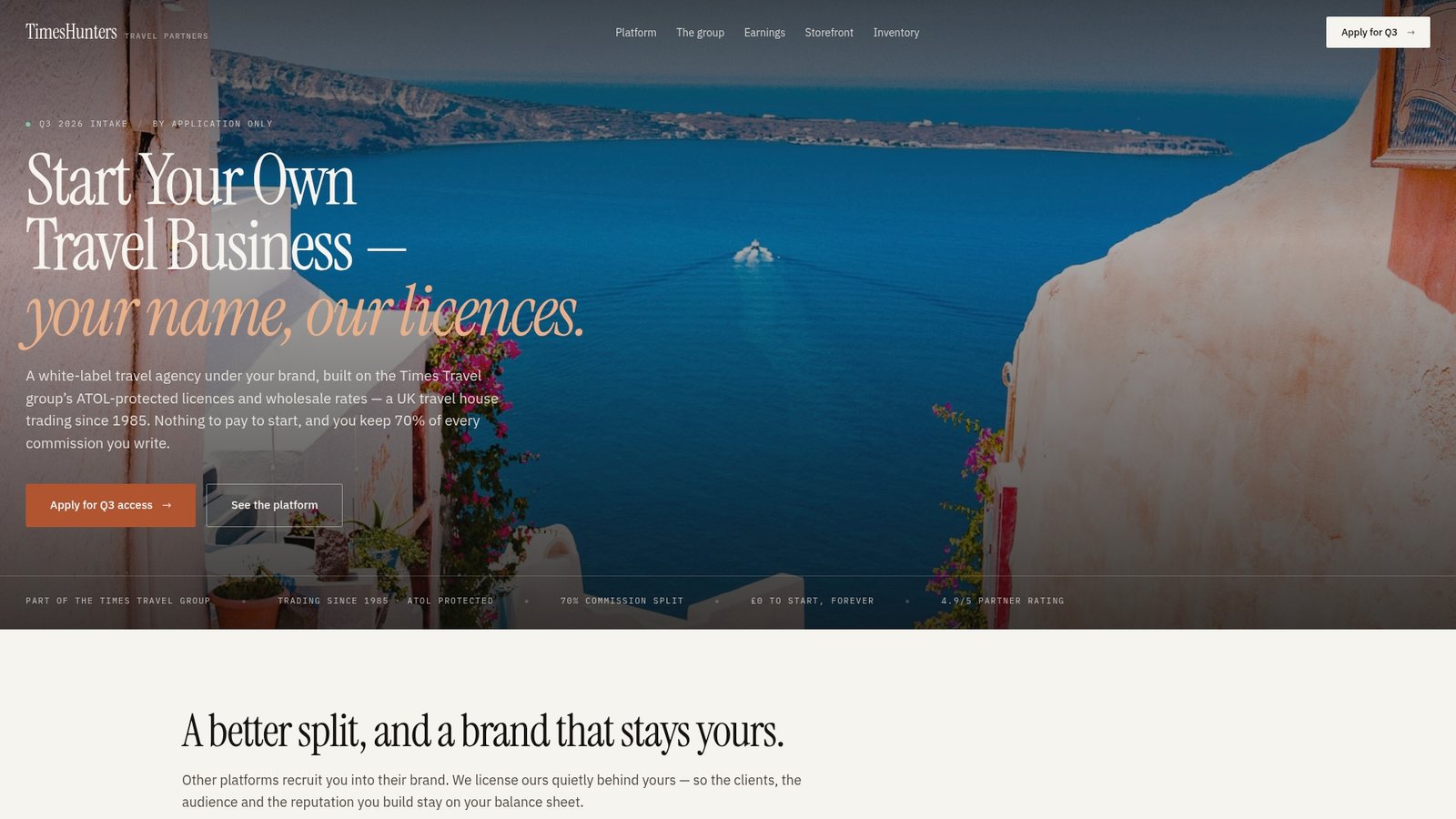
That suits aspiring travel entrepreneurs, freelance agents and small operators who want their own brand and client list without building the licensing and supplier relationships from zero. If you’d rather send proposals backed by a real operating business than a template alone, take a look at the Timeshunters platform and see what setting up under your own name involves.
Sources
If you want a pre-built starting point rather than assembling one from scratch, Creo Proposals’ travel agent template offers a client-ready framework, Better Proposals’ travel agency template includes e-signature and payment tools, and Proposable’s travel proposal samples show a complete accept-and-sign layout worth studying before you build your own.