Keep 30% commission: Sell travel as a creator via a white label agency
Creator focused how-to for launching a white label travel agency: ATOL compliance, predictable cashflow, booking operations, and converting followers into...

Yes. A creator with an established audience can launch a branded, white‑label travel agency and sell holidays legally, provided the underlying licence is ATOL‑protected. The legal prerequisite is checking how the ATOL and agency arrangements work before you list a single package. The commercial upside is real too: commission on a proper agency split beats a typical affiliate link many times over, and the marker of success is simple, protected bookings, repeat clients, and cashflow you can actually predict.
TL;DR:
- A white-label travel agency can be legally launched by creators with an ATOL-protected license, but they must verify the license scope and agreement details beforehand.
- Commission payments depend on customers traveling, often arriving months after booking, requiring careful cashflow planning and deposits to mitigate delays.
- Partnering with an existing ATOL holder is recommended for legal compliance, with a focus on transparent terms around protection, commissions, refunds, and failure procedures.
- Building trust with followers is crucial; concrete content like itineraries and transparent pricing encourages actual bookings rather than relying solely on inspiration.
- Using a platform like Timeshunters offers ATOL protection and infrastructure without the lengthy application process, maintaining creator autonomy and boosting income potential.
Table of Contents
- Why the white‑label travel agency model suits creators
- How do you set up a branded travel agency step by step?
- What legal and ATOL rules must you check first?
- How does commission and cashflow actually work?
- How do you convert followers into paying customers?
- What operations and tools keep bookings running smoothly?
- How should you handle customer service and support?
- Insider perspective: what the first year actually looks like
- How Timeshunters helps you turn followers into a travel business
- Sources
- FAQ
Why the white‑label travel agency model suits creators
Selling travel isn’t the same as recommending it. A recommendation earns a click; a booking earns a commission, and the gap between those two things is trust. Travellers still lean on professional booking help far more than most influencer marketing assumes: 34% of people used a travel professional to book a holiday in the past year, and confidence in booking through an agent rose five percentage points year on year. That is exactly the gap a branded agency fills.
Creators already do the hard part. Phocuswright’s research on creators and conversion found creator content influenced 72% of people who consulted a creator before booking. The problem most influencers hit is that inspiration doesn’t automatically become revenue unless they own the transaction. Compare the routes:
- Affiliate links: low effort, low reward, often a few percent per booking, and you never see the client again.
- Ad‑hoc brand deals: one‑off fees, no recurring income, no client relationship.
- White‑label travel agency partner: you own the brand and the client list, with commission splits that can run far higher than affiliate rates, backed by an ATOL‑protected licence you don’t have to apply for yourself.
Pro Tip: Treat your first ten bookings as a trust exercise, not a sales target. Repeat clients, not one‑off sales, are what turn a side hustle into a real agency.
Certain platforms build their proposition around this gap, offering partners a substantial commission split against the low single digits typical of online travel agency affiliate schemes, with some partners reportedly increasing income from hundreds to over a thousand pounds per booking after switching models.
How do you set up a branded travel agency step by step?
Launching doesn’t require reinventing the travel industry. It requires discipline about what you sell, who fulfils it, and what your audience sees first.
- Pick a niche and product mix. Ski chalets, honeymoon villas, safari camps, small‑ship cruises, whatever matches your content. Narrow beats broad when your audience already trusts you for one thing.
- Draft sample packages before you launch. Three to five ready‑to‑book itineraries with real pricing give your audience something concrete to act on, rather than a vague “message me for a quote.”
- Choose a white‑label partner or host agency carefully. This is the decision that makes or breaks the business.
- Build your brand assets. A booking site under your name, clear terms, sample itineraries, and a visible deposit policy.
- Publish, track, and capture leads. Go live with bookable content, trackable links, and a simple lead capture flow before you push hard on marketing.
When you’re vetting a white‑label partner, the agreement should spell out:
- Whose ATOL protection covers the booking, and how that’s disclosed to your customers
- The exact commission split and when it’s paid
- Settlement frequency (weekly, monthly, per booking)
- Who handles refunds, amendments and cancellations
- What happens if the supplier or partner fails financially
A Startups makes the same point in a broader context: niche focus, transparent pricing, and clear marketing separate agencies that last from ones that fizzle after the launch buzz fades.
What legal and ATOL rules must you check first?
ATOL, the Air Travel Organiser’s Licence, protects customers who buy flight‑inclusive holidays if the seller or organiser collapses. If you’re selling flights combined with accommodation or other services, someone in the chain needs to hold ATOL cover, and the CAA’s guidance on ATOL requirements sets out fitness, competence, and financial checks that make direct application a serious undertaking for a solo creator.
The Package Travel Regulations define when a combination of flights, hotels and transfers counts as a “package,” triggering specific liability and refund obligations for whoever sells it. Get this wrong and you’re personally on the hook for protections you never arranged.
This is why most creators partner with an existing ATOL holder rather than applying themselves. Under the ATOL Regulations, the ATOL holder must publish a schedule of terms in its agency agreements, spelling out obligations when an agent (you) makes flight‑inclusive bookings available to customers.
Before you sign anything:
- Verify the partner’s current ATOL status directly with the CAA, not just their marketing page
- Request the actual agency agreement wording, not a summary
- Confirm what your customer‑facing terms must say about protection and who they’re contracting with
How does commission and cashflow actually work?
Commission rarely lands the moment someone books. Most partners only confirm and pay commission after the customer has actually travelled, which means a booking made in March for a September holiday won’t show up as real income until autumn. Cancellations and amendments can claw commission back months after you thought it was settled, since payouts are typically reconciled post‑travel rather than at point of sale.
Build your pricing and cashflow around that reality rather than around the illusion of same‑day income:
- Never bury fees in the checkout. Drip pricing (adding charges late in the booking flow) erodes trust fast with an audience who already knows you personally.
- Raise average booking value through specialist add‑ons, not price inflation. Private transfers, curated excursions, or upgraded rooms lift your take without making the headline price look inflated.
- Take deposits on every booking to protect your cashflow position before final payment lands.
- Reconcile bookings against payouts monthly, not annually, so a clawback doesn’t blindside you.
- Keep a contingency cash buffer for the gap between a booking’s deposit and its final commission payment.
A higher commission split changes this equation directly.
Pro Tip: Run your cashflow forecast assuming every commission arrives 90 days later than the booking date. If the numbers still work under that assumption, you’re genuinely solvent, not just optimistic.
How do you convert followers into paying customers?
Inspiration and conversion are different skills, and most creators are far better at the first than the second. The content that actually converts followers into bookers tends to be concrete: itinerary walkthrough videos, downloadable itinerary PDFs with real pricing, and honest “how it felt” storytelling from a trip you actually took or sold.
- Post the inspiration, then follow up fast with a landing page that lists bookable packages, not just a vague link‑in‑bio.
- Use trackable links or personal codes to measure which content drives bookings, keeping in mind that attribution gaps and delayed confirmations remain a known issue across creator‑led travel sales.
- Route interest through a booking call or widget, then confirm and follow up automatically so nobody falls through the cracks between “interested” and “paid.”
Label paid promotions honestly and don’t push every post into a sales pitch.
What operations and tools keep bookings running smoothly?
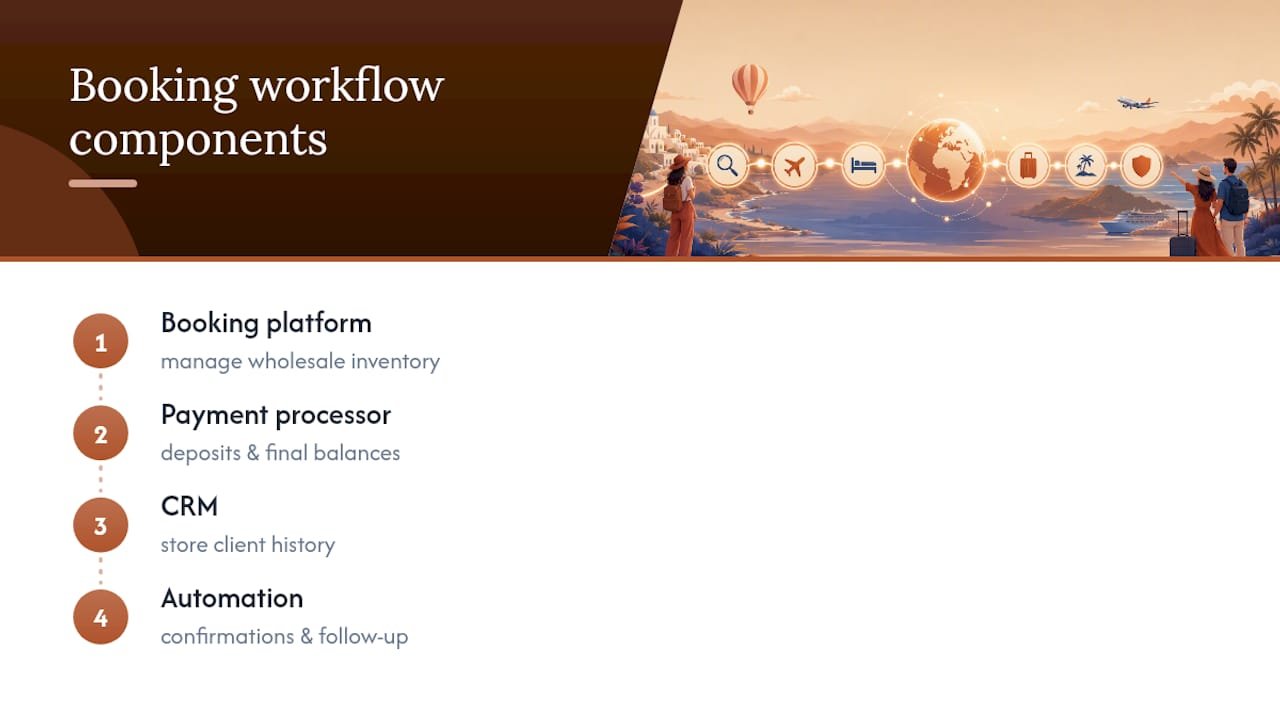
Running an agency, even a small one, means running systems, not spreadsheets held together with hope. At minimum, you need a booking platform that handles wholesale inventory, a payment processor that manages deposits and final balances, a CRM that stores client history, and automated confirmation and follow‑up so nobody books a honeymoon and hears nothing for three weeks.
Track a handful of numbers weekly rather than monthly: total bookings, conversion rate from enquiry to sale, average booking value, cancellation rate, and confirmed revenue after travel (the number that actually matters, given delayed commission settlement). Booking lead times and average values are shifting; industry trading data for 2025 shows growth in long‑haul and niche products alongside rising average booking values, worth watching if you’re deciding what to specialise in.
Solo creators can run this alone at low volume, bring in a freelance travel consultant as bookings grow, or lean on a partner’s fulfilment team. Whichever route, keep clean records of refunds and complaints. They matter for regulatory checks and for your own sanity when a dispute lands eighteen months after the trip.
How should you handle customer service and support?
Selling travel means becoming the first point of contact when something goes wrong, and something eventually will. A flight gets cancelled, a hotel loses a booking, a client’s passport expires two days before departure. Your audience trusts you personally, which means complaints land in your inbox, not a faceless call centre’s.
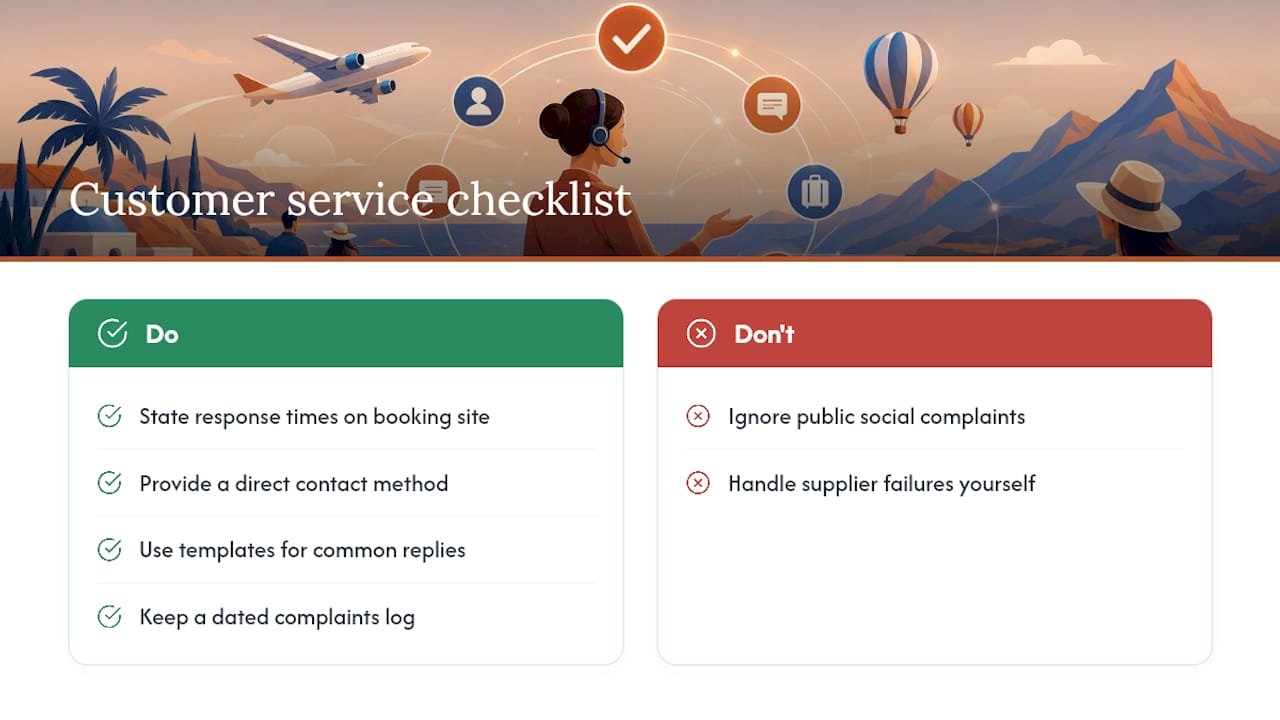
Set expectations early. State response times clearly on your booking site (within 24 hours on weekdays is a realistic standard for a small operation) and give clients a direct contact method that isn’t buried in social media DMs. Template your most common responses, amendment requests, refund queries, documentation reminders, so you’re not writing every email from scratch under pressure.
Lean on your white‑label partner for the parts you can’t fix yourself. Supplier failures, ATOL claims, and complex rebooking sit with the licence holder’s operations team, not with you, and knowing that boundary in advance stops a bad week from becoming a personal crisis. Keep a simple complaints log with dates, actions taken, and outcomes. It protects you if a dispute escalates and it shows patterns worth fixing, like a recurring supplier issue, before they cost you a client base you spent months building.
Never let a service failure sit unanswered on social media. A public complaint handled well, quickly and personally, often does more for trust than the booking that went smoothly ever could.
Insider perspective: what the first year actually looks like
Meaningful bookings take months, not weeks. Expect your first year to involve slow trust‑building, a handful of bookings that teach you more than any guide can, and at least one cashflow scare from a delayed commission payout. The creators who struggle most usually made one of three mistakes: they monetised every post before earning trust, skipped reading the agency agreement properly, or spent commission before it was actually confirmed.
— Sam
How Timeshunters helps you turn followers into a travel business
Timeshunters gives you the one thing most creators can’t build alone: ATOL‑protected infrastructure without applying for a licence yourself, launching a business under someone else’s brand, or waiting months for accreditation. You keep your own name, your own client list, and your own autonomy, while the white‑label travel agency platform handles the licensing, wholesale rates, and booking mechanics behind the scenes.
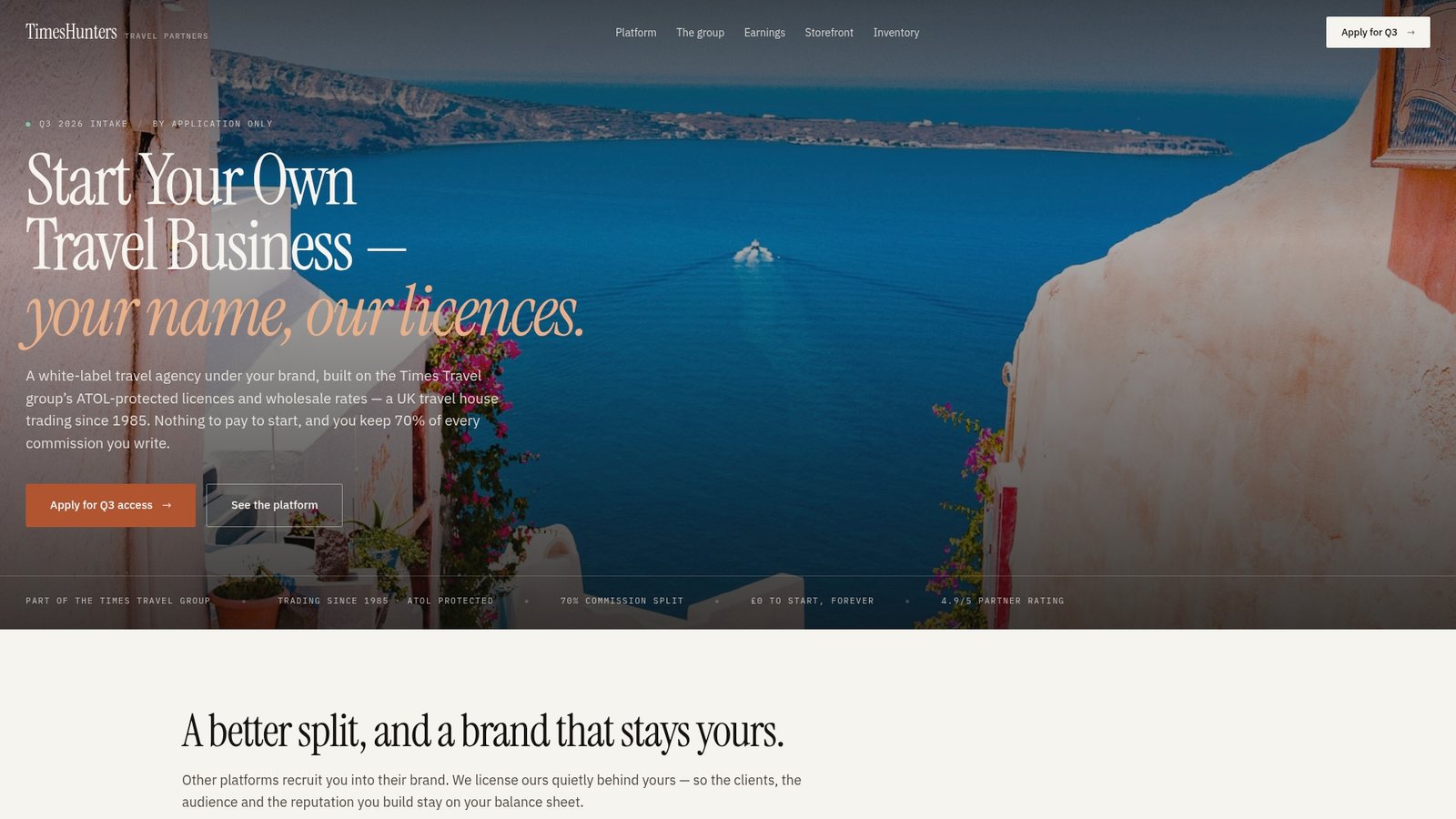
The offering may cover hotels, cruises, tours, villas, safari camps, and rail, all resold under your brand with a branded booking site, instant pricing proposals, and automated client follow‑up already built in. Some platforms state partners keep a substantial commission split, positioned against the far thinner margins typical of standard online travel agency affiliate schemes, with partners reporting increased income per booking after switching to this model. There may be no cost to start, and the audience might not see the licence behind the curtain.
If you’ve read this far and you’re weighing up whether to build the compliance and supplier relationships yourself or partner in, visit the white‑label travel agency page to see how the setup works and request more detail on getting started.
Sources
For deeper detail beyond this guide, consult the CAA’s ATOL requirements and Package Travel Regulations for legal detail, ABTA’s Holiday Habits report for traveller confidence data, and hospitality booking guidance like Wild Foodz’s stay‑booking tips or Frequentflyer for content ideas.
- Holiday Habits (ABTA)
- Creators and conversion (Phocuswright)
- CAA ATOL requirements for the travel industry
- Legislation
FAQ
Can an influencer legally sell holidays under their own brand?
Yes, provided the bookings are covered by a valid ATOL licence, either your own or a partner’s, and any flight‑inclusive package meets the Package Travel Regulations. Most creators partner with an existing ATOL holder rather than applying independently, since the CAA’s application process involves financial and competence checks that take time to clear.
How much commission can a creator earn selling travel?
It depends entirely on the model. Standard online travel agency affiliate schemes often pay a few percent per booking, while white-label partner models can offer far higher splits, Timeshunters states its own partner commission split at 30%, with some partners reporting significantly increased income per booking after switching.
When does commission actually get paid out?
Commission is usually confirmed and paid only after the traveller completes their trip, not at the point of booking. Cancellations or amendments can claw commission back months later, so building a cashflow buffer for that lag matters more than chasing booking volume alone.
Do I need my own ATOL licence to start?
Not necessarily. Many creators use a white‑label partner’s existing ATOL protection instead of applying themselves, which avoids the lengthy fitness, competence, and financial checks the CAA outlines for direct applicants. Always confirm exactly how that protection is disclosed to your customers before you launch.
Will selling travel damage my credibility with followers?
Only if you monetise every post or hide pricing. Creator‑influenced bookings converted 72% of people who consulted creators in Phocuswright’s research, which shows trust and sales can coexist when recommendations stay honest and paid content is clearly labelled.