
Break even in four bookings: 2026 cost playbook for UK home agents
2026 cost playbook for UK home based travel agents. Compare host fees (£30–£120 a month), ATOL, VAT/TOMS and hidden charges, and see an example that...

Most UK home-based travel agents spend somewhere between nothing and £3,000 to get started, with common host joining fees of £100–£300, plus ongoing monthly costs from £30 for a basic tier to £120 or more for a premium package, according to industry-reported cost data. The two decisions that move these numbers most are which licence route you choose and which host tier you sign up to.
TL;DR:
- Most UK home-based travel agents start with a one-off fee of a few hundred pounds for host joining, plus equipment costs if needed, with franchise options costing from about £2,500.
- Monthly fees range from £30 for basic packages to over £120 for premium services, with detailed comparisons of what’s included required before signing up.
- Licensing through ATOL and ABTA varies in cost, with franchise ATOL being simpler to obtain but standard ATOL offering more control at a higher administrative fee.
- VAT and TOMS schemes significantly impact earnings calculation, and choosing the proper legal capacity upfront avoids complex bookkeeping later.
- Agents typically earn commissions and may add service fees, with a realistic breakeven point of around four bookings after startup costs, depending on booking value and fees introduced.
Table of Contents
- 1. One-off start-up costs and what they buy
- 2. Ongoing monthly membership and host agency fee tiers
- 3. ATOL, franchise ATOL, APC and ABTA charges explained
- 4. VAT, TOMS and tax implications for commissions and fees
- 5. How agents earn: commissions, mark-ups and service fees
- 6. Worked example: how many bookings to break even
- 7. Less obvious charges and contract terms to avoid
- 8. Compliance updates and practitioner evidence that affect cost choices
- 9. Author’s quick practical judgement for readers deciding now
- 10. Start a lower-cost route with a white-label platform
- Sources
- FAQ
1. One-off start-up costs and what they buy
Joining a host agency is the cheapest way in. Most hosts charge a joining fee in the low hundreds of pounds, and this typically covers initial training, access to a booking portal and a period of hand-holding while you learn supplier systems, according to trade reporting on start-up costs. You will also need basic kit: a reliable laptop, a dedicated phone line or number, decent broadband and, ideally, a simple customer relationship management tool to track leads and repeat clients. None of that is travel-specific, so most people already own some of it.
Franchise packages and formal training days sit at the other end of the scale, with reported starting prices from around £2,500 upwards for a more structured, branded route into the industry, per the same trade data.
Typical one-off spend breaks down as:
- Host joining fee: commonly a few hundred pounds.
- Equipment and software: laptop, phone, broadband and a basic CRM, much of which may already be owned.
- Optional franchise or training package: from roughly £2,500 for a fuller, branded start.
2. Ongoing monthly membership and host agency fee tiers
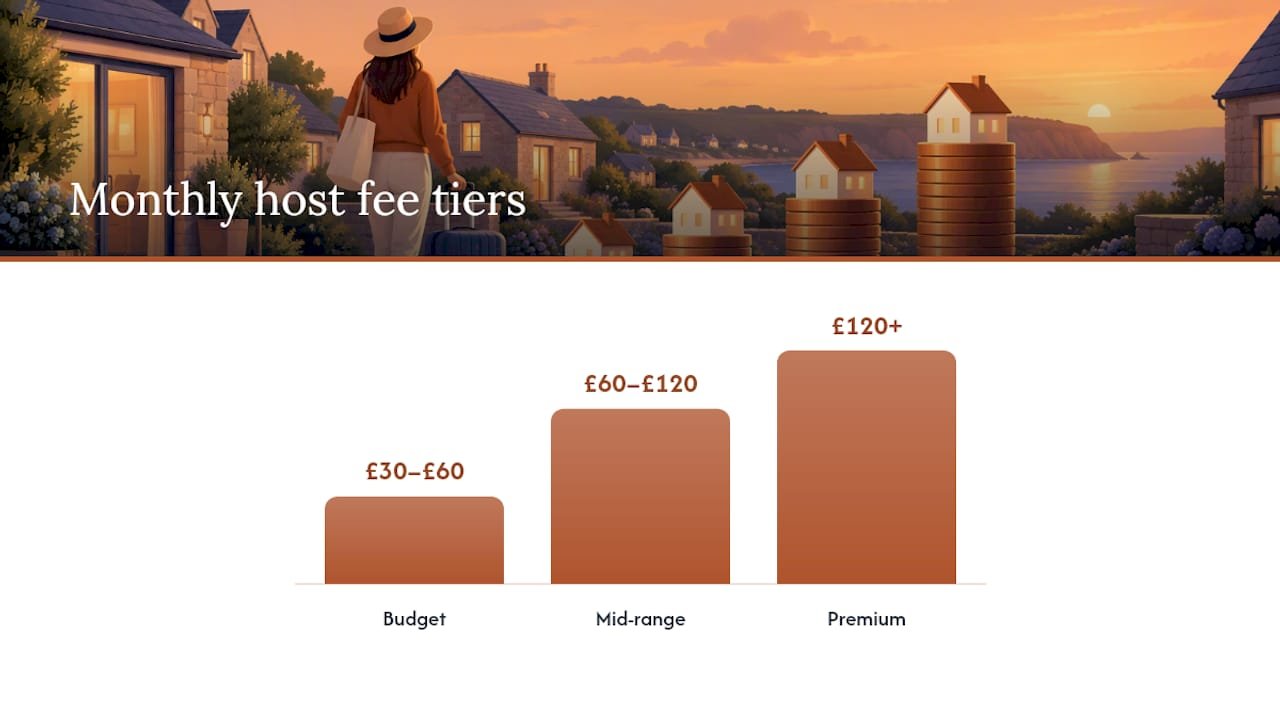
Monthly host fees fall into three rough bands, based on industry cost reporting:
- Budget (£30-£60 a month): usually covers ATOL access through the host’s licence and basic booking tools, but often with limited marketing support or mentoring.
- Mid-range (£60-£120 a month): typically adds ABTA or ATOL/APC coverage bundled into the fee, a marketing kit, and some form of ongoing mentoring or business support.
- Premium (£120+ a month): brings fuller marketing packages, dedicated account management and sometimes access to higher-value supplier deals, which some agents find worth paying for once bookings scale.
Before committing, compare offers on the same terms: what commission split applies, whether ATOL and ABTA cover is included or extra, what marketing materials are provided, and whether there’s a minimum contract term.
Pro Tip: Ask each host for a written breakdown of exactly what the monthly fee includes, rather than relying on a sales call, so you can compare like for like.
3. ATOL, franchise ATOL, APC and ABTA charges explained
Your licence route is the single biggest driver of regulatory cost. The Civil Aviation Authority sets out several ATOL types, including standard ATOL, Small Business ATOL (SBA) and franchise ATOL arrangements, each with its own eligibility rules and fee structure, as detailed in CAA guidance on ATOL types. Franchise ATOL lets you trade under a larger operator’s licence, which is often the simplest route for a home-based start, while holding your own standard ATOL brings more control but higher administrative overhead.
Annual Percentage Charge (APC) and CAA renewal timing matter for cashflow, since CAA’s published renewal fee schedule shows that fees for arrangements such as Small Franchise ATOL vary depending on when you submit your renewal.
Beyond ATOL, membership bodies add further costs:
- ABTA membership: an application and annual subscription cost, separate from ATOL.
- Travel Trust Association: an alternative consumer protection route some independent agents use instead of, or alongside, ABTA.
- APC charges: tied to your ATOL type and renewal date, so timing your application affects when cash leaves the business.
4. VAT, TOMS and tax implications for commissions and fees
Whether you pay VAT on your commission alone or on the wholesale price depends on your legal capacity: acting as a disclosed agent versus acting as a principal changes the treatment entirely, according to HMRC’s VAT Notice 709/6. Get this wrong from day one and your bookkeeping will need unpicking later.
Where you buy in and resell travel as a principal, or act as an undisclosed agent, the Tour Operators’ Margin Scheme usually applies instead of standard VAT rules, per HMRC’s TOMS guidance. Under TOMS, VAT is calculated on your margin rather than on the full sale price, which is a meaningfully different calculation to run every quarter.
TOMS dramatically increases accounting complexity: agents who might fall under it should budget for professional accountancy support rather than DIY bookkeeping.
Decide your legal capacity before you take your first booking, then confirm the VAT treatment with an accountant familiar with travel.
5. How agents earn: commissions, mark-ups and service fees
Commission rates vary by product and by host split, so two agents selling the same holiday can take home very different amounts depending on their agreement. Beyond commission, many agents add a direct client fee once they’ve built a track record:
- Consultation fee: a fixed charge for research and itinerary planning, sometimes non-refundable.
- Percentage fee: a small charge on top of the booking value, often reserved for complex or luxury trips.
- Fixed booking or amendment fee: a flat charge for processing changes after a booking is confirmed.
Practitioners generally advise building a client base first, as convenience is the top priority in business travel, influencing client booking behaviours and average values. Case studies of established advisors introducing fees describe non-refundable consultation charges of roughly £100 to £250, or a small percentage such as 3.5% on higher-value bookings, once trust is established, according to reporting on a Travel Counsellor’s move to fees.
Pro Tip: State any service fee in writing before you start work, so clients know exactly what they’re paying for and why.
6. Worked example: how many bookings to break even
Take an illustrative, conservative case: say start-up costs of £300 plus three months of a £60 mid-tier host fee, totalling £480. If your average commission per booking after the host split is £120, you need four bookings to break even.
- Conservative scenario: one booking a month means it takes four months to recoup costs.
- Optimistic scenario: two bookings a month clears the same £480 in two months.
- Ways to shorten payback: raise average booking value, introduce a modest service fee, or improve lead conversion so fewer enquiries are wasted.
These figures are illustrative only, built to show the mechanics rather than to represent typical earnings.
7. Less obvious charges and contract terms to avoid
Some costs only surface once you’re trading. Watch for:
- Payment processing fees taken on top of the host’s advertised commission split.
- Supplier chargebacks passed on to you when a client cancels or disputes a booking.
- Lead charges, where a host bills you for enquiries regardless of whether they convert.
- Commission clawback clauses that let a host reclaim commission months after a booking completes.
- Long exclusivity terms that lock you to one host’s supplier list.
Before signing anything, ask the host for written evidence that ATOL and ABTA cover is genuinely included, rather than taking a verbal assurance at face value.
8. Compliance updates and practitioner evidence that affect cost choices
The Economic Crime and Corporate Transparency Act introduces stronger identity verification and fraud-prevention duties, along with new Companies House powers and offences, according to ABTA’s guidance on ECCTA. Even a home-based agent should document supplier due diligence and basic fraud-prevention steps, since these changes raise governance costs across the industry, however small the business.
ECCTA increases governance and identity-verification costs for UK travel businesses, and even small home-based agents should document supplier due diligence and fraud-prevention steps to reduce downstream risk.
9. Author’s quick practical judgement for readers deciding now
If you’re ready to move, compare at least three hosts on fees and inclusions, get written confirmation of ATOL and ABTA cover, and speak to an accountant about VAT and TOMS before your first sale. Budget clarity beats optimism every time.
— Sam
10. Start a lower-cost route with a white-label platform
Choosing between a low-fee host and a pricier franchise is really a question of how much margin you’re willing to give up for convenience. TimesHunters offers a different route to the same goal: a white-label travel agency platform where you keep your own brand and client relationships while trading under Times Travel group’s ATOL-protected licences, with no cost to start. Partners receive a 30% commission split, rather than paying a fixed monthly host fee, and get access to wholesale hotel, cruise, tour, villa, safari camp and rail inventory alongside automated booking management and a branded booking site. For agents weighing up licence friction against margin, that structure removes the up-front licensing decision entirely. Check the white-label travel agency page to see how it compares with the costs above.
Sources
- Gov
- ATOL requirements for the travel industry – CAA
- ECCTA – implications for the travel industry & ABTA members | ABTA
FAQ
How much is a typical travel agent fee?
Home-based agents typically pay a one-off joining fee of £100 to £300 plus a monthly host fee ranging from £30 for a basic tier to £120 or more for a premium package. Franchise or formal training routes can start from around £2,500.
Do travel agents get 70% off travel?
No, this refers to commission, not a discount: travel agents earn a share of the booking value as commission rather than paying a lower price themselves. Commission splits vary by host and by product type, so the exact share depends on the specific agreement in place.
How much commission do travel agents make in the UK?
Commission rates vary widely by product type, supplier and host agreement, so there’s no single UK-wide figure. Your take-home commission depends on the split your host or platform offers, which is why comparing agreements on the same terms matters before you sign.
Who are the top travel agents in the UK?
There’s no official ranking of the “top” UK travel agents, and the right choice depends on what you’re trying to achieve, whether that’s booking a holiday or starting a home-based agency. For anyone comparing host or platform options as a business decision, the fee structure, licence coverage and commission split matter more than general reputation.
What is TOMS and does it apply to me?
The Tour Operators’ Margin Scheme is a special VAT scheme that applies when you buy in and resell travel as a principal, or act as an undisclosed agent, calculating VAT on your margin rather than the full price, according to HMRC’s TOMS guidance. Whether it applies to you depends on your legal capacity in each transaction, so confirm this with an accountant before you start trading.