Group Booking Management: A Guide for Travel Entrepreneurs
How to manage group bookings under your own travel brand: enquiries, quotes, deposits, rooming lists and changes, plus how to keep 70% commission.

Group bookings are where a small travel business can earn the most per enquiry, and where it is easiest to lose money through slow replies, loose deposit terms and messy name lists. Managing them well comes down to one routine: qualify the enquiry, quote once and clearly, lock deposits and deadlines, run one controlled passenger list, and handle changes in writing. Doing that under your own brand, with ATOL-protected licences, wholesale inventory and automated booking management behind you, is what we built TimesHunters for, and it lets you keep 70% commission on what you sell.
This guide is for people building a travel business: freelancers, influencers, hospitality owners and professionals with an existing audience who are about to take their first wedding party, family reunion, hen weekend or corporate trip.
TL;DR
- A group booking is one organiser reserving several rooms or seats for one trip, with negotiated rates and contract terms that you must manage as a single unit.
- Reply fast, ask all the qualifying questions in one message, and send one quote with a clear price, deposit, deadline and expiry date.
- Keep one passenger or rooming list with one named owner, and set your own cut-off ahead of the supplier’s.
- Supplier payment schedules differ widely, so map every deposit and balance date before you quote the group.
- On the TimesHunters platform you sell under your own name with ATOL-protected licences, and partners receive 70% of the commission.
Table of Contents
- What counts as a group booking
- Step 1: Qualify the enquiry before you quote
- Step 2: Send one clear quote
- Step 3: Map every deposit and deadline
- Step 4: Run one controlled passenger list
- Step 5: Handle changes in writing
- Step 6: Close the booking properly
- Why the model matters as much as the routine
- Perspective
- Start taking group bookings under your own brand
- FAQ
- Sources
What counts as a group booking
A hotel group booking is a reservation of several rooms by one organiser for a single event or trip, with negotiated rates and contracted terms, managed together so rates, rooming lists and billing stay aligned. The exact threshold varies by supplier. Some hotels start at five rooms, others at ten, and airlines and tour suppliers set their own minimums, so always ask the supplier what triggers group terms.
The point of the distinction is that group terms change your risk. You are not selling one holiday to one family. You are holding inventory for many people, collecting money from many people (or from one organiser on their behalf), and answering for the whole party if numbers shrink.
For a new agent, that is both the opportunity and the trap. The commission on a ten-room trip is worth far more than ten separate enquiries, but a single missed deadline can cost the organiser a non-refundable deposit and cost you the relationship.
Step 1: Qualify the enquiry before you quote
Speed matters. A short reply within the hour that asks the right questions often counts for more than a perfect quote sent the next day. Put every question in one message so the organiser answers once:
- Dates, and how flexible they are
- Number of travellers, split into adults and children, and the room or cabin mix
- Purpose of the trip and any shared activities or meals
- Budget per person or per room
- Who is paying: the organiser, or each traveller individually
- Who makes the final decision
The UK’s meetings and events body BEAM, in its 2026 group enquiry guidance, expects the client brief to be fully qualified, provisional bookings to be made at enquiry to secure space, release dates and option expiry dates to be agreed, and a booking not to be treated as definite until the signed contract has reached the venue in time. Take that as your working standard even on leisure trips.
On budget, ask plainly. If the organiser says “just send your best price”, that tells you they are comparing, so offer two options at different levels rather than a single number.
Where it goes wrong
The usual failure is quoting before you know who decides. You build a lovely proposal for an organiser who then has to get approval from ten friends or a committee. Ask who signs off, and build the time for that into your quote’s expiry date.
Step 2: Send one clear quote
A good group quote states the price per person or per room, what is included, the deposit amount, the date for the names list, the payment deadlines, what happens to unused rooms or seats, and the date the quote expires. An end date gives you a natural reason to follow up and stops you holding inventory indefinitely.
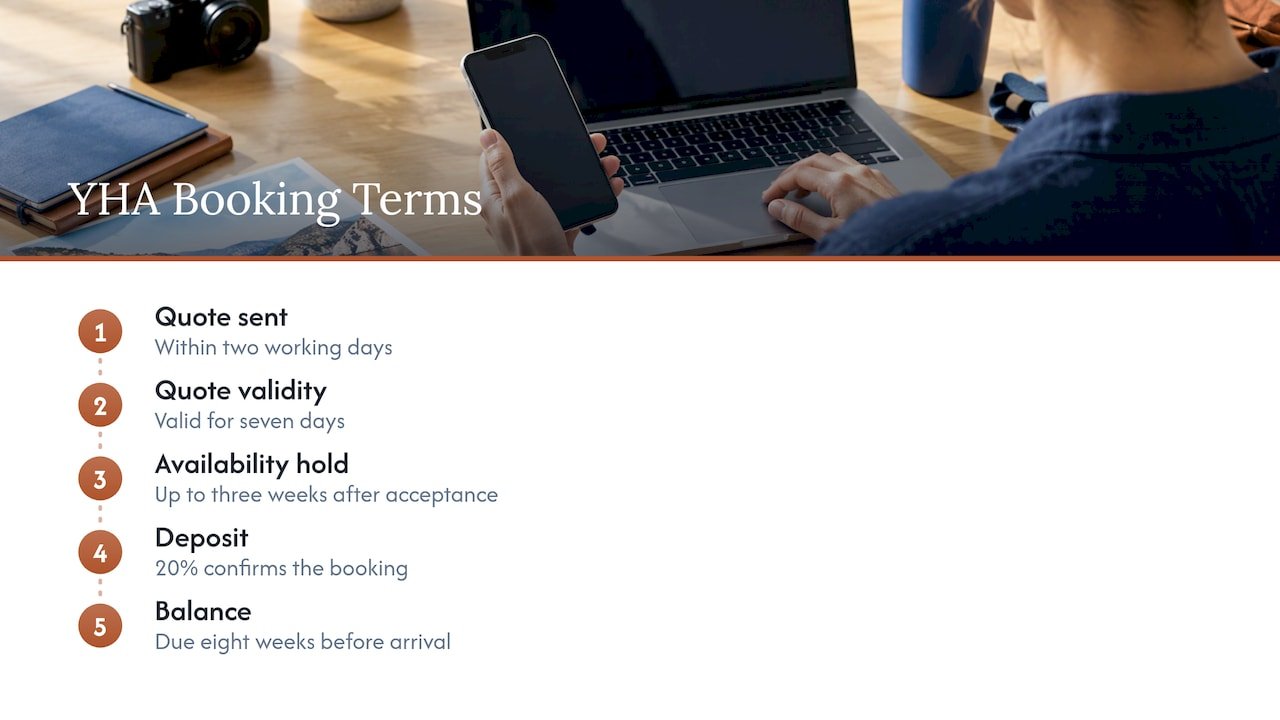
For a sense of how a UK supplier structures this, YHA’s group process sends an online quote within two working days, valid for seven days. Accepting it holds availability at the quoted price for up to three weeks, and a 20% deposit confirms the booking, with the balance due eight weeks before arrival. Your own quote sits on top of terms like these, so you need them in front of you before you promise the client anything.
Speed and presentation are the hard part for a one-person business. Our client-ready travel proposal template shows what a quote should contain, and our guide to turning enquiries into bookings covers the follow-up. The TimesHunters platform includes instant pricing proposals and automated client follow-up, so the reply goes out while the organiser is still thinking about the trip.
Step 3: Map every deposit and deadline
This is where group bookings differ most from ordinary ones. Every supplier has its own schedule, and your client’s payment dates must sit safely ahead of them. A few UK examples show the spread:
| Supplier type | Deposit | Balance | Source |
|---|---|---|---|
| Hostel group | 20% to confirm | 8 weeks before arrival | YHA |
| Hotel group, 10+ rooms | At least 50%, non-refundable, 28 days before the booking begins | 14 days before arrival | Distinct Group |
| Residential school trips | Per paying member, non-refundable but transferable if replaced | 8 to 10 weeks before departure | PGL |
| Airline group desk | Due 14 days after booking | 45 days before departure | Virgin Atlantic |
The same hotel terms add that a cancellation more than 28 days out incurs no extra charges, while inside 28 days the deposit is withheld and charges for any part not cancelled stay payable. Read that kind of clause before you sign off a quote, because it decides how much room the organiser has to adjust numbers.
Choose who pays
Decide early whether the organiser pays for everything or each traveller pays individually. A single payer is simpler to manage but concentrates the risk on one person. Individual payment suits friends and club trips, but it needs a code or link, a deadline and a way to track who has paid. If you take payments from individual guests through your own site, a guide to collecting direct payments for bookings shows how card payments can be set up per guest. On our platform, payments are managed and financially protected, so you are not building that plumbing yourself.
Whatever the structure, set your own internal cut-off a week or two before the supplier’s. A cut-off that is the supplier’s date leaves you chasing money with no margin.
Step 4: Run one controlled passenger list
The rooming list (or passenger manifest for flights and tours) is the named list of who is travelling and in what room or seat. Hotels typically expect it 7 to 14 days before arrival, and the contract may demand it earlier. It is the supplier’s work order: it drives room sharing, accessibility needs and key cards, so a late or messy list means problems at the front desk while the group stands waiting.
A workable routine:
- Name one owner for the list, usually you, with one master copy.
- Collect each traveller’s full name exactly as on their passport or ID, dates, room type, dietary and access needs, and who is paying.
- Send a first draft with gaps marked TBA well ahead, then the final list at the contract cut-off, then an updated version just before travel with late changes.
- Number the versions so nobody works from an old one.
- Share only the personal data the supplier needs, and send it securely, as your data protection duties as a business apply from your first client.
For group flights, name changes are often restricted by the airline, so get spellings right the first time. Our guide to automating itinerary delivery lists six messages worth sending to travellers, and booking confirmation automation covers the confirmations side.
Step 5: Handle changes in writing
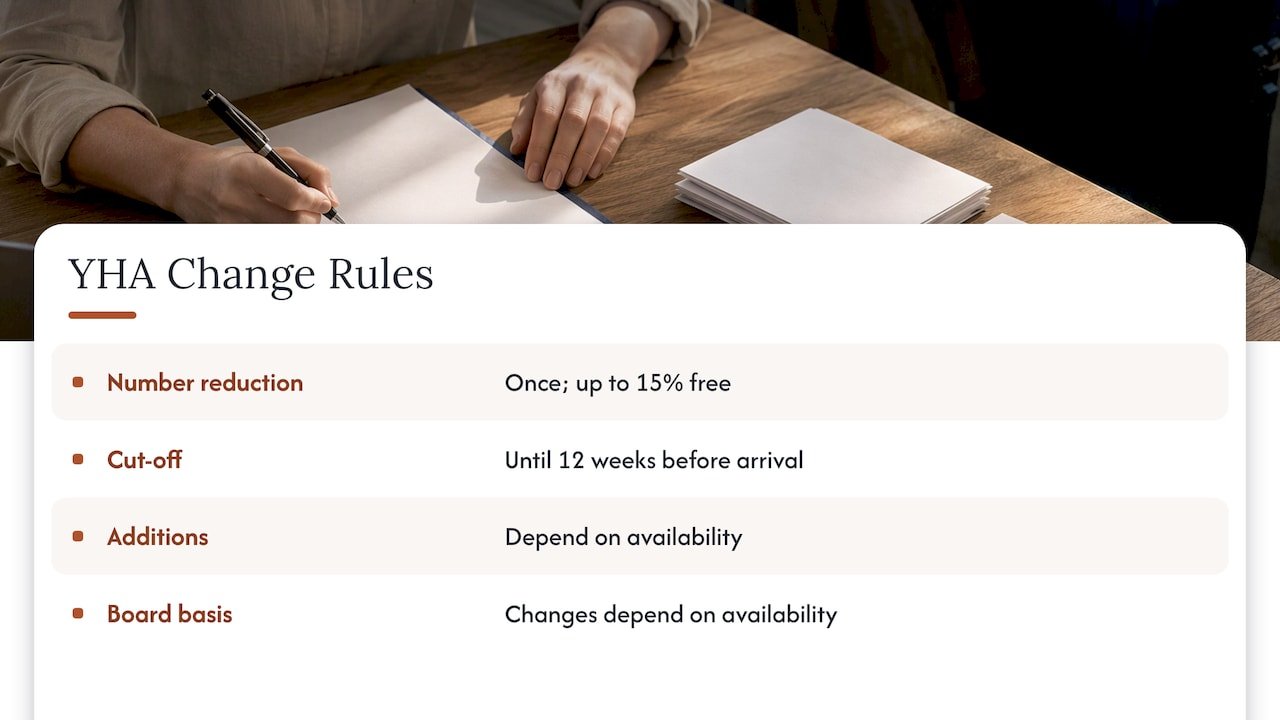
Changes are certain: someone drops out, a couple joins late, a dietary need appears. Know the supplier’s rules before the organiser asks. YHA, for example, lets groups reduce numbers once by up to 15%, free of charge, up to 12 weeks before arrival, while additions and changes to board basis depend on availability. Other suppliers are stricter.
Tell the organiser at the start which changes are free, which cost money and by what date each door closes. Confirm every change by email so there is a record. If a supplier holds space for you, keep them advised of changes while it is held, as BEAM’s guidance asks.
Watch pickup as the date approaches. If sign-ups are running slow against the contract, you want to know early enough to nudge the organiser or ask the supplier about extending a cut-off.
Step 6: Close the booking properly
After travel, send a short thank-you, ask what worked and what did not, and ask the organiser whether they would use you again. Group organisers are repeat buyers: the person who ran a successful family reunion often organises the next one, and the guests who enjoyed it become your next enquiries. This is also how a personal brand grows. A client list built under your own name is yours, and every well-run group adds to it.
Keep a record for yourself too: what the organiser asked, where the numbers moved, which supplier terms caught you out. That record is your next quote template.
Why the model matters as much as the routine
A tidy routine only pays if the economics work. Commission is the whole business, so what you keep from each booking decides whether a group trip is worth the admin. Our model gives partners 70% commission, set against the 4% that online travel agencies typically offer. You can read how that works out after fees in our UK host agency commissions guide, and how to protect your cash flow in our five contract checks for net rates.
Supplier access matters too. Rate type affects both your margin and your quote, which is why we explain static and dynamic hotel rates for agents.
Perspective
Most new agents think the hard part of groups is finding the trip. It is not. It is staying organised across weeks of deadlines while still looking like a professional to the organiser who trusted you with their friends, family or colleagues.
That is why we built the platform around the admin as well as the sale. You trade under your own name, your clients are your clients, and our ATOL-protected licences sit behind you. The licence’s branding is invisible to your customers, and there is no cost to start. Branded booking site, instant proposals, automated booking management, managed payments and financial protection, and automated client follow-up are all part of what partners use.
The commission is the other half. Partners receive 70%. On a group, where the booking value is high, that gap between 70% and the 4% typical of online travel agencies is the difference between a side project and a business.
Sam
Start taking group bookings under your own brand
If you want to take groups without building licences, payment handling and booking admin from scratch, our white-label travel agency gives you a branded booking site, wholesale hotel, cruise and tour inventory, instant proposals and ATOL-protected licences, with a 70% commission share. Our onboarding and support programme walks new partners from setup to launch.
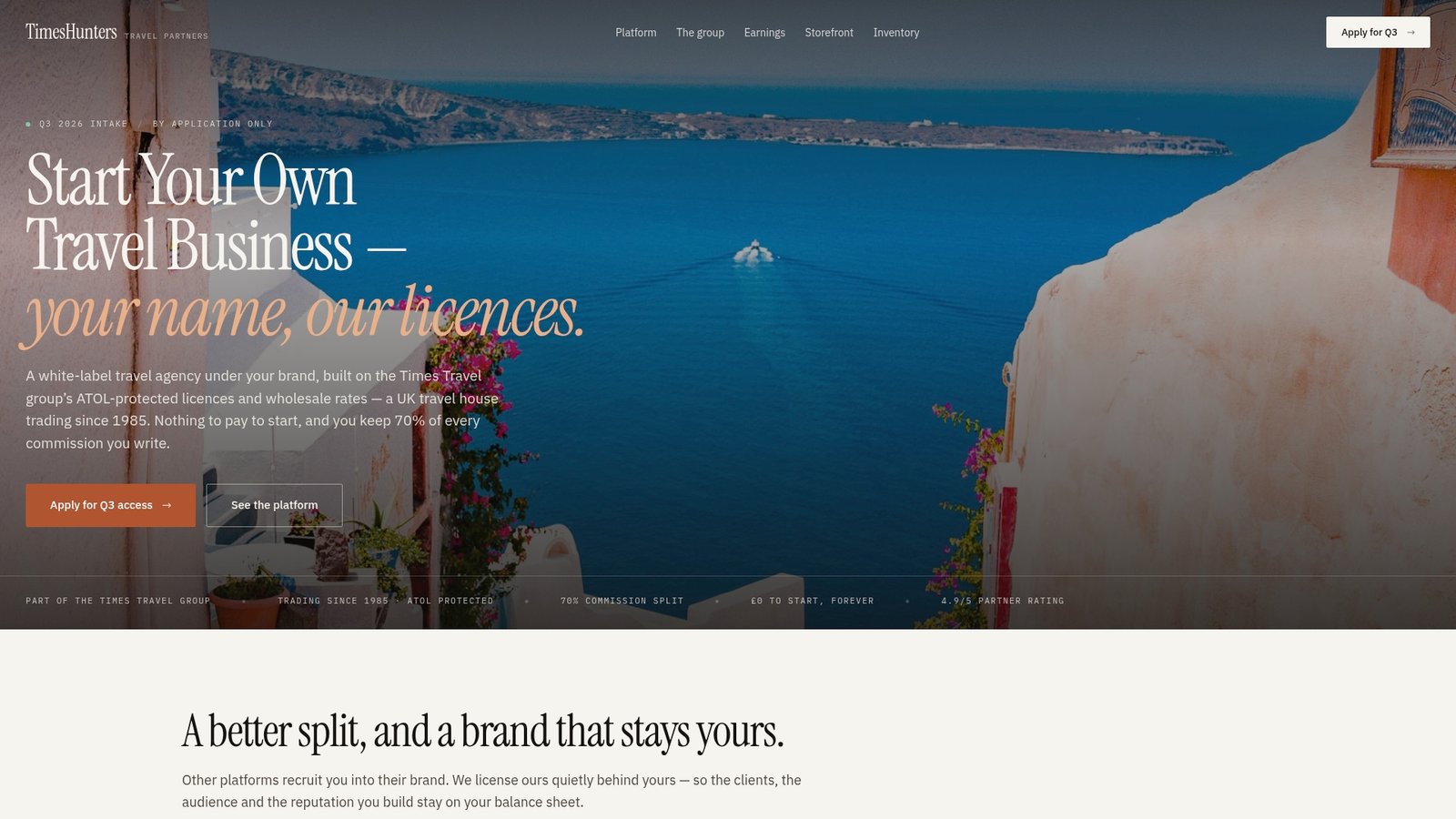
You can also see the full offer at timeshunters.com.
FAQ
How does group booking work?
The organiser enquires, the supplier or agent quotes a price for the whole party, and a deposit confirms the booking. Names, final numbers and balance payments follow on dates set in the contract. The agent manages the list and the deadlines in between.
What counts as a group booking?
There is no single rule. It is several rooms, seats or places booked together under one organiser with negotiated terms, and each supplier sets its own minimum. Hotels commonly count rooms, with the cutoff varying by property, so ask each supplier.
Is it cheaper to book in a group?
Often the per-person rate is lower because the supplier is guaranteed a block of business, but the terms are stricter, with non-refundable deposits and fixed deadlines. Compare the whole cost, including any taxes, service charges and meals, rather than the headline rate alone.
How far ahead should I set deposit and payment dates?
Set your client’s dates ahead of the supplier’s. Supplier balances commonly fall between two and ten weeks before travel, so asking your client to pay a week or two earlier gives you time to chase and fix problems.
Sources
- Managing Group Bookings for Hotels: A Complete 2026 Guide
- How to reply to a group booking inquiry
- BEAM Meetings, Events and Group Enquiry Handling Best Practice
- How to manage your group booking, YHA
- Hotel Room Bookings Terms and Conditions, Distinct Group
- Virgin Atlantic group sales guide, December 2024
- Stripe Connect for direct bookings