
Host Agency Commissions: UK Agents’ Pay After Fees and Clawbacks
Calculate UK agents’ take home from host agency commissions with a worked example, then check fees, clawbacks, and contract terms before signing.

Host agency commissions work in two layers: the supplier pays the host a commission, then the host passes you a share, the commission split. Many hosts advertise an agent share, but your real take-home depends on supplier rates, host fees and payout timing. Our partner commission is 30%. Model all three before you sign anything.
TL;DR:
- Your split applies to the supplier commission, not the booking price, and earnings vary by product because hotel, cruise, and package rates differ.
- Compare the full first year cost, including monthly or booking fees and clawbacks, because cancellations or supplier reversals can erase earnings from successful bookings.
- Suppliers generally pay commissions only after travel, while hosts may add monthly or quarterly cycles and reporting delays; keep several months of expenses in reserve.
- Get the split, fee schedule, clawback triggers, and payout timing in writing; reject unlimited unilateral changes and negotiate fixed terms, especially if you bring clients.
- Ask an accountant whether you act as an intermediary or principal, since VAT treatment can differ; keep booking, commission, and fee records.
Table of Contents
- How commission splits work and how hosts express them
- Fees and deductions that shrink your split
- When you get paid and how to handle the wait
- How to calculate your net earnings per booking
- Contract clauses to check before you sign
- Tax and VAT basics for commission income
- How to choose a host agency: a short checklist
- Model first, then commit
- TimesHunters: a white-label route to a higher partner commission
- FAQ
- Sources
How commission splits work and how hosts express them
Hosts present splits in a few ways, and the headline percentage rarely tells the whole story.
- Flat splits: one fixed share of the supplier commission, whatever your sales volume.
- Tiered splits: your share rises as your annual sales grow, so a new agent might start lower and climb as the book builds.
- Fee-adjusted splits: the headline share looks generous, but monthly or per-booking charges cut into it.
The point that catches most newcomers is the two-layer maths. Your percentage applies to the supplier commission, not to the sale price. Travel Weekly’s guidance on host contracts warns that agents often mistake supplier commission for their own take-home, and that skipping either layer leads to overestimating earnings.
Products matter too. Hotels, cruises and packaged holidays can carry very different supplier commission rates, so the same split can produce very different earnings on each. Our page on typical travel agent commission rates shows how the supplier side varies by product.
Fees and deductions that shrink your split
A generous split can be eaten away by charges, so ask for the full fee schedule. The usual suspects are:
- Joining or onboarding fees.
- Monthly platform or membership fees.
- Training or technology fees.
- Per-booking admin charges.
- Payment processing fees.
- Marketing or lead fees.
Then there are clawbacks and chargebacks. If a client cancels, a supplier reverses the commission, or a booking changes after you have been paid, the host may deduct that money from your next payout. In your first year, with a thin book of business, a few clawbacks can wipe out several good bookings. Always ask how long the clawback window runs and exactly which events trigger it.
Pro Tip: Compare total first-year cost under two scenarios: a low upfront fee with heavy clawback terms versus a higher fixed fee with a clean split and clear clawback rules. The cheaper-looking option is often the dearer one.
Our UK agent cost playbook walks through how these costs add up for home-based agents.
When you get paid and how to handle the wait
Commission rarely lands when the client pays. Under the industry’s delayed revenue model, commissions are generally paid only after the client has travelled, so you may work on a booking for months or longer before earning from it. Hosts then pay on their own cadence, often monthly or quarterly, with a reporting lag on top. Treat any payout date as a range, not a promise.
Practical steps to keep your cashflow steady:
- Keep a reserve that covers your running costs for several months of unpaid work.
- Build a steady pipeline, so earlier bookings pay out while new ones are still waiting.
- Track the expected travel date and payout date for every booking in one spreadsheet.
- Ask your host in writing how soon after supplier payment they pay you.
- Where the contract allows, stagger your sales across travel months rather than bunching them.
How to calculate your net earnings per booking
Run this formula for every product you plan to sell:
- Sale price × supplier commission rate = gross commission.
- Gross commission × your agent split = gross take-home.
- Gross take-home − host fees − expected clawbacks = net take-home.
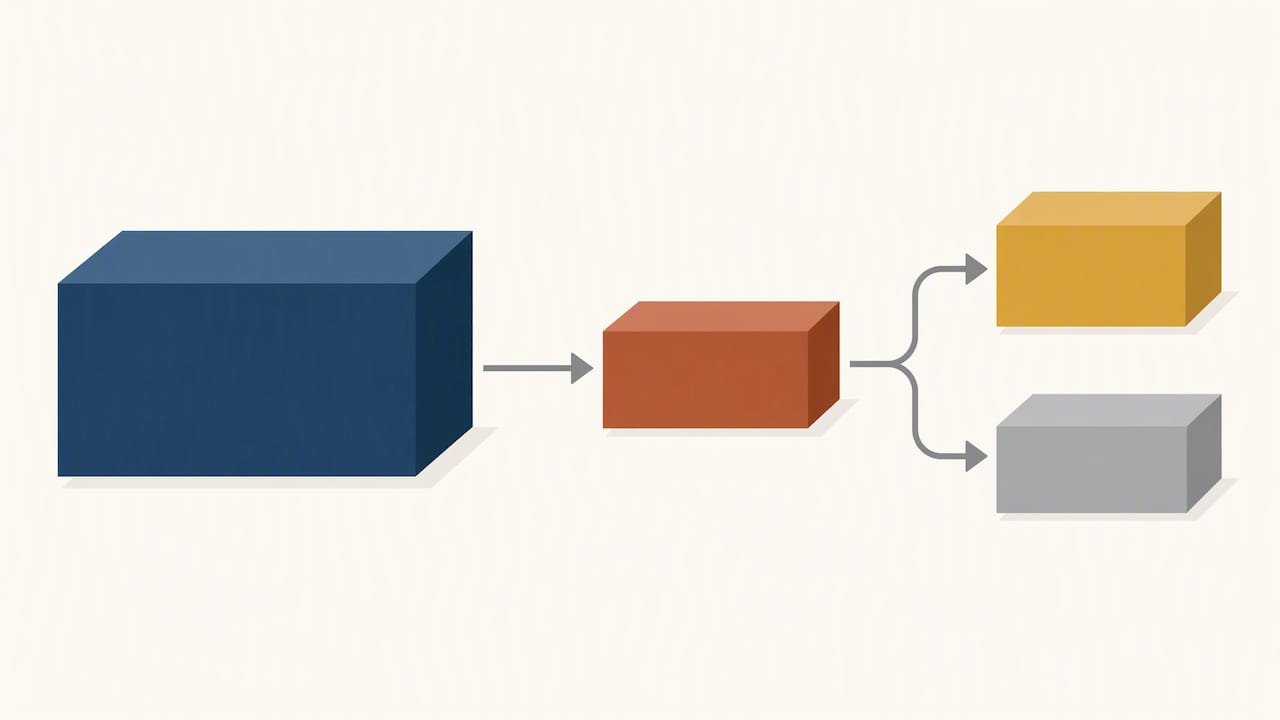
Here is an illustrative example, not market data. Gross commission is £200. If the host charges a £15 admin fee and you set aside £10 for possible clawbacks, your net take-home is £115.
The two-layer rule: apply your host split to the supplier commission, not the sale price. Skip either layer and you will overestimate what you earn.
Before you run your own numbers, confirm these contract variables: the split for each product type, every fee, the clawback window, and the payout date. Our net per-booking calculator guide helps you check your figures.
Contract clauses to check before you sign
Most host contracts are negotiable, especially if you arrive with existing clients. The biggest red flag is any clause that lets the host change your split or add fees without limit. Travel Weekly’s practitioner guidance says to insist on fixed terms or a clearly defined change process.
Watch for:
- Unilateral changes to splits or fees.
- Vague clawback windows with no end date.
- Unclear cancellation rules, such as who bears the cost when a client pulls out.
Terms worth asking for:
- A fixed split for a defined period, such as your first year.
- A written notice window before any change takes effect.
- Plain definitions of what triggers a clawback.
If you bring a book of business, say so early and ask for better terms in exchange. Hosts compete for agents who sell, and a written concession costs them little.
Tax and VAT basics for commission income
Tax is where a good split can quietly turn into a bad one, so raise it with an accountant before you start trading. The key distinction is whether you act as an intermediary or a principal. Gov explains that intermediaries usually account for VAT on their commission only, while principals may fall under different rules such as the Tour Operators Margin Scheme.
Points to take to your accountant:
- Whether you act as an agent or a principal under your host’s arrangement.
- Whether VAT applies to your commission, which can depend on how you trade and whether self-billing is used.
- How your commission counts as taxable business income under HMRC’s business income guidance.
Keep clear records of every booking, commission statement and fee, and get professional advice before you register or decline to register for VAT.
How to choose a host agency: a short checklist
Put these questions to every host you consider, and get the answers in writing:
- Can you show a sample earnings calculation for a hotel, a cruise and a package?
- What is the full fee schedule, including every deduction and clawback rule?
- What is the exact payout schedule, and how long after supplier payment do you pay?
- What financial protection do you use, such as ATOL cover or a trust-account route, and do you support self-billing? Our checklist on client money protection shows what to look for.
- Are your contract terms fixed and transparent, with no unilateral changes?
- What tools and training will actually help me sell more?
A host that answers these clearly and quickly is usually one that will treat your money the same way.
Model first, then commit
My view is simple: never judge a host by its headline split. Build the spreadsheet, run your own sale prices through both layers, and protect your cashflow before you celebrate any percentage. A good structure may make a difference to income, though your own results will depend on your products and clients. Read every clause, push for fixed terms, and take professional advice on tax.
— Sam
TimesHunters: a white-label route to a higher partner commission
We offer a white-label travel agency platform that lets you build your own branded business on Times Travel group’s licences. Our partners receive a 30% commission on bookings, as listed on our partner site, with access to wholesale hotel, cruise and tour inventory, a branded booking site and automated booking management, so you can spend less time on admin and more on clients. Your clients see your brand, not ours. Want to see what that looks like for your own sales? Ask us for a sample earnings calculation, or explore our partner referral programme and start your agency today.
FAQ
What is a travel agent host agency?
A host agency is an established travel business that lets independent agents sell under its umbrella. It typically provides supplier relationships, booking tools and financial protection in exchange for a share of your commission and sometimes fees.
How much commission do travel agents make on cruises?
It depends on the cruise line and your host’s split, because your share is a percentage of the supplier commission, not the sale price. See our look at cruise agent commissions for how that plays out.
Which travel agency is best for international travel?
The best choice is the one that offers fixed contract terms, clear fees, reliable financial protection and wholesale access across the destinations you sell. Compare hosts using the checklist above rather than a single headline split.
Do TUI travel agents get commission?
Agents selling holidays generally earn commission from the supplier, but the rate and the share you keep depend on your employment or host arrangement. Ask for the exact structure in writing before you commit.