90 Day Launch for Agents: Build a Luxury Travel Niche via White Label
90-day playbook for travel agents: validate an access-led product, secure supplier partnerships, and use white-label infrastructure to launch a luxury...

Yes, specialising in luxury travel can be a genuinely profitable, repeatable business, but only if you build around access, relationships and high-value product formats rather than volume booking. The single best next step is to validate one access-led product (a private-jet expedition or an exclusive villa buyout, say) against one supplier relationship before you build anything else. The 2026 Virtuoso Luxe Report and platforms like TimesHunters both point the same way: the money is in scarcity, not scale.
TL;DR:
- Focus on access-led products with strong supplier relationships and exclusivity to achieve higher profit margins in luxury travel.
- High-net-worth clients prioritize privacy, exclusivity, and speed, with demand for ultra-luxe experiences increasing significantly.
- Validating demand through tailored pitches, supplier checks, and benchmarking is essential before fully committing to a niche.
- Building authority through curated events, longform content, and strategic partnerships outweighs volume advertising in this segment.
- Leveraging turnkey solutions like TimesHunters can accelerate infrastructure setup, allowing entrepreneurs to concentrate on client sourcing.
Table of Contents
- What defines a luxury travel niche and how narrow to go
- How do high-end travellers behave differently?
- Services and exclusive product formats that sell to luxury clients
- Marketing, sales and building authority in the luxury segment
- Pricing, profitability and how to increase take per booking
- A practical 90-day checklist to start or pivot into the luxury niche
- Key challenges and risks in the luxury travel niche
- Legal and regulatory considerations for luxury travel services
- Which tools help you deliver and market luxury travel experiences?
- Sustainability and ethics in luxury travel
- Case studies in luxury travel excellence
- Global luxury travel markets and regional preferences
- TimesHunters case study: a turnkey route into the niche
- Ready to launch your own luxury travel brand?
- Sources
- FAQ
What defines a luxury travel niche and how narrow to go
Luxury, in commercial terms, isn’t a price tag. It’s a combination of three things: access to inventory the public can’t book directly, genuine scarcity, and personalisation deep enough that the client feels the trip was built around them, not sold to them. A £15,000 safari that anyone can book on a comparison site isn’t luxury in this sense. A private buyout of the same camp, arranged through a relationship the client can’t replicate themselves, is.
That distinction should drive how narrow you go when you pick a niche. Three rules help:
- Audience depth: choose a segment with enough repeat high-value clients to sustain you, not just a one-off spike (family offices, private equity partners, or a specific diaspora community with strong travel spend all qualify).
- Supplier access: don’t specialise in a product you can’t actually get preferential rates or allocations for. A niche without supplier leverage is just a marketing angle.
- Margin potential: some formats (private aviation, exclusive-use buyouts) carry far higher margin headroom than standard package holidays, even at similar price points.
To validate demand before committing, run three quick tests: pitch one bespoke itinerary to five warm contacts and track response time, call two suppliers to check what allocation or rate access you’d actually get, and price one package against the Virtuoso editorial benchmark for a comparable trip. If none of those three produce interest or advantage, the niche needs rethinking.
How do high-end travellers behave differently?
Privacy, exclusivity, meaning and speed dominate the decision-making of high-net-worth clients, in that rough order. They aren’t buying a holiday. They’re buying discretion, a story worth telling (or, increasingly, not telling anyone), and the certainty that someone will pick up the phone at 11pm.
Booking patterns split into two distinct rhythms. Milestone trips (a fortieth birthday, a honeymoon, a multi-generational family gathering) get planned eighteen months out, with dozens of revisions along the way. Then there’s the spontaneous high-value booking: a client who wants to be on a plane to the Maldives by Friday and doesn’t care what it costs, only that it happens.
- Milestone trips reward patience, iteration and a strong brief-taking process.
- Spontaneous bookings reward infrastructure: who you can call, and how fast.
The trend is unmistakable. The 2026 Virtuoso Luxe Report found that 45% of professional travel advisors reported an increase in ultraluxe requests, meaning exclusive-use, private, or exceptionally high-end experiences. That’s not a niche trend anymore. It’s close to half the advisor base seeing demand shift upward.
This changes staffing and response expectations. You need someone contactable outside office hours, supplier contacts who’ll hold inventory on a phone call rather than a formal request, and a fulfilment process built for urgency, not just for the eighteen-month planners.
Services and exclusive product formats that sell to luxury clients
The products that actually command premium prices share one trait: a consumer cannot simply go online and book them. That’s what separates a luxury villa listing from a true buyout, or a first-class seat from a private charter.
- Villa and resort buyouts — securing an entire property, not just rooms within it, for a family or group. This is the format most travel entrepreneurs can access fastest through established villa and camp operators.
- Private yacht charters — from a week on the Amalfi coast to a full Mediterranean season, yachts sell on exclusivity and crew quality as much as the vessel itself.
- Private aviation and charters — increasingly requested for both convenience and privacy; even clients who could fly first class will charter for a family funeral or a discreet business trip.
- Bespoke expeditions — private-jet expeditions that circle multiple continents in a fortnight are the clearest example of packaging logistics, concierge and access into one premium product.
- Closed-door access — a private after-hours viewing, a chef’s table that isn’t on any menu, a meeting arranged with someone the client has admired for decades.
Assembling these into a sellable package means combining three layers every time: the logistics (transport, accommodation, timing), the concierge layer (someone managing the human details), and the access itself. Build a supplier checklist before you pitch anything: confirmed availability windows, a named contact who can hold inventory, and clarity on what bespoke add-ons (private chef, security, translator) the supplier can actually deliver versus what you’ll need to source separately.
Marketing, sales and building authority in the luxury segment
Volume advertising doesn’t work in this segment, and chasing it wastes money you should be spending on relationships instead. High-net-worth clients rarely discover an advisor through a Facebook ad. They discover one through a recommendation, an event, or a piece of writing that demonstrates real expertise. Bespoke operators typically build authority through editorial presence and relationship marketing rather than paid reach, and that pattern holds across the segment.
A handful of tactics consistently outperform generic marketing spend:
- Curated events for existing clients and their referrals, kept small and genuinely well-hosted rather than large and generic.
- Longform content that demonstrates specialist knowledge (a detailed guide to a region’s best closed-door experiences does more for credibility than a hundred Instagram posts).
- Specialist partnerships with concierge services, private banks and executive travel providers, who often need a travel specialist to refer clients to and rarely have one they trust.
- Restraint on social media — posting less, but only the material that signals genuine access, tends to build more trust than frequent, generic posting.
Executive transport partnerships are worth building early. A relationship with a service like Airport Lift Nottingham’s executive travel arm solves a logistics problem your clients will ask about constantly, and gives you a professional referral partner in return.
Pro Tip: Don’t launch a public Instagram push before you’ve built two or three strong supplier and referral relationships. In this segment, a quiet reputation among the right dozen people beats ten thousand followers, and premature visibility can actually undercut the exclusivity you’re trying to sell.
Pricing, profitability and how to increase take per booking
Standard commission in mainstream travel retail sits low enough that volume becomes the only lever, which is exactly the trap the luxury niche lets you escape. Access-led products, the kind consumers can’t book themselves, carry meaningfully higher margin headroom because they can’t be price-compared online.
Alternatives to pure commission are worth building into your model early:
- Service or planning fees, charged separately from the booking commission, for the design work itself.
- Membership or retainer arrangements with repeat high-spend clients who want ongoing access rather than one-off trips.
- Bundling logistics, concierge support and access products together, which lifts average booking value far more reliably than trying to sell each piece separately.
Depth beats breadth here. A small number of very high-value clients, served exceptionally well, generates disproportionate value compared with a large, shallow client list, and that concentration is what makes the higher-margin products worth building around.
Track three numbers monthly: average booking value, margin per booking (not just commission percentage), and lead response time. That last one matters more than most new entrants expect. Sales research suggests immediate replies produce dramatically better conversion than responses delayed even by a few hours, which for spontaneous high-value bookings can mean the difference between winning and losing the client entirely.
A practical 90-day checklist to start or pivot into the luxury niche
Ninety days is enough time to go from idea to a working pipeline, provided you sequence the work properly.
- Weeks 1 to 2: Define your niche precisely, using the audience depth, supplier access, and margin rules covered earlier. Write it down as a single sentence.
- Weeks 2 to 4: Secure at least one meaningful supplier relationship, ideally one that gives you preferential rates or held allocations, not just a generic partner listing.
- Weeks 3 to 4: Draft three premium offers built around that supplier relationship, each combining logistics, concierge and access.
- Weeks 5 to 8: Pilot outreach to warm contacts, past clients, or referral partners. Don’t cold-market yet; test the offers on people who already trust you.
- Weeks 8 to 10: Host one small curated event or briefing, even informal, for referral partners and prospective clients.
- Weeks 10 to 12: Refine pricing and operations based on real feedback, then formalise your response infrastructure.
Operational essentials shouldn’t wait until week 12. Build response templates now, so a spontaneous enquiry gets an acknowledgement within minutes, not hours. Write an emergency plan for when things go wrong mid-trip: who the client calls, and who you call. And confirm your payment and financial protection arrangements, including ATOL cover where flights are involved, before you take a single deposit.
Key challenges and risks in the luxury travel niche
Privacy is the single hardest thing to manage well, and the easiest thing to get catastrophically wrong. High-net-worth clients often share details (health conditions, family disputes, security concerns) they’d never tell a mainstream travel agent, because the relationship implies discretion. One leaked itinerary, one careless mention on social media, one supplier who talks, and the client relationship ends permanently, often along with several referrals you never knew you had.
Service expectations run correspondingly high. A missed transfer that’s a minor inconvenience for a standard client becomes a serious failure for someone paying for a flawless experience. There’s very little tolerance for the operational hiccups mainstream travel absorbs routinely.
Supplier reliability is a related risk. Ultraluxe suppliers, boutique yacht operators, small private aviation brokers, independent villa managers, don’t always have the redundancy of larger operators. A single supplier failing at the wrong moment can unravel an entire trip, and your reputation with it.
There’s also a concentration risk in the business model itself. Serving fewer, higher-value clients means losing one can hurt disproportionately. Diversifying your client base within the niche, rather than relying on two or three families for most of your revenue, matters more here than in mainstream retail.
Finally, burnout is real in a segment built on being contactable at all hours. Building a small trusted network of collaborators or backup contacts early avoids the trap of becoming a single point of failure for every client you serve.
Legal and regulatory considerations for luxury travel services
Financial protection is the starting point, and it isn’t optional. Any package involving flights typically needs ATOL protection, and operating without proper licensing exposes both you and your clients to serious risk if a supplier fails financially.
Private aviation adds a further layer of complexity. You’re not usually the operator, but you are the one recommending and arranging the charter, so understanding which broker or operator holds the relevant air operator’s certificate matters, even if you’re not the licensed party yourself. The same logic applies to yacht charters: charter agreements, insurance coverage and crew certification sit with the yacht owner or management company, but a professional advisor should be able to confirm those are in order before recommending a vessel.
Data protection deserves particular attention in this niche, given how much personal and financial information high-net-worth clients disclose. UK data protection law applies fully regardless of how wealthy or private your clients are, and a breach involving a recognisable public figure carries reputational consequences well beyond the usual regulatory fine.
Industry bodies like IATA publish resources and standards that help agents understand accreditation, ticketing rules and professional obligations, worth reviewing before you take on international or multi-supplier itineraries. If you’re operating under a licence-holder’s ATOL protection rather than your own, as many white-label arrangements allow, clarify exactly where their compliance responsibility ends and yours begins.
Which tools help you deliver and market luxury travel experiences?
The technology stack for a luxury travel business looks different from mainstream retail, mainly because the product can’t be automated the way a standard package holiday can.
Booking and inventory systems still matter, but the emphasis shifts toward platforms that give you access to wholesale rates and held allocations rather than simply comparing public prices. Automated proposal tools that generate instant, polished pricing documents help enormously when a client expects a same-day response to a complex, multi-element itinerary.
Client relationship management becomes more important than in mainstream travel, given how few clients you’re managing and how much detail matters for each one. A system that tracks preferences, past trips, family details and communication history turns repeat business into something closer to a memory than a database lookup.
Marketing technology plays a smaller role than in volume travel, but longform content platforms, email newsletters for warm audiences, and simple event management tools for curated gatherings all outperform paid social advertising for this segment.
Payment and financial protection infrastructure deserves particular mention. Automated, secure payment handling with proper financial protection reassures clients making five and six-figure payments, and reduces the administrative burden that would otherwise eat into the time you should be spending on relationships and sourcing, not admin.
Sustainability and ethics in luxury travel
Sustainability has moved from a nice-to-have to a genuine expectation among a meaningful segment of high-net-worth travellers, though not universally, and not always for the reasons marketers assume. Some clients care primarily about environmental impact. Others care more about ethical labour practices at the properties and experiences they book, or about ensuring tourism revenue actually reaches local communities rather than disappearing into an international operator’s accounts.
This matters practically because sustainability claims in luxury travel are frequently vague or unverifiable, and increasingly sophisticated clients notice. A property claiming to be eco-friendly without specifics reads as marketing, not substance. Advisors who can speak knowledgeably about a supplier’s actual practices, water usage, staff employment terms, conservation funding, carry more credibility than those repeating a brochure line.
The privacy-and-meaning shift discussed earlier connects directly here. Clients moving away from status-driven, purely performative travel toward more purpose-driven experiences often want their trip to align with personal values, not just deliver comfort. That can mean choosing a smaller, locally-owned camp over a larger international brand, even at a higher price, because the story behind the choice matters to them.

Practically, this means building relationships with suppliers who can answer detailed sustainability questions honestly, rather than defaulting to whichever operator has the best marketing materials. It’s a genuine differentiator for advisors willing to do that homework, most don’t.
Case studies in luxury travel excellence
The advisors and brands that do this well tend to share one habit: they build reputations around a specific type of access, not a broad claim to “luxury” in general. An advisor known specifically for private-island buyouts, or for arranging closed-door culinary experiences in a handful of cities, becomes the obvious call for that request, even from clients they’ve never met before.
Editorial-driven brands illustrate this clearly. Virtuoso’s own content showcases specific ultraluxe formats, private islands, exclusive villa takeovers, private-jet expeditions, precisely because that specificity is what sells at premium prices. Nobody markets “nice hotels.” They market the experience nobody else can arrange.
The private-jet expedition model, as run by operators like Aman, demonstrates the packaging principle at its clearest: logistics, concierge support and genuinely exclusive access combined into a single high-margin product that couldn’t be assembled by the client independently, however much time or money they had.
The common thread across successful operators, large and boutique alike, is depth over breadth. Advisors who focus on a handful of high-yield brands and maintain deep supplier ties consistently outperform those spreading themselves across dozens of shallow relationships. That’s a deliberate strategic choice, not an accident of specialisation.
Global luxury travel markets and regional preferences
Luxury travel demand doesn’t behave the same way everywhere, and treating it as one uniform global market is a common mistake for entrepreneurs entering the niche.
North American high-net-worth clients tend to prioritise convenience and speed of response alongside exclusivity, often booking spontaneous high-value trips with little notice. Middle Eastern clients frequently favour extended family group travel, with buyouts and multi-generational itineraries a dominant request pattern. European clients, particularly from established wealth rather than newer wealth, often lean toward understated luxury: exceptional quality without ostentation, and a strong preference for privacy over visible status signalling. Asian markets show growing demand for bespoke cultural and wellness-focused itineraries, often blending luxury logistics with genuinely immersive local experiences rather than purely five-star comfort.
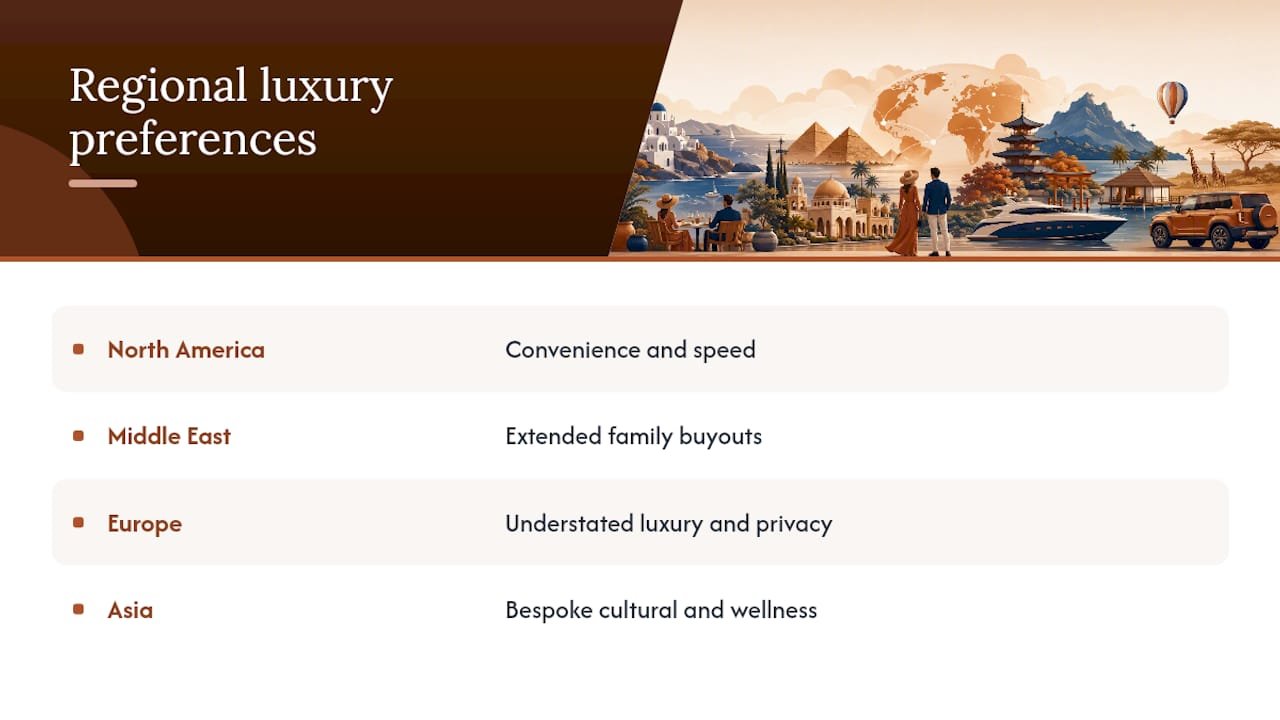
These differences matter practically when you’re choosing which supplier relationships to prioritise and how to position your marketing. A niche built around understated European sensibilities won’t resonate with a client base seeking visible exclusivity, and vice versa. Understanding which regional preference your existing network already skews toward, rather than guessing at a generic global luxury client, saves considerable time and marketing spend when you’re deciding where to focus first.
TimesHunters case study: a turnkey route into the niche
Building supplier relationships and financial protection infrastructure from scratch takes time most entrepreneurs don’t have. That’s the gap a white-label model like TimesHunters is built to close: partners launch a branded agency using Times Travel group’s ATOL-protected licences, with access to wholesale hotel, cruise, tour, villa, safari camp and rail inventory already in place.
One partner testimonial describes income rising after moving to this model, though individual results will vary by niche and client base.
This model fits best for two types of entrepreneur: those with an existing audience (an influencer, a hospitality professional, someone with a strong personal brand) who want to monetise trust without building infrastructure from scratch, and those who simply prefer a turnkey operational backbone so they can focus entirely on client relationships and sourcing, rather than licensing and payment systems.
— Sam
Ready to launch your own luxury travel brand?
You’ve seen what it takes to build a luxury niche from the ground up: supplier relationships, financial protection, response infrastructure, and months of pipeline-building before the first booking lands. Timeshunters offers a shortcut specifically to the infrastructure part, without asking you to give up your own brand or client relationships in the process.
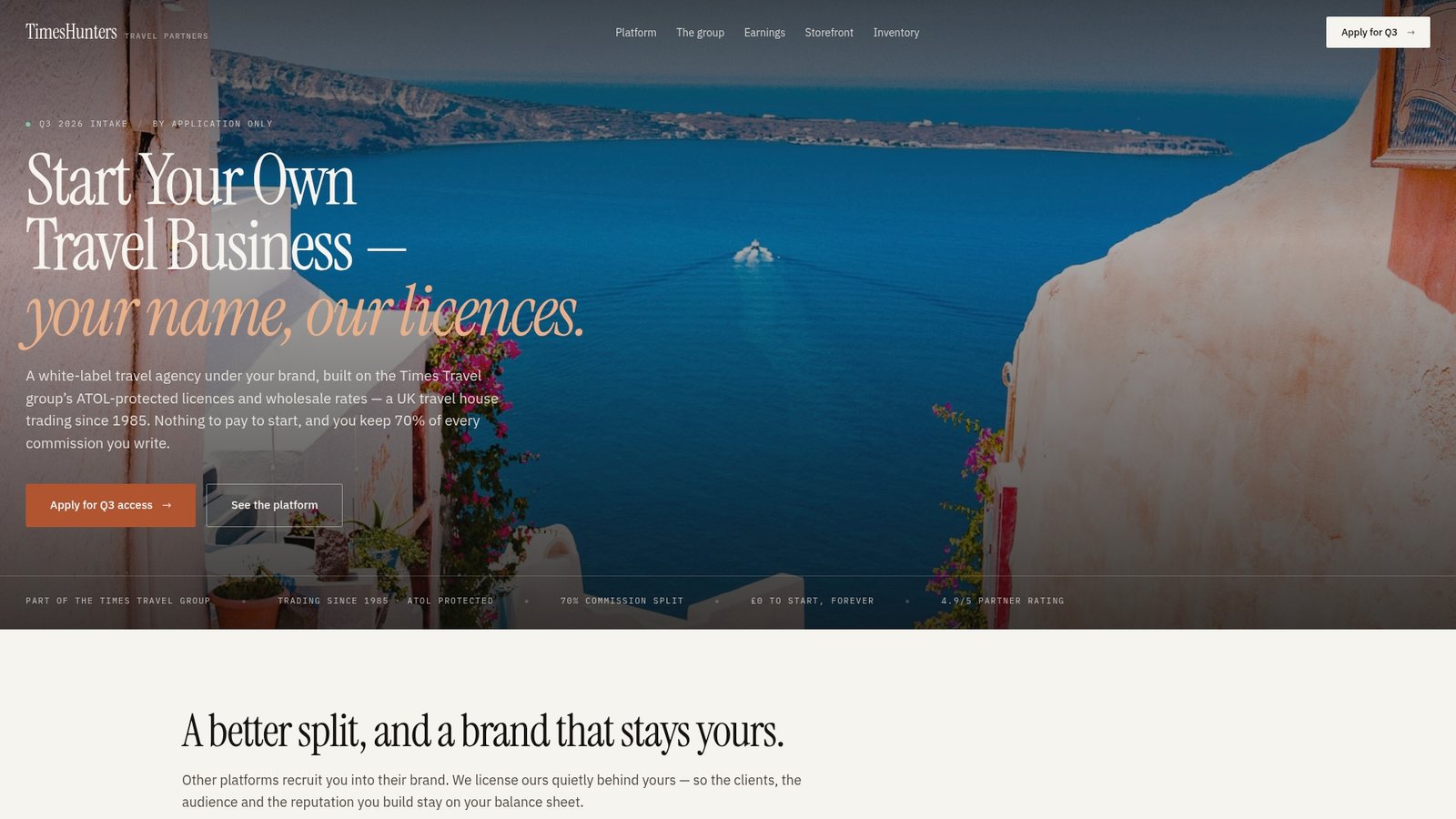
The white-label travel agency model puts Times Travel group’s ATOL-protected licences, wholesale rates and automated booking management behind your own name, with partners keeping 70% commission on bookings rather than the low single-digit percentages typical of online travel agency work. You still choose your niche, your suppliers, and your clients; Timeshunters handles the licensing, payments and financial protection underneath it.
This is one legitimate route among several, and it suits entrepreneurs who’d rather spend their first ninety days building client relationships than building compliance infrastructure. If that’s you, take a closer look at what the white-label agency service includes and get a sense of whether it fits the niche you’re planning to build.
Sources
For readers who want to go deeper on the data and strategy behind this article, these are worth bookmarking.
FAQ
What travel niche is most profitable?
Access-led niches, ones selling private aviation, exclusive-use buyouts, and bespoke expeditions, tend to be the most profitable because they carry higher margins and can’t be price-compared online. Depth in a specific supplier relationship consistently outperforms a broad, shallow product range.
What are the 5 C’s of luxury travel?
There’s no single, universally agreed “5 C’s” framework in the travel industry, and different consultants define it differently, so treat any version cautiously. The consistent themes across genuine luxury positioning are access, scarcity, personalisation, privacy and speed of response, which this article treats as the core commercial principles rather than a fixed acronym.
What are the latest trends in luxury travel?
The clearest current trend is a shift from status-driven travel toward privacy and meaning, with 45% of professional advisors reporting increased ultraluxe requests for exclusive-use and exceptionally high-end experiences. Sustainability expectations and demand for closed-door, non-bookable access are rising alongside it.
Who are some high-end travel influencers?
Rather than naming individual influencers, it’s more useful to focus on the pattern: credible voices in this space tend to be advisors or editorial brands demonstrating specific, verifiable access, such as Virtuoso’s editorial content, rather than generic luxury lifestyle accounts. Following outlets that showcase genuine access-led product, not just aspirational imagery, tends to be a better learning source.
How does the Timeshunters commission model work?
Timeshunters operates on a commission split where partners running their branded agency keep 70% of booking commission, well above the roughly 4% typical of online travel agencies. Full pricing and setup details are available directly on the Timeshunters website.