
Build a UK Travel Client List in 48 Hours With Three Systems
Practical UK playbook to grow your travel client list fast: three systems, lead magnets, referrals and CRM segmentation, plus PECR compliance and ABTA...

The fastest way to build a travel client list is to pick one niche, publish a single lead magnet around it, ask your last ten clients for referrals, and route every new contact straight into a CRM with a welcome sequence. Do all three in the next 48 hours. Draft a one-page guide for your niche, message ten recent clients for referrals, and set up a basic welcome email in whatever CRM you use.
TL;DR:
- Build a niche lead magnet around one specific problem, offer something usable immediately, add a clear next step, and compare signups per pound spent.
- Marketing emails and texts require consent, except for previous customers given a clear opt out when details were collected; keep records and include unsubscribe links.
- A travel consultant’s £250 referral reward produced 75 bookings, while clear eligibility, unique tracking, confirmation messages, and scheduled monthly payouts make such schemes accountable.
- A follow up sequence confirms needs on day one, sends options on day three, then schedules a call, proposal, and final nudge by day 21.
- Tag CRM contacts by traveller profile and tailor welcome sequences; limit staff access, review inactive leads annually, and confirm safeguards before sharing records with partners.
Table of Contents
- Quick wins: fast tactics to gather opt-ins and contacts this week
- Designing lead magnets that travel clients will download and trust
- Run a referral programme: a step-by-step blueprint
- Build trust with niche positioning and visible credentials
- Collecting and contacting leads lawfully: PECR essentials for UK advisors
- Segmenting your list and using a CRM to personalise outreach
- Convert leads to bookings: follow-up sequences and proposal shortcuts
- Illustrative example: how a white-label platform can reduce friction
- Legal considerations beyond email marketing: data privacy and your client list
- Author perspective: prioritise systems over tactics
- A gentle alternative: consider a white-label platform to speed growth
- FAQ
- Sources
Quick wins: fast tactics to gather opt-ins and contacts this week
You don’t need a new website or a big budget to start collecting contacts. You need a few scripts and a willingness to ask directly.
- Write a one-paragraph referral message: thank the client, name the type of traveller you’d love an introduction to, and ask them to forward your details by email, WhatsApp or text where that’s appropriate.
- Run one small social ad promoting a niche lead magnet, cap the spend for a week, and track cost per opt-in rather than cost per click.
- Approach two local businesses or corporate partners, such as a gym with a travel-minded membership or a hotel open to guest placements, and propose a simple gifting or referral collaboration.
- Treat every recent booking as a soft opt-in opportunity: if you told the client how to opt out when you collected their details, you can usually follow up with relevant offers later.
These four moves cost almost nothing and typically surface contacts within days, not months. For more structured lead generation templates, our fastest wins that work now guide expands on scripts and sequencing.
Designing lead magnets that travel clients will download and trust
A lead magnet only works when it solves one specific problem for one specific traveller. “Free travel tips” converts poorly because it promises nothing concrete.
- Focus on a niche: a packing checklist for first-time safari travellers beats a generic packing list every time.
- Deliver value immediately: a cost planner or itinerary template should be usable the moment someone downloads it, no follow-up required.
- Include a clear next step: every lead magnet should end with one obvious action, usually booking a short call.
High-converting formats include one-page checklists, sample itineraries, cost planners, short micro-guides and brief video walkthroughs. Test variations of the headline, the format, the call to action and the channel you distribute through, then keep whichever combination produces the most opt-ins per pound spent. Our travel lead magnets page has format examples worth adapting.
Pro Tip: Give your lead magnet a number in the title, such as “7-Day Kenya Safari Cost Planner”: specificity signals that the content is practical rather than generic.
Run a referral programme: a step-by-step blueprint
A referral programme only works when the reward, the eligibility and the payout process are explicit from the start.
- Define the reward: a flat credit, a small upgrade or a gift card tends to outperform vague “thank you” gestures.
- Set eligibility clearly: who qualifies as a referrer, and does the new client need to complete a booking before the reward pays out.
- Track referrals with a unique code or link so you always know who sent whom.
- Send a confirmation email the moment a referral is logged, so both parties know it’s been received.
- Run payouts on a fixed monthly schedule rather than ad hoc, which keeps the programme feeling professional.
One travel consultant who offered a £250 referral reward generated 75 new bookings from the scheme, a useful illustration of how a modest, clearly tracked incentive can outperform scattergun marketing.
Build trust with niche positioning and visible credentials
Choosing a niche isn’t just about marketing efficiency, it changes how much trust you earn before a client even speaks to you.
- Test a niche across three dimensions: traveller type, trip style and geography, such as “multigenerational families booking Caribbean cruises”.
- Display trust signals prominently: verified testimonials, relevant membership credentials and plainly written terms around insurance and financial protection.
- Share past outcomes honestly, describing what a client wanted and what you delivered, without exaggerating results you can’t repeat for everyone.
ABTA’s own research found that travellers often see agent expertise as worth paying for, and that trust in a named adviser is a genuine point of difference from booking direct. Our onboarding guide covers how ATOL and ABTA credentials factor into that trust-building.
Collecting and contacting leads lawfully: PECR essentials for UK advisors
Before you send a single marketing email or text, you need either specific consent or to qualify for the narrow “soft opt-in” exception that applies to previous customers who were given a clear opt-out when their details were first collected.
- Get explicit consent at the point of collection, worded plainly, with an unsubscribe link in every message that follows.
- Keep records of when and how consent was given, since you may need to show this later.
- Never buy email lists: the ICO’s PECR guidance treats unsolicited marketing to purchased contacts as a compliance risk, and those lists convert poorly in practice.
Organically grown, opt-in subscribers can convert far better than purchased leads, which is the practical reason compliance and performance point the same direction.
Segmenting your list and using a CRM to personalise outreach
A flat list of email addresses is barely more useful than no list at all. Segmentation is what turns contacts into bookings.
- Tag contacts by profile: VIP, honeymoon, family, cruise fan, first-timer, so every message matches the reader.
- Build separate welcome cadences per segment: a honeymoon tag might trigger a romantic escapes guide, while a family tag triggers a multi-generational trip planner.
- Watch open-to-booking rates by segment and retire or rewrite any sequence that underperforms.
Advisors using smart lists and tag-driven campaigns in a CRM report far better personalisation than a generic newsletter achieves.
Pro Tip: Review one segment’s performance each week rather than the whole list at once: it’s easier to spot what’s actually working.
Convert leads to bookings: follow-up sequences and proposal shortcuts
Most bookings come from the follow-up, not the first conversation. A simple five-step sequence keeps leads warm without feeling pushy.
- Day 1: send a thank-you message confirming what the client is looking for.
- Day 3: follow up by email with two or three tailored options.
- Day 7: a short call or voice note to answer questions directly.
- Day 14: send a proposal with pricing, inclusions and a deadline for the quoted rate.
- Day 21: a final nudge referencing availability or seasonal pricing changes.
A strong proposal includes a clear itinerary, transparent pricing, what’s included and excluded, and a simple way to confirm the booking. Track how many leads convert at each stage so you know exactly where people drop off and what to fix first.
Illustrative example: how a white-label platform can reduce friction
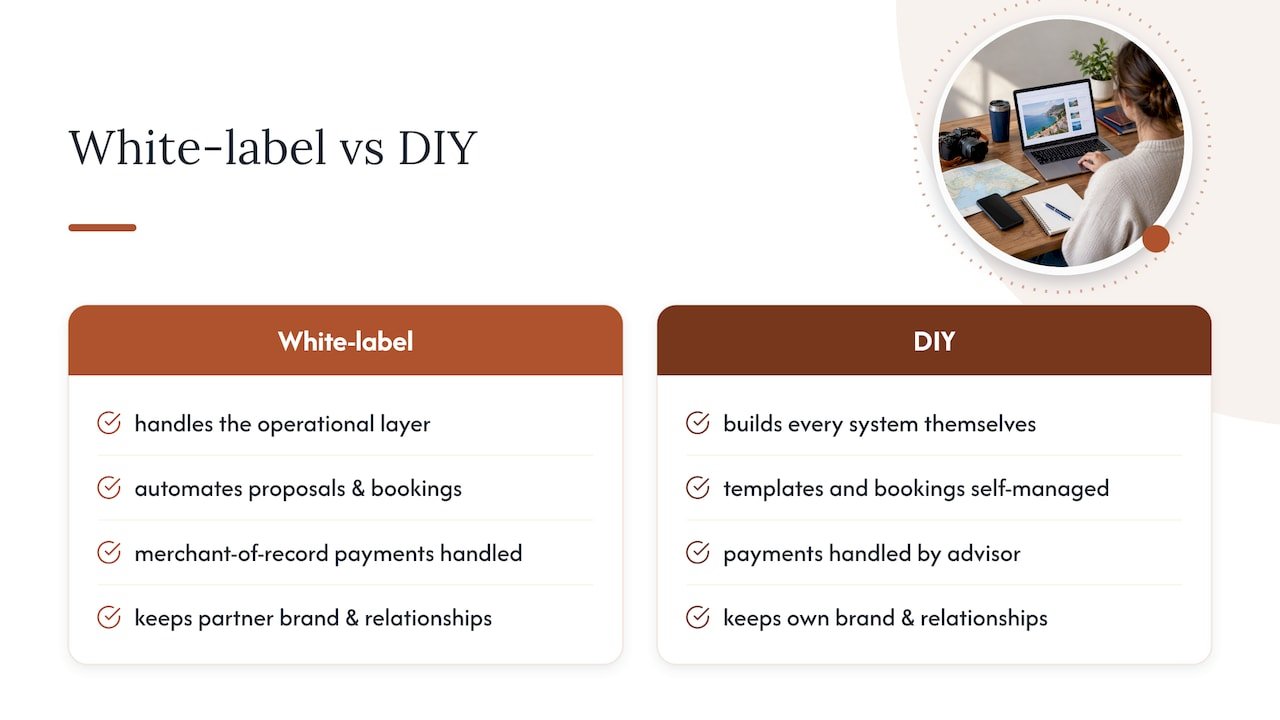
Some advisors prefer to build every system themselves. Others choose a platform that handles the operational layer so they can focus on relationships.
As one example, white-label platforms can automate proposal templates, booking confirmations and merchant-of-record payment handling, removing tasks that otherwise eat into client-facing time.
Partners keep their own brand and client relationships while working under an ATOL-protected licence, with proposal templates and automated booking management built in.
A managed platform suits advisors short on time or ops capacity; a lean, DIY system suits those who want full control over every tool.
Legal considerations beyond email marketing: data privacy and your client list
PECR governs how you contact people, but data protection law governs how you store and use their details once you have them. Your client list, whatever its size, is personal data, and that brings obligations that have nothing to do with marketing emails.
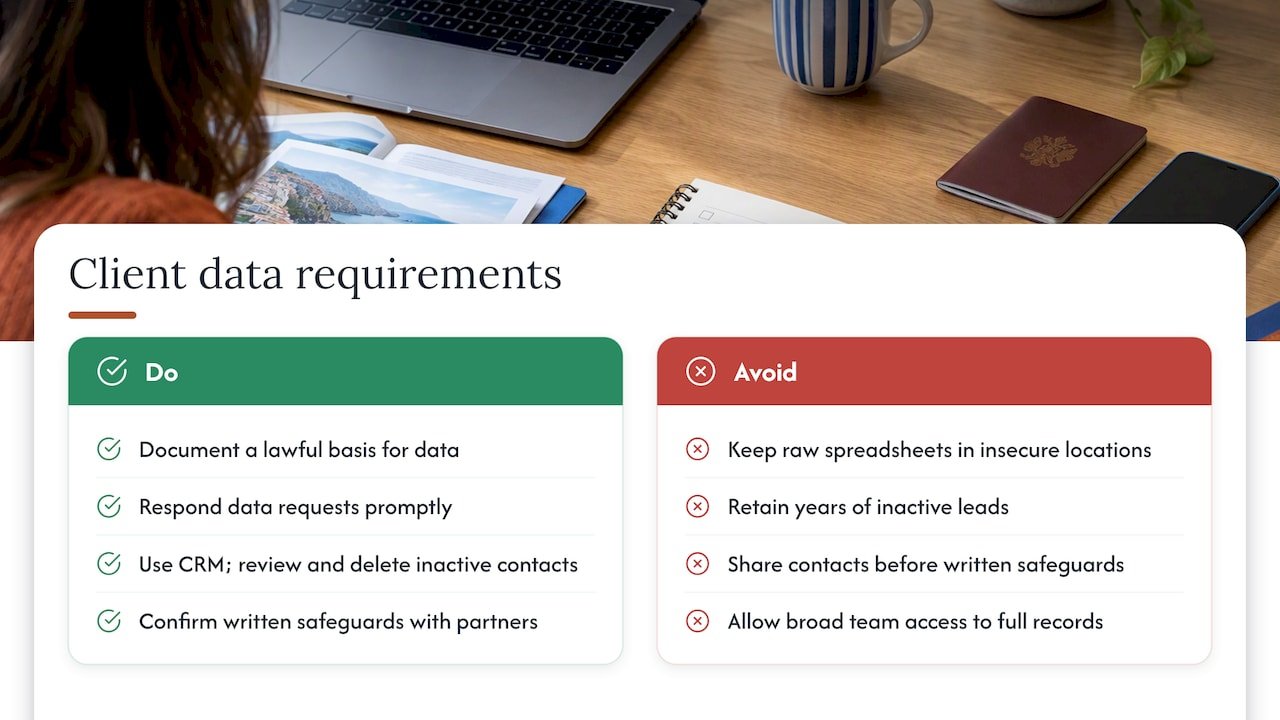
You need a lawful basis for holding client details at all, usually either consent or the legitimate interest of fulfilling a booking. Clients have the right to ask what data you hold on them, to correct it, and in many cases to have it deleted, so you need a process for responding to those requests within a reasonable time.
Storage matters as much as collection. A spreadsheet emailed between devices or left in an unsecured cloud folder is a liability: passport numbers, dates of birth and payment references are sensitive enough that a breach carries real consequences, both reputational and regulatory. Use a CRM with proper access controls rather than loose documents, and limit who on your team can see full client records.
Retention is often overlooked. Keeping ten years of defunct leads “just in case” increases your risk without adding value, so set a review point, perhaps annually, where you archive or delete contacts who haven’t engaged in a long time. If you ever work with a partner platform or supplier that processes client data on your behalf, confirm in writing how that data is handled and protected before you share a single contact.
Author perspective: prioritise systems over tactics
Most advisors chase tactics: a new social post format, a trending ad style, a referral gimmick someone mentioned at a conference. Few build a system. The ones who do, picking a niche, running one lead magnet consistently, asking for referrals on a schedule, and tagging every contact in a CRM, outgrow the tactic-chasers within months, not because any single move is brilliant but because the system compounds.
A 90-day priority order: pick your niche in week one, launch one lead magnet by week two, start the referral ask by week four, and get your CRM segmented and automated by week eight. Measure weekly, adjust monthly.
— Sam
A gentle alternative: consider a white-label platform to speed growth
If building every one of these systems from scratch sounds like more operational work than you want to take on, a white-label platform offers a different route to the same client list: branded booking pages, ATOL-backed onboarding, automated confirmations and instant proposal tools, all running under your own name.
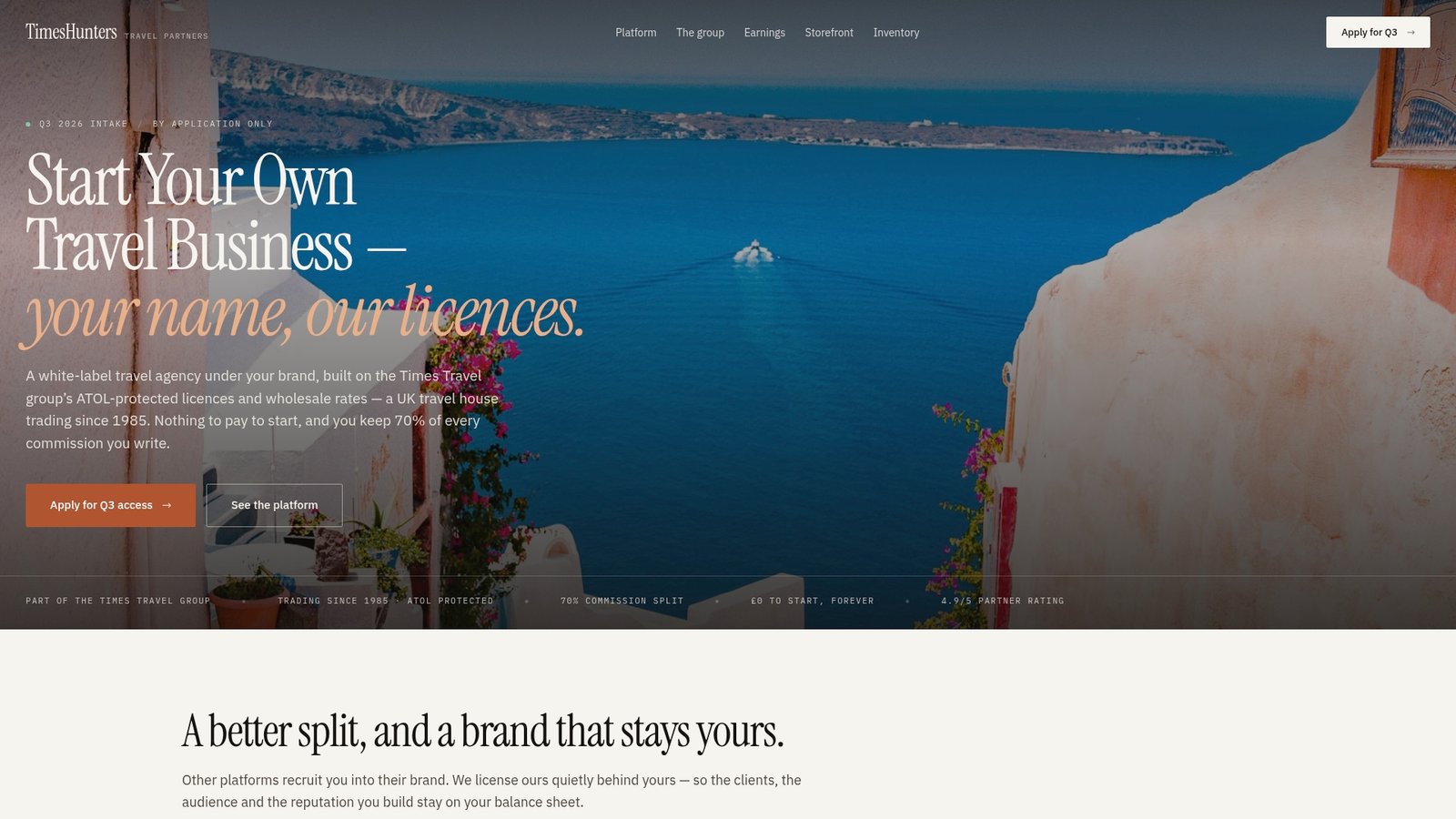
This route tends to suit advisors who already have an audience, limited spare time, and a preference for brand ownership without building booking infrastructure themselves. We built TimesHunters around exactly that gap: your brand stays yours, the operational layer is handled, and partners keep 70% commission on bookings made through the platform. If that fits how you want to grow, take a look at how the white-label model works.
FAQ
How do you build clientele as a travel agent?
Specialise in a niche, publish one lead magnet that solves a specific problem for that niche, and ask recent clients for referrals on a regular schedule. Route every new contact into a CRM with a welcome sequence so the relationship continues automatically.
How do I make a list for travel clients?
Start by collecting opt-in contacts through a lead magnet, referral programme or partner collaboration, always with clear consent under PECR rules. Then tag and segment those contacts in a CRM by traveller type so you can send relevant follow-ups rather than one generic newsletter.
Do travel agents get discounted rates on bookings?
Many agents access wholesale or discounted rates through supplier agreements, though the exact terms vary by operator and aren’t universal. This isn’t a fixed industry-wide percentage, so check the specific terms of whichever supplier or platform you work with.
What travel niche tends to be most profitable?
There’s no single official ranking of niche profitability, since it depends on client spend, repeat bookings and your own expertise. Niches with higher average trip values, such as luxury, honeymoon and multigenerational family travel, are commonly cited by advisors as strong starting points because they combine higher per-booking value with naturally strong referral behaviour.
Sources
- Guide to PECR: electronic mail marketing | ICO
- ABTA’s holiday habits report showcases the value of travel agents and tour operators | ABTA
- My simple £250 client referral scheme has led to 75 new bookings | TTG