
UK Travel Creators: Monetize Audiences Through a Compliant Agent
UK travel creators can turn followers into commissionable bookings, keep their brand, and follow the agent route with ATOL certificates ready before payment.

A practical way to monetise a travel audience is to act as an agent or retailer for an ATOL holder, or to use a white-label host that supplies a written agency agreement and supports ATOL certificate issuance. Get that legal base set before you take any payment. Then pair it with a repeatable sales funnel and automated follow-up, so audience interest turns into bookings you earn commission on.
TL;DR:
- Most creators should begin as agents, selling a principal’s services for agreed commission while clearly identifying who contracts with customers and defining cancellation terms.
- Before accepting payment for bookings that include flights, sign the ATOL holder’s written agency agreement and ensure a certificate can be issued with the first payment.
- Use a single enquiry route, then follow up within a day and send proposals covering the itinerary, total price, protection, and the customer’s next step.
- Booking confirmations should name the principal, list protected items, show the relevant ATOL number and certificate reference, and disclose any booking fee clearly.
Table of Contents
- Which model suits you: agent or organiser?
- Which regulatory must-haves apply before you take payment?
- How do you turn followers into paying bookings?
- What does your operations checklist look like?
- Why this compliance-first route suits creators
- How we help you launch with TimesHunters
- FAQ
- Sources
Which model suits you: agent or organiser?
Your first decision is the role you play, because it decides your liability, your paperwork and how your commission works.
ABTA explains that an agent or retailer markets a principal’s travel services, tells the customer who the contract is with, may collect payment on the principal’s behalf, accounts to that principal and receives an agreed commission. An organiser or principal, by contrast, combines services into its own product and carries the wider duties set out in the Package Travel and Linked Travel Arrangements Regulations 2018.
Most audience owners start as agents, and for good reasons:
- You reach the market sooner, because you sell someone else’s licensed products.
- You carry fewer financial-protection responsibilities than an organiser.
- You keep your brand and your client relationships.
- You can agree a documented commission split before the first sale.
Make sure the agreement states who the principal is, how and when commission is calculated, and what happens to commission if a customer cancels or amends. Customers must always know which principal they are contracting with, so the look of your booking site matters less than the host relationship behind it.
Which regulatory must-haves apply before you take payment?
Compliance is a workflow issue, not a legal afterthought. If you sell flights or flight-inclusive holidays, the Civil Aviation Authority requires the ATOL holder to have a written agency agreement with you, and an agent may not accept payment until it can issue the certificate. The ATOL regulations back this up.
Work through these items in order:
- Sign a written agency agreement with the ATOL holder whose products you sell, including the CAA’s schedule of terms.
- Agree who issues the ATOL Certificate, and make sure it can be supplied when the customer makes the first payment, as the CAA’s certificate guidance requires.
- Check that receipts and confirmations show what is protected, in line with ATOL Standard Term 1.
- Understand when combined services become a package or linked travel arrangement, and which information duties then fall on the organiser or retailer.
- Plan your payment flow around certificate issuance, never the other way round.
Pro Tip: Test a full dummy booking, from payment to certificate, before you promote anything to your audience.
ABTA’s code guidance adds that agreements should identify whether you are principal or agent and which party performs the information duties. If you want the payments side explained in more depth, our piece on trust accounts versus insurance covers the routes UK agents use.
How do you turn followers into paying bookings?
Followers rarely book from a single post. ABTA frames conversion as a full customer journey: enquiry, follow-up, closing and upselling across web, email, social and phone. Copy that shape: content, then a call to action, then an enquiry or consultation, then a personalised proposal, then the booking, then the upsell.
Channels that carry people along that path:
- A scheduling link in your bio so a follower can book a short consultation.
- A gated destination guide that captures an email address in exchange for useful content; our notes on travel lead magnets show how.
- An email sequence that follows up within a day, then again once the proposal is sent.
- Direct calls to action in stories, posts and videos, each pointing to one next step.
Trust does a lot of the selling. ABTA’s Travel Confidence Index shows that booking with a travel professional and clear protection raise traveller confidence, and further ABTA research points to correct documents, reputable names and reviews as reassurance. So state your protection plainly, show clear pricing and put customer reviews where people can see them.
A consultation needs only a simple script: ask who is travelling, when, what budget feels comfortable and what would make the trip a success. Then send a proposal that covers the itinerary, the total price, what is protected and the next step. For more on generating enquiries, see our guide to travel agent lead generation.
Pro Tip: Offer an upgrade or extra at proposal stage, not after payment, when the customer is still imagining the trip.
When you are ready to raise booking value, our playbook on upselling travel extras shows where agents keep more commission.
What does your operations checklist look like?
Keep operations tight so every booking is compliant and every commission can be traced. Your confirmations should carry the principal’s name, the ATOL number where relevant, the list of protected items and the unique ATOL Certificate reference. Make sure customers can see which part of their payment is protected, and disclose any booking fee clearly alongside it.
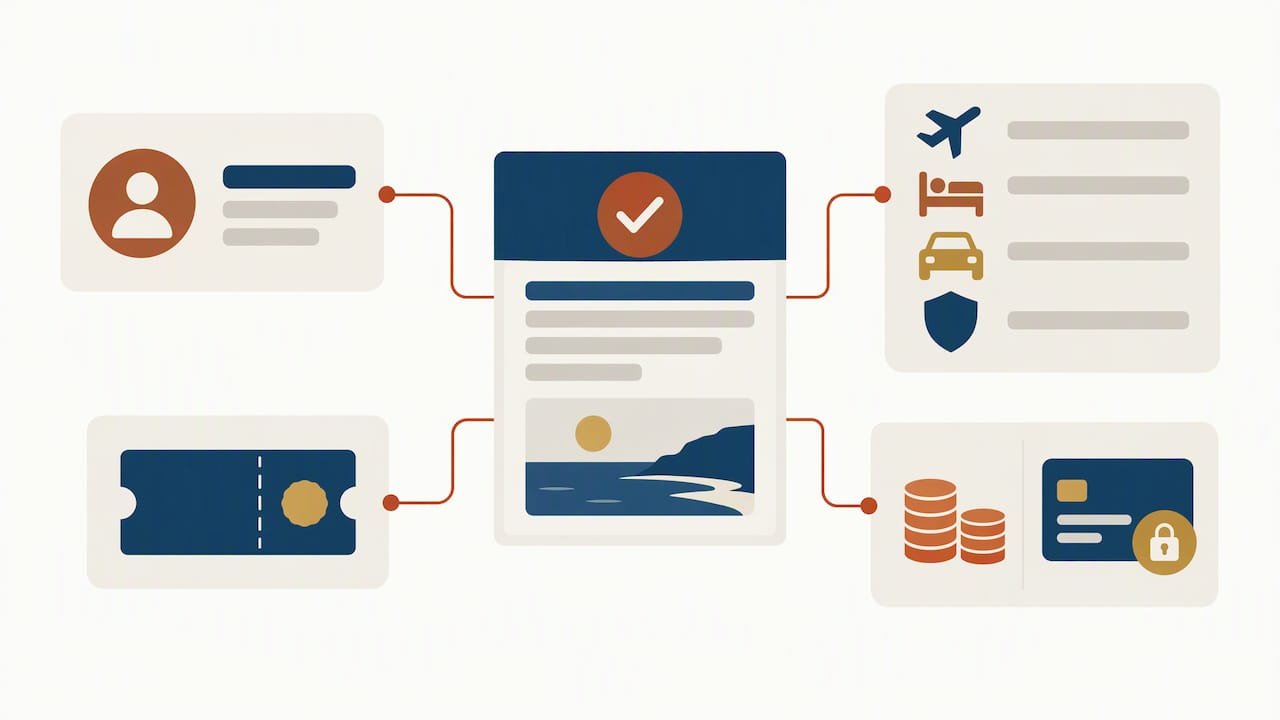
Behind the scenes, consider systems that support certificate issuance, record commission splits and help you manage agency agreements. Match commission payments to booking references to make reconciliation easier.
A short checklist keeps you honest:
- Pre-launch: signed agency agreement, a tested ATOL certificate, receipts that show protected sums.
- Launch: content that states protection clearly, and one consistent enquiry route.
- Post-booking: confirmation sent at once, commission reconciled against the principal’s statement.
Protecting your audience’s data matters too. Collect only what a booking needs, tell people how you use it, and store it securely, since enquiry forms and email lists hold personal information.
If you also want guidance on sourcing, our travel resource partner BergMe covers insurance limits for ski trips, a useful reference when you build trust messaging around niche products.
Why this compliance-first route suits creators
Keeping your client relationships and brand while borrowing a host’s licences and inventory is, in my view, the most realistic growth route for a creator. The legal groundwork feels dull next to content, yet it is what lets you take a deposit with confidence. An agreed commission split and support with booking operations can help creators build a sustainable business. Expect to invest in your sales process and basic compliance work if you want to scale.
The audiences that convert best are the ones whose owner treats trust as a product feature, not a footnote.
— Sam
How we help you launch with TimesHunters
We built TimesHunters for people who already have an audience and want to earn properly from it. You can explore launching under your own name with a branded booking site and booking support.
The point is to keep your brand and your client relationships. Our licence branding is invisible to your customers, and you keep a 30% commission split rather than the thin margins typical of online travel agencies. Our wider white-label travel agency page sets out the inventory and tooling in full, and our page on selling travel as a creator explains how the split works for people with an audience.
If you are ready to evaluate the model, start at Timeshunters and request a conversation with our team about launching your own branded travel business.
FAQ
Do I need an ATOL to sell flights to my audience?
Whether you need your own licence depends on your role and arrangements with the ATOL holder. Check the applicable requirements before selling. The CAA’s agent guidance says an ATOL Certificate must be issued immediately on first payment. Before taking payment for flight-inclusive bookings, confirm that your arrangement meets the applicable ATOL requirements.
What is the difference between an agent and an organiser?
An agent sells another business’s travel services and earns commission, while an organiser combines services and takes on wider duties. Those duties include the financial-protection and information requirements in the Package Travel Regulations. Most creators start as agents.
Can I keep my own brand when using a white-label host?
Yes, a white-label host lets you trade under your own name while the host supplies the licences and processes behind the scenes. Customers must still be told clearly who the principal is, in line with ABTA’s trading guidance.
How do I persuade followers to book with me?
Show clear protection, honest pricing and real reviews, then give them one simple next step such as a consultation link. Reassurance matters, and ABTA’s research links trust signals to confidence in booking.