
Tour operator bonding in the UK: what it costs and your options
How tour operator bonding works in the UK: ATOL bonds, non-flight security, renewal rules and a lower-capital route for new travel sellers.

Tour operator bonding is the financial security a UK package organiser must lodge so that customers get their money back, or get home, if the business fails. For flight-inclusive holidays the security goes to the Civil Aviation Authority (CAA) under the ATOL scheme. For packages without flights you choose between a bond, insolvency insurance or a trust account. If you want to sell holidays but not tie up tens of thousands of pounds, there is a fourth route: sell under a licence holder’s existing protection.
This guide explains each route in plain terms, with the figures regulators publish, so you can decide before you commit capital.
TL;DR
- Flight-inclusive packages need an ATOL, and the CAA’s normal policy for a business under a year old is a bond of 15% of annual public sales, with a minimum of £50,000.
- Packages without flights must have insolvency security under the 2018 regulations: an approved-body bond, insurance or a trust account.
- A bond cannot simply be rolled over: a renewal must cover the new licence period plus a six-month run-off.
- Running your own bonded operation is capital-heavy. Selling as a partner under an existing ATOL-protected licence avoids most of that cost.
- Match the route to your plan: a niche escorted-tour operator and a personal-brand travel seller need very different structures.
Table of Contents
- What bonding actually means
- Flights included: the ATOL bond
- No flights: package travel security
- Why bonding is a barrier, not just a cost
- Do you need your own bond at all?
- Our perspective
- The lower-capital route: selling under an ATOL-protected licence
- Trade-only and other structures worth knowing
- A practical checklist before you commit
- Working out which route fits
- FAQ
- Sources
What bonding actually means
A bond is a guarantee from a bank, insurer or approved body that money will be paid out if your company becomes insolvent. It is not a fee in the usual sense, and it is not a pot of your own cash that you simply hand over. You pay for the guarantee, and the provider will often want counter-security from you, so the real cost is both the premium and the capital or assets you tie up.
The purpose is consumer protection. When a package organiser fails, customers who have paid for holidays not yet taken need refunds, and those abroad need repatriation. The bond funds that.
Two separate regimes matter in the UK, and which one applies depends on whether your packages include flights.
Flights included: the ATOL bond
The CAA’s Air Travel Organiser’s Licence is mandatory for flight-inclusive packages sold in the UK. The CAA sets security requirements for each licence holder individually, but it publishes its normal policy.
For new entrants with less than a year of trading history, the standard requirement is 15% of annual public sales revenue, subject to a minimum bond of £50,000. Where the CAA sees higher risk, it can raise the requirement, to as much as 25%. The CAA is explicit that its policy document is not exhaustive and that requirements vary from one holder to the next.
A worked example
Say a new operator forecasts £600,000 of public sales in its first licence year. At 15%, the bond requirement would be £90,000. At the 25% high-risk ceiling it would be £150,000. A forecast of £200,000 would produce 15% of £30,000, but the £50,000 minimum would apply instead. The figures are illustrative, not a quote, and your actual requirement is the CAA’s decision.
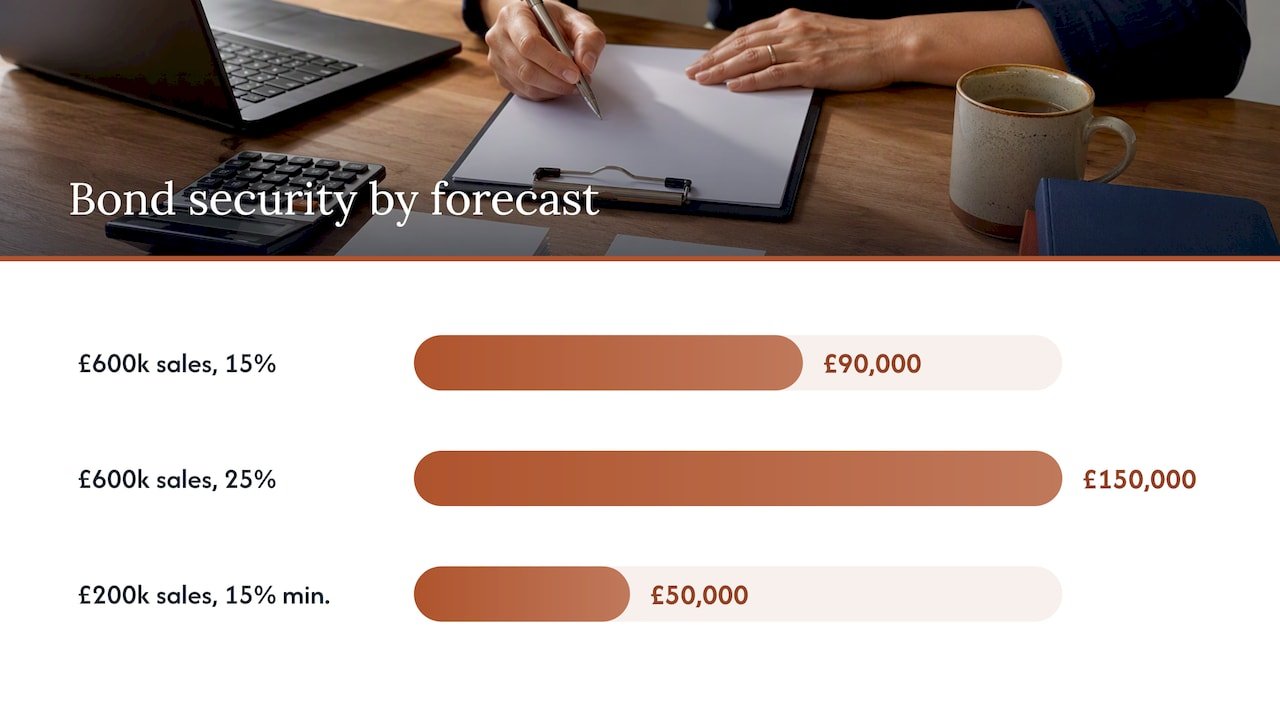
The point of the example: for a small start-up, the minimum bond often dominates. You can be asked for £50,000 of security before you have taken a single booking at scale.
Renewals and the six-month run-off
Many new operators miss this one. The CAA says a bond must cover the period of the new licence plus a six-month run-off, so it cannot rely on your current bond even if that still has months left to run. The reason is simple: if the licence is not renewed and the firm fails, funds must still be there for passengers who booked during the licence term.
In practice, build the renewal bond into your cash planning from the first year. It is a rolling liability, not a one-off hurdle.
The scale of the scheme
The system is large. As of March 2026, authorised ATOL passenger capacity reached a record 35.3 million, according to the Travel Trade Consultancy’s analysis of the CAA data. The CAA’s own figures cited in our research put that across 1,610 licence holders. Those numbers tell you the regulator is used to supervising operators of every size, and that it expects serious financial discipline from all of them.
No flights: package travel security
If your packages do not include flights, ATOL does not apply, but the Package Travel and Linked Travel Arrangements Regulations 2018 still do. The government’s guidance for businesses says UK-established package organisers must have effective security covering refunds and repatriation if they become insolvent. The security must cover the reasonably foreseeable costs of returning the traveller’s payments for services not performed.
For non-flight packages there are three permitted models:
| Option | How it works | What to weigh |
|---|---|---|
| Bonding through an approved body | A trade body such as ABTA or ABTOT stands behind your customers | Typically calculated as a share of annual revenue, with reserves affecting the percentage; capped at 18 months |
| Insolvency insurance | An insurer covers refunds and repatriation | Premium cost and policy terms vary by provider |
| Trust account | Customer money is held until the service is completed | Ring-fences every pound, but you cannot use customer funds as working capital |
The guidance data we have indicates that bonding is typically sized at roughly 10 to 25% of annual revenue depending on reserve funds. Treat that as a planning range and ask the body or provider for a quote on your own numbers.
ABTA explains that its requirements depend on whether you act as an agent, a principal or both, and it will ask about your business model when you apply. That distinction matters. Many people who think they need a bond are actually agents selling someone else’s protected packages.
If you are weighing the trust-account route in particular, our walkthrough of trust accounts versus insurance sets out the trade-offs, and three trust account checks covers what to verify before relying on one.
Why bonding is a barrier, not just a cost
The capital is only part of it. According to The Accounts’ analysis of UK tour operators, the market has been taken over by airline-owned operators who control the flight seat, the main cost input, and can price it internally. The same report finds that only six companies incorporated since 2021 have reached meaningful scale, and that the largest cohort of operators was founded before 1990.
Incumbents are protected by bonding costs, by established supplier networks and by consumer trust in familiar names. A newcomer faces all three at once.
Where independents do win
The independents that thrive tend not to compete on price. The same report points to escorted, complex-planning, higher-margin trips that the large airline-backed operators do not focus on, with net margins in the range of 10 to 18%. If you are going to run a bonded operation, that is the territory to aim for. A mass-market price war against operators that own their own aircraft seats is the trap to avoid.
Price honesty matters too. The report notes that the Advertising Standards Authority regularly challenges misleading price advertising, and the ASA’s ruling on Holiday Gems Ltd is an example of a quoted holiday price that was not a confirmed booking. Whatever route you choose, quote prices you can actually honour.
Do you need your own bond at all?
This is the question most people searching for bonding should ask first. There are broadly three business shapes:
- Principal. You contract suppliers, build packages and sell them under your own name. You carry the legal duty to provide security, so you need your own ATOL for flights or one of the three non-flight options.
- Agent for a licence holder. You sell packages organised by someone else, who holds the licence and carries the security. Your customers are protected under that licence.
- Hybrid. You act as agent for some products and principal for others. This is where the paperwork gets complicated.
If your real aim is to earn from holiday sales, build a brand and serve your own clients, the second shape gets you trading without raising a bond. If your aim is to design and operate your own product, the first is unavoidable, and you should budget accordingly.
Our guide on becoming an independent travel agent in the UK covers how that choice plays out in practice, and the regulations changing from 6 April 2027 is worth reading if you sell packages.
Our perspective
We talk to a lot of people who start out saying they want to be a tour operator and, a few conversations later, realise they want something else: their own brand, their own clients, and a better share of what each booking earns. Bonding is rarely the thing they actually want to build.
The bond is the price of being the legal organiser. That price makes sense if you are designing a distinctive escorted programme with real margins. It makes much less sense if your edge is an audience, a network of clients, or years of knowing what a particular kind of traveller wants. In that case the capital is better spent on marketing and on your service than on lodging security with a regulator.
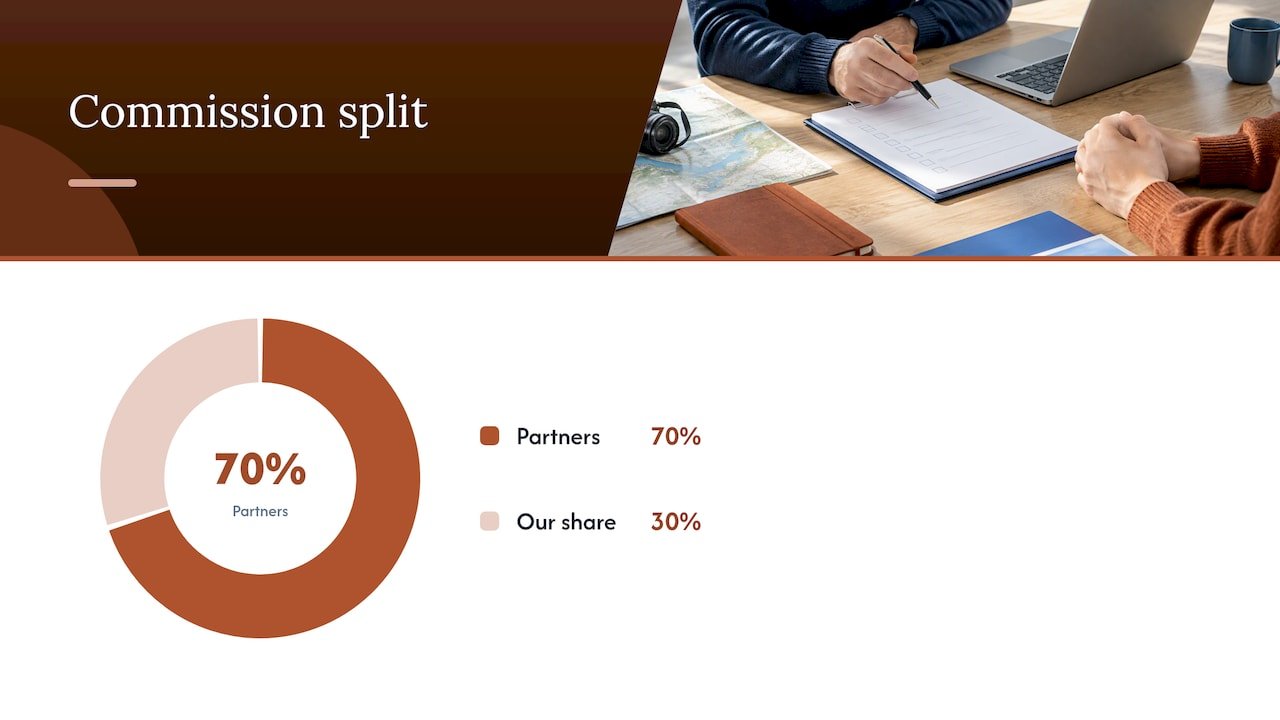
That is why we built our model around partners selling under licences that already carry ATOL protection. You keep your name and your client relationships, and the licence’s branding is invisible to your clients. Partners receive 70% of the commission on bookings, and we keep 30%. There is no cost to start.
This does not suit everyone. If you want to contract your own hotels, run your own tours and carry your own risk, you need your own licence and your own security, and you should plan for it carefully. We would rather you know that now than discover it after weeks of planning.
— Sam
The lower-capital route: selling under an ATOL-protected licence
A white-label agency lets you trade under your own brand while the booking sits under an established licence. At TimesHunters, partners use Times Travel group’s ATOL-protected licences, which means the regulatory security is already in place rather than something you must fund. You get:
- a branded booking site under your own name;
- access to wholesale hotel, cruise and tour inventory, plus villas, safari camps and rail;
- instant pricing proposals and automated booking management;
- managed payments and financial protection;
- automated client follow-up, with training and support.
If this matches what you were really after, see how the white-label travel agency works, or look at the ATOL licence guide for UK sellers for how the licensing side works without the long wait. Our travel agent training covers the launch process.
On money, tour operator commissions shows how to calculate net earnings per booking, and host agency commissions explains what agents take home after fees and clawbacks.
Trade-only and other structures worth knowing
Some specialist operators avoid consumer-facing retail altogether and sell only through agents. Travel Weekly reported one example of an operator that went fully trade-only after an acquisition. The attraction is that you focus on your product and skip the overheads of shopfronts and consumer marketing, and you avoid competing with your own distribution.
The bonding duty does not disappear, though. If you assemble packages, you are still the organiser, and the security rules still apply to you. Trade-only is a sales channel decision, not a way around the regulations.
A practical checklist before you commit
- Write down what you sell. Flights included, or not? That decides ATOL versus the three non-flight options.
- Decide your role. Principal, agent or hybrid. Ask the relevant body to confirm in writing how it classifies you.
- Forecast public sales honestly. The bond scales with revenue, and an optimistic forecast raises your capital need.
- Model the minimum bond. For flight packages, assume at least £50,000 in the first year under the CAA’s normal policy.
- Plan the renewal. Remember the new-licence-plus-six-months rule.
- Check your cash flow. A trust account protects customers but limits your use of their money.
- Price transparently. Make sure every advertised price is one you can honour.
- Compare with the agent route. Work out what you would earn selling under an existing protected licence before you spend on your own.
Working out which route fits
A quick guide:
- You have a distinctive escorted-tour concept and the capital. Run your own operation, seek an ATOL or non-flight security, and expect to compete on specialism, not price.
- You have an audience or client list and want to monetise it. Selling under a protected licence is the faster, lighter route. Our pages for travel creators and independent agents go into the detail.
- You run a hotel or hospitality business. You may be adding travel as a revenue line, not becoming a tour operator. The bedbanks versus white label comparison is a useful starting point.
Whichever you choose, check the current figures with the CAA, ABTA or your chosen provider before relying on anything here. Requirements are set case by case, and policy can change.
FAQ
How much is a tour operator bond in the UK?
For flight-inclusive packages, the CAA’s normal policy for businesses under a year old is a bond of 15% of annual public sales, with a minimum of £50,000, and up to 25% in high-risk cases. For non-flight packages, approved-body bonds are typically sized as a share of annual revenue, depending on your reserves. Your actual figure is set for your business, so ask the CAA or the body directly.
Do I need ATOL if I only sell holidays without flights?
No. ATOL applies to flight-inclusive packages. You must still protect customers under the 2018 package travel regulations, by approved-body bond, insolvency insurance or a trust account, if you are the package organiser.
Can I reuse my existing bond when my licence is renewed?
No. The CAA requires a bond covering the whole new licence period plus a six-month run-off, so it cannot rely on the previous bond. Plan for the renewal bond well before your licence expires.
Can I sell holidays without holding my own bond?
Yes, if you act as an agent selling packages organised by a licence holder who carries the security. That is the structure behind white-label agencies. Check that your role is genuinely that of an agent, and that your client paperwork reflects it.
Sources
- CAA: requirement for bonding and other forms of security
- CAA: ATOL renewals FAQ
- Package Travel and Linked Travel Arrangements Regulations 2018: guidance for businesses
- ABTA: membership costs and requirements
- Travel Trade Consultancy: key findings from the March 2026 ATOL authorisation data
- The Accounts: UK tour operators, the airlines took over the package holiday
- ASA ruling on Holiday Gems Ltd
- Travel Weekly: Major Travel acquired and goes trade-only